Yeshiva
Beit Midrash
- Jewish Laws and Thoughts
- Pathways in Personality Development
- Humility, Holiness and Fearing Hashem
- Jewish Laws and Thoughts
- Personality Development
- Anava - Humility

A humble person is content with his lot and is thankful for whatever he receives. He does not feel as if he deserves more than what he has. He is happy with what he has. The conceited person, by contrast, who seeks out honor and desires respect, is never satisfied with what he receives. He always feels as if he is lacking something. He is ever envious of others. A humble person, because he is content with his lot, does not envy others. He feels as if he always receives more than what he deserves.
Hasidic legend relates that once, two great Torah scholars went to visit the famous disciple of the Baal Shem Tov, the Maggid of Mezritch, and to witness his greatness for themselves. During their visit, they asked the Maggid to explain the words of the sages, "A person must bless over hardships in the same manner that he blesses over good fortune." How, they asked, can a person recite a blessing over misfortune and be thankful for it in the same way that he blesses over goodness?
The Maggid of Mezritch answered them saying, "Go to the study hall and speak with R' Zussa. He will clarify these words for you."
So they went and inquired in the study hall. "Who here is the acclaimed R' Zussa?" they asked. "We have been sent by the Maggid of Mezritch to speak with him."
"There is no such acclaimed scholar here by that name," they were told. "There is only Reb Zussa who is sitting over there in the corner by the wood stove."
They went over to him and found a simple man garbed in tattered clothing. He appeared to be utterly destitute and they could not believe that this was the person who was supposed to explain the words of the sages to them. However, because there was nobody else by this name in the study hall, they introduced themselves.
"The Maggid of Mezritch sent us to you so that you might explain to us the words of the sages, 'A person must bless over hardships in the same manner that he blesses over good fortune.' How is it possible to bless over hardships at all? What's more, how is it possible to bless over hardships in the same manner one blesses over good fortune?"
Reb Zussa replied, "I do not even know how to answer to your question. I have known only good fortune in my life. The Almighty has always provided me with whatever I lacked. How can a person like myself, who has never known hardships, explain such words? I have always blessed over good fortune. Somebody who lacks food or clothing might be able to help you, but personally I have never lacked a thing."
This is true humility, and it is accompanied by joy and bliss. A proud person, by contrast, who thinks highly of himself and seeks honor, is plagued by unhappiness and envy. He always thinks that he deserves more, and he is never satisfied with what he has.
We see, then, that besides being a correct and virtuous trait, humility is also beneficial. It frees a person of all envy and brings him happiness. This is always the case: The true and upright path is also the most pleasant and rewarding.
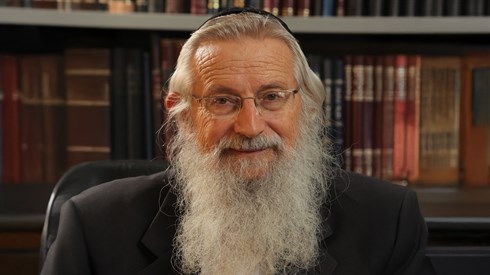






Rabbis in Midrash























Lessons
fast navigation









Hosha'ana Rabba FLYDUBAI & HOSHANA RABBA- ANI VAHU HOSHIA NA- I & HIM SAVE US
"Ani vaHu Hoshia Na", "I and Him, Save Us". We don't just pray to Him, but we also pray to and for ourselves that we should emulate and educate our children to have that instinctive altruism with which He created the world. President Trump seemed amused about Yaniv Hayon, our PLUMBER who confidently worked with G-d like Superman (he learned from a pilot on a TV show!) to save 174 lives on the Dubai hijacking, but we in Israel are totally accustomed already 78 years to our plumbers, teachers, garbage-men, rabbis, farmers & doctors being Hashem's shlichim! This is what Zionism is about.
Moreshet Shaul Hashem Is your Shadow – part I
Based on Siach Shaul, Pirkei Machshava V’Hadracha p. 420 – an address from 1941

P'ninat Mishpat A Non-Contractor in Changing Times – part I
(based on ruling 85128 of the Eretz Hemdah-Gazit Rabbinical Courts)
Moreshet Shaul Our King on Rosh Hashana, Our Father on Yom Kippur.
Based on Aroch Siach, p. 221 (Rav Shaul Yisraeli)






