Yeshiva
Beit Midrash
- Torah Portion and Tanach
- D'varim
- Va'etchanan
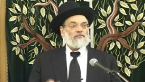
On this Shabbat, the Sabbath of Consolation following the fast of Tisha B'Av, we read Parashat VaEtchanan (D'varim 3,23-7,11). Its first word means "I pleaded" – Moshe Rabbeinu recounts to Israel in this, his parting speech, how he pleaded with G-d to allow him to pass through and see the Land of Israel. Reading these words we feel his love of the Land and for Israel's historic mission there.
The Medrash tells us one of the ways in which Moshe seeks to make his case:
"R. Levi said that Moshe told Hashem: O G-d, the bones of Yosef entered the land [and were buried there], and I cannot enter??" Hashem answered, "He who acknowledged his land is buried there in his land, and he who did not acknowledge his land is not buried in his land.
"What was the story with Yosef? His master's wife [who tried to seduce him] called him a 'Hebrew man' (B'reshit 39,14) and he did not deny it, and in fact later he told the Minister of Drinks that he had been kidnapped from his home in the land of the Hebrews. Moshe, however, heard the Midianite girls call him an "Egyptian man" (Sh'mot 2,19) and he did not protest – and therefore he was not to be buried in the Holy Land.
"[G-d continues:] If you are buried with them here, they will come to the Land in your merit – and then you would end up coming as well, to which I object].
"R. Levi said, 'This is similar to one whose copper coins were scattered in a dark place. He said to himself, "If I ask people to shine a light for me so that I can gather them, no one will pay attention to me."' What did he do? He took a gold coin and cast it in their midst and began shouting, "Shine a light for me so I can find my gold coin!" And they did. After finding the gold coin, he said to them. "Wait for me so that I can gather the copper coins," and he gathered them up. Thanks to the gold coin, the copper coins were gathered. So said G-d to Moshe, ‘If you are buried with them in the wilderness, they will all come by your merit, and you will come at their head,'" as is written, "he came at the head of the people”' (D'varim 33,21).
The primary job of Yosef was a material one, to prepare the nation for its historic exodus from Egypt "with vast wealth." Thus he would lay the foundation for Israeli sovereignty in the Land with wealth and economic strength. Moshe, on the other hand, brought down the Torah from heaven for Israel, building the spiritual side of the nation, their destiny. This was precisely Moshe's claim: "Yosef was responsible for the physical entry, and he entered the Land – while I, in charge of the spiritual, do not get to enter?!"
Hashem answered him, "There's a big difference: Yosef acknowledged the Land, that is, it was his reality; he saw the land as the basis for everything – and therefore he merited to complete his mission in Egypt when the Israelites left it. For Moshe, however, the land was not the primary thing; he did not "acknowledge" his connection to it." Moshe's chief mission concerns the Torah, which was actually given in the desert, not in a populated land. He belongs to the Upper spiritual side, which is not directly tied with land, and this is why he did not protest when he was called an Egyptian. The "location" was not the critical thing for him; rather his job and mission were the important matter. Moshe could therefore enter the Land only when it is in its most perfected state, when Jerusalem is built and complete with the Holy Temple at the zenith of its holiness – a tremendous sanctity that can never end and that is not followed by a destruction. However, such a level can only be reached when Israel itself is in a very superior religious state – which was certainly not the case after the Sins of the Golden Calf and the Scouts. Moshe did not complete his mission in the desert, and he had to raise up his generation in order that they be worthy of entering.
What about the Land made Moshe long so greatly to enter it?
He prayed to G-d, "Please let me go over and the good Land that is beyond [to the west of] the Jordan River, this goodly mountain [region] and the Levanon" (D'varim 4,25). Rashi explains that the "mountain" refers to Jerusalem, and the "Levanon" is the Holy Temple. That is, he wished to be an intrinsic part of building both the economic/political basis of the nation, and the spiritual center. Both these centers together, Jerusalem and the Temple, are those that give absolute wholeness and enable Israel to reach their ultimate objectives. Moshe Rabbeinu desired to live on that level spiritual loftiness that he could not attain in the desert.
Even Like an Animal!
The Sages of the Medrash D'varim Rabba (11,6) taught: "Moshe said before G-d, Master of the Universe, if You do not bring me into the Land of Israel, leave me be at least like the beasts of the field that eat grass and drink water, live, and see the world - let my soul be like one of them!"
How strange! Assuming that Moshe's desire for the Land stemmed from a love for Torah and mitzvot, what benefit could he derive from being like animal, clearly not obligated in any commandments? We must learn from here that love for the Land of Israel is not tied solely to the commandments. The Ritva, in fact, wrote at the beginning of Tractate Gittin that even that part of Eretz Yisrael that lacks the level of sanctity of "those who ascended from Bavel" still possesses the beloved quality of the Land – and this is why the Sage Rabbi Avahu would kiss the shore of Acre when he arrived there, even though those who ascended from Bavel did not conquer it and Land-dependent mitzvot do not apply there. R. Avahu displayed a unique Divine attachment to the Land, desiring to be close to holy things even if no fulfillment of practical commandments is involved.
This is why Moshe Rabbeinu requested that if he did not merit to live as a member of Am Yisrael in the highest spiritual degree of the Land - at least he would like to be in the presence of those who did merit it, and to enjoy the radiance of the Divine Presence in any form of life. Such is the importance of clinging to the Land of Israel – something we can do today, but Moshe himself was not able to do.
Translated by Hillel Fendel
In order to get Shiurim like this every week directly to your Inbox, click here








Rabbis in Midrash


































Hosha'ana Rabba FLYDUBAI & HOSHANA RABBA- ANI VAHU HOSHIA NA- I & HIM SAVE US
"Ani vaHu Hoshia Na", "I and Him, Save Us". We don't just pray to Him, but we also pray to and for ourselves that we should emulate and educate our children to have that instinctive altruism with which He created the world. President Trump seemed amused about Yaniv Hayon, our PLUMBER who confidently worked with G-d like Superman (he learned from a pilot on a TV show!) to save 174 lives on the Dubai hijacking, but we in Israel are totally accustomed already 78 years to our plumbers, teachers, garbage-men, rabbis, farmers & doctors being Hashem's shlichim! This is what Zionism is about.











