Yeshiva
Beit Midrash
- Jewish Laws and Thoughts
- Pathways in Personality Development
- Humility, Holiness and Fearing Hashem
- Jewish Laws and Thoughts
- Serving Hashem, Mitzvot and Repentance

The Torah study is dedicatedin the memory of
Gila Bet Rachel
R' Pinchas ben Yair's ladder continues: Sanctity leads to Divine Inspiration, and Divine Inspiration leads to resurrection. Ramchal, however, concludes with the trait of sanctity because this trait still involves human effort, but Divine Inspiration is a gift from God bestowed upon a person after he has climbed all the preceding rungs of the ladder.
Possessing sanctity means sanctifying all aspects of life, including mundane, physical activities. It means sanctifying the mundane. Even the ordinary consumption of food is sanctified by those who have reached this level. When they eat, it is as if they are offering a sacrifice to God upon the altar, and via this offering the entire world is blessed. In this very manner the food eaten by a person who has reached the level of sanctity is sanctified and raised up as if it had been offered up upon the altar.
Hence, the sages say that if a person brings a gift to a Torah scholar, it is as if he had offered up a first-fruit offering, and they say that if a person wishes to offer a libation upon the altar, let him fill the throats of Torah scholars with wine. This does not mean, of course, that Torah scholars should be gluttonous, Heaven forbid. Rather, Torah scholars are sacred in their ways and actions, and the Divine Presence rests upon them. They resemble the Holy Temple and the Altar, and just as the Divine Presence abided in the Holy Temple, so does it rest upon the Torah scholar.
Hence, whatever is given to a Torah scholar ascends and is sanctified by virtue of their elevated status and sanctity. And because they cling to God's sanctity, whatever they make use of in this world ascends and is sanctified.
Regarding the stones that Jacob gathered and placed under his head at Beit-El, "R' Yitzchak said: This tells us that all the stones gathered themselves together into one place and each one said: 'Upon me shall this righteous man rest his head' " (Chullin 91b). In sum, possessing sanctity means being so attached to God that nothing one does can separate or distance him from the Almighty, and when such a person occupies himself with worldly matters, his bond with God is not weakened. Rather, he elevates the matters he is occupied with.
Sanctity, of course, is only reached after one has climbed all of the previous rungs – Torah, caution, alacrity, cleanliness, abstinence, purity, piety, humility, and fear of sin. Without first perfecting all of the preceding traits one cannot attain sanctity. In fact, sanctity is so lofty in its own right that it cannot be reached without Divide assistance. It begins with human effort and ends with Divine grace, as the sages say, "If a man sanctify himself a little, he becomes much sanctified; if he sanctify himself below, he becomes sanctified from above" (Yoma 39a).
With this we have completed a series of fifty-one short articles on the subject of character improvement, based upon Ramchal's classic work, Messilat Yesharim. We have finished but our work is not complete, for improving character traits is a constant, life-long endeavor.
-----
Translated biblical verses and/or Talmudic sources in the above article may have been taken from, or based upon, Davka's Soncino Judaic Classics Library (CD-Rom).
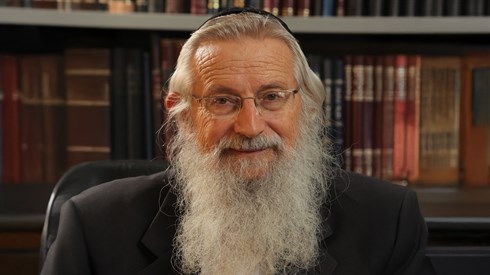





Rabbis in Midrash























Lessons
fast navigation










Various Events FOR WHOM NOT TO VOTE
Rav Zvi Yehuda Kook stressed that Israeli politics is G-dly, so I have no problem answering this common question on a Torani blog. Also, Free-Will is a G-d-given right and obligation, to "destine one's fate" (R. Soloveichik, Kol Dodi Dofek, 67), so I obviously don't tell others how to vote. But once not a few (especially young) have already asked, a couple of personal words from experience and thoughts from chazal & Rav Kook which may be of help to others, mainly for whom NOT to vote.

P'ninat Mishpat Fallout from Failure to Install Elevator – part II
based on ruling 85007 of the Eretz Hemdah-Gazit Rabbinical Courts








