Yeshiva
Beit Midrash
- Jewish Laws and Thoughts
- Pathways in Personality Development
- Humility, Holiness and Fearing Hashem
- Jewish Laws and Thoughts
- Personality Development
- Anava - Humility

"The Holy One blessed be He said to Israel: 'I desire you, for even as I bestow you with greatness, you humble yourselves before me. I bestowed greatness upon Abraham, and he said, "I am but earth and dust" (Genesis 18:27). I bestowed greatness upon Moses and Aaron, and they said, "And what are we?" (Exodus 16:7) I bestowed greatness upon David and he said, "I am not a man - I am worm" (Psalms 22:7).
'However, this is not the case with idolaters. I bestowed greatness upon Nimrod, and he said, "Let us build a city" (Genesis 11:4).' Nimrod reigned as king in the generation of the Tower of Babel, and his name describes him well ("nimrod" in Hebrew indicates rebellion), for he rallied the entire world to rebel against the kingdom of Holy One blessed be He. 'I bestowed greatness upon Pharaoh, and he said, "Who is G-d that I should heed his command?" (Exodus 5:2).'
The Jewish people, however, are not like the idolaters. They humble themselves before the Holy One blessed be He, and therefore He desires them. Abraham submitted himself entirely to the Holy One blessed be He, saying "I am but earth and dust." Moses and Aaron humble themselves even more, saying "And what are we?"
Earth and dust constitute a certain level of existence, albeit the lowest of the low. Moses and Aaron say "And what are we?" i.e., we are not not even earth and dust - complete self-nullification. True, Abraham was aware of his own outstanding qualities, but rather than attribute them to himself he attributed them to the Holy One blessed be He. The Holy One blessed be He graced Abraham with outstanding qualities, but these qualities were not his, for they ultimately belonged to the Almighty Himself. Were it not for God's generous gift, Abraham would have been as earth and dust.
Can a wise person take pride in his wisdom? Is the wisdom his own? If he is wise by nature, his wisdom is a divine gift. He did not create the wisdom he possesses: He received it from God. Can a rich person take pride in his riches? He is like a bank employee who holds the keys to the bank's safe. The money does not belong to him, he is just the guard!
But why shouldn't a person take pride in his God-given talents? After all, now that God has given them to him, they are his. Answer: Because these talents have been given to him not for his own personal purposes, but in order to serve God. It is not fitting, therefore, that he attribute them to himself.
But shouldn't a person be able to take pride in the fact that he has been graced with a greater capacity for serving God than others? Answer: If a person uses God-given talents such as wisdom, wealth, and courage in the service of God, he is indeed justified in being proud. This can be learned from the words of Jeremiah, "Thus says the Lord, Let not the wise man glory in his wisdom, nor let the mighty man glory in his might, let not the rich man glory in his riches; But let him who glories glory in this, that he understands and knows me, that I am the Lord who exercises loving kindness, justice, and righteousness, in the earth; for in these things I delight, says the Lord." (Jeremiah 9:22-23).
Taking pride in the service of God is not conceit, it is joy. It is joy in God, and it is thus praiseworthy. Conceit in the service of God is an impossibility, for while a person serves God he surrenders himself to God. He knows his place and understands that his entire worth stems from his attachment to God. He becomes filled with God's greatness.
Complete submission to God does not cause a person to feel worthless. Rather, it causes a sense of joy at being attached to God's greatness. Jews are characterized by humility. They are aware of their unique qualities but they are not conceited. They are humble and content and take pride in their God.
-----
Some biblical verses in the above article were taken from, or based upon, Davka's Soncino Judaic Classics Library (CD-Rom).
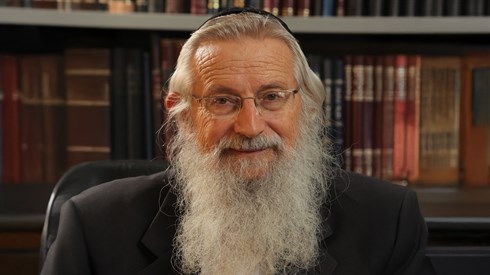




Rabbis in Midrash























Lessons
fast navigation










Various Events FOR WHOM NOT TO VOTE
Rav Zvi Yehuda Kook stressed that Israeli politics is G-dly, so I have no problem answering this common question on a Torani blog. Also, Free-Will is a G-d-given right and obligation, to "destine one's fate" (R. Soloveichik, Kol Dodi Dofek, 67), so I obviously don't tell others how to vote. But once not a few (especially young) have already asked, a couple of personal words from experience and thoughts from chazal & Rav Kook which may be of help to others, mainly for whom NOT to vote.

P'ninat Mishpat Fallout from Failure to Install Elevator – part II
based on ruling 85007 of the Eretz Hemdah-Gazit Rabbinical Courts









