YeshivaThe torah world Gateway
Beit Midrash
- Shabbat and Holidays
- Jewish Holidays
- Jerusalem Day

Even today, Yerushalayim is already our national capitol (whether one wants to demonstrate against or for the government), the Torah center (teaming with yeshivot, batei din and halachic authorities), and universal focus (which interests most to all religions and nations).
Rav Kook writes (Orot Yisral 8, 5) that if one claims that he loves all human beings the same, without having a particular love for his immediate family or nation, that's a sign that he doesn't know what real love is, and his HUMANIST claims are just a bluff. Love of family/nation helps define and understand what love is, enabling us to eventually widen that love to other broader fields, and also limits universalism from becoming just theoretical or extreme.
Similarly, Rav Kook (ibid 4, 5) writes that one who thinks that love of our nation brings one to dislike other nations, obviously doesn't know what Ahavat YISRAEL is. For as opposed to most other patriotism, love of Israel doesn't put down others, but rather brings us to want to better the lot of the gentiles of the world, "and through you will come blessing to all the families of the world" (Breishit 12, 3).
Similarly, Rav Kook writes (ibid 7, 6) that anyone who thinks they can live a full life of Torah outside of the Land and State of Israel (i.e. religion without nationalism), he doesn't know what Torah is about. Just as one who thinks Judaism is just between man and G-d (religion), ignoring man & his fellow man (humanism), is missing the boat.
In short, the national-religious-universal are all necessary, to help complete each other. In a nation of millions, inevitably there are going to be some more national oriented, as well as others more universal oriented or religiously oriented (although all of the 3 are obviously religious, Rav Kook in this case is referring to religion as it was expressed in the galut: Shabbat, Kashrut etc.). Only when all are working together can we achieve the proper balance and reveal the unity of mankind's 3 ideologies.
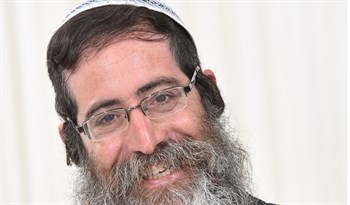
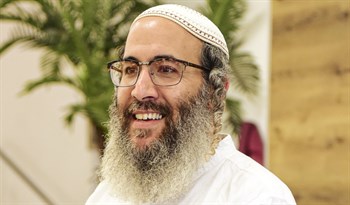
Rabbi Ari Shvat
Lectures at various yeshivot, michlalot and midrashot. Has published many books & Torani articles and is in charge of Rav Kook’s archives.
Additional Lessons Answering Accusations of Israeli-Occupation
& Why the Moral Mitzvot are Geared Only to Jews- Not Gentiles?
Ein Aya Practical Tricks How Not to Accept Gossip by Giving the Benefit of the Doubt
Ayn Aya, Shabbat v, 65


Rabbis in Midrash










Lessons
fast navigation









Israel and the Nations A Few Minutes & Many Innovative Ideas on Antisemitism & What to do About It
As we approach the High Holidays, this short lecture (18 minutes) deals with the unfortunate situation of how Israel and the Jewish People stand against antisemitism, analyzing its cause according to Rav Kook, and how to deal with the issue pragmatically & via our prayers.
Ha'azinu PURSUIT is PERFECTION
p. Ha'azinu, Shabbat Shuva
Rav Kook deals with the question of the seemingly hopeless nature of Tshuva. For G-d Himself knows that He created us with free will, which inevitably means we will sometimes make mistakes and choose wrong. This can easily be frustrating, freezing us into inaction and ye'ush (loss of hope). If one sins even once, does he chalila have no choice but suicide?! Moreover, our Godly conscience demands justice, righteousness and perfection, but we all know this is impossible, so what's the solution? Rav Kook's innovative thinking, strongly based on chazal (our sages), offers an inciteful and important aspect to this topic, especially this time of year!

Sukkot Bug-Free Sukkah: Essential Halachic and Practical Schach Guide
How to inspect, clean, and store bamboo mats and palm branches to protect your mitzvah and holiday meals.