Yeshiva
Beit Midrash
- Torah Portion and Tanach
- Shmot
- Ki Tisa

The commentators to Torah over the centuries have long debated the issue of the absence of Moshe and its connection to the sin of the Golden Calf. Many saw it as a sign of immaturity on the part of the people, in thinking that Moshe was their security blanket and that they could not serve God without his help and intervention. Others interpreted Moshe’s absence as a separation trauma in which Israel believed that Moshe, after being in Heaven once already, so to speak, could not readjust to earthly existence and would perhaps never return.
This would have signaled to the people that Torah and God’s commandments were heavenly, other-world issues that could have no daily relevance to their mortal existence upon earth. This is an idea that the Torah itself has to constantly counteract – that the Torah is not in Heaven and it is not for Heaven. It is for humans and intended to direct us in our earthly existence. The rabbis taught us in the Talmud that the Torah was not given to celestial angels. It was given to fragile, vulnerable, sinful human beings.
Moshe is not blamed for his absence. After all, he followed God’s commandment to remain on the summit of Mount Sinai after the granting of the Torah to Israel. He certainly cannot be faulted for obeying the commands of the Lord. Yet his absence seems to be a contributing factor in the grievous sin of the Golden Calf.
I think that Moshe’s absence, which after all was occasioned by a command from God, was not really the main problem that troubled the Jewish people. Rather, it was the choice of Aharon and Chur to replace him that proved troubling, as events later proved. Chur was too strong a person and, in his confrontation with the people, was killed. Aharon was too accommodating and compassionate a person and in his goodness and identification with the people and their demands he contributed to the sin of the Golden Calf.
Moshe was the perfect blend of strength and compassion. The rabbis criticized King Saul for being too strong on one occasion and too weak and compromising in another situation. A leader must encompass within one’s personality both strength and compassion, firmness and the ability to compromise. The greatness of a leader is determined by the ability to be firm when necessary and accommodating when that occasion arises.
Moshe was and is the prime example of such leadership qualities. He fights a civil war against the architects of the Golden Calf and at the same time pleads the case for forgiveness of the Jewish people from God. It is the absence of such a perfectly balanced personality, which can destroy the leader of a people.
Shabat shalom
Rabbi Berel Wein
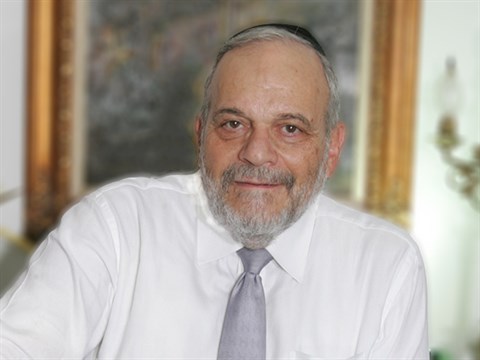


Rabbis in Midrash























Lessons
fast navigation











Various Events FOR WHOM NOT TO VOTE
Rav Zvi Yehuda Kook stressed that Israeli politics is G-dly, so I have no problem answering this common question on a Torani blog. Also, Free-Will is a G-d-given right and obligation, to "destine one's fate" (R. Soloveichik, Kol Dodi Dofek, 67), so I obviously don't tell others how to vote. But once not a few (especially young) have already asked, a couple of personal words from experience and thoughts from chazal & Rav Kook which may be of help to others, mainly for whom NOT to vote.

P'ninat Mishpat Fallout from Failure to Install Elevator – part II
based on ruling 85007 of the Eretz Hemdah-Gazit Rabbinical Courts











