Yeshiva
Beit Midrash
- Jewish Laws and Thoughts
- Personality Development
- Pathways in Personality Development

The Torah study is dedicatedin the memory of
Yaakov Ben Behora
One who loves God in such a manner can be likened to one who very strongly loves the wife of his youth, so much so that he finds joy and pleasure in merely speaking of her, or one who greatly loves his son. As Scripture states (Jeremiah 31:19), "For when I speak of him I will strongly remember him."
There is no question that one who truly loves his Creator will not leave off serving Him for any reason whatsoever. He will need no motivation or inducement to serve Him. His heart will elevate and motivate him to this end.
Pathways in Personality Development (52)
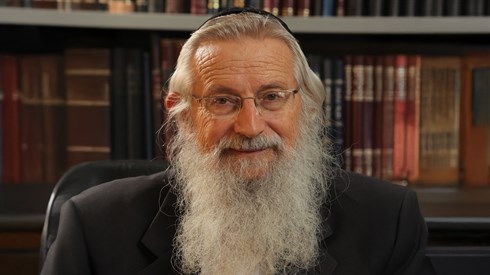
Rabbi Zalman Baruch Melamed
36 - 35. Fear of God's Exalted Nature
37 - 37. Piety and the Love of God
38 - 38. Love and Devotion to God
Load More
Like one who is in the desert and longs for water, so would King David thirst for God, His Torah and His commandments, as it is written (ibid. 119:47), "I will take delight in Your commandments, which I love," and (ibid. 24), "Your commandments, also, are my delight . . . " Even when lying on his bed he would cling to God (Psalms 63:7): "In truth, I will remember You upon my couch; in the night watches I will think of You."
The true test of this love, of how deep and strong it is, comes in times of difficulty, times of distress and misfortune. Regarding this the sages say, " 'And you should love the Lord, Your God with all your heart and with all your soul' (Deuteronomy 6:5) - even if He takes your soul, 'and with all your might'- with all of your possessions."
One who truly loves the Almighty knows how to accept hardships lovingly, with an understanding that everything which God does is for the best, even the hardships. This may be likened to a surgeon who cuts an infected limb in order that the rest of the body become healthy and not perish. And though this act is seemingly cruel, it is in fact an act of mercy. Not only does the sick person not become angered by the physician who pains him, he actually thanks him, and blesses him, and loves him all the more for having healed him.
This is the way a person must relate to all of the hardships which befall him in life. He must understand that they are for his own good, and they themselves constitute a reason for loving the Almighty even more.
Someone on an even higher spiritual level needs no explanation as to why such hardship come, for he does not think of himself at all, and he needs no explanation regarding what befalls him or why. He is occupied solely with honoring God. His one desire is to bring pleasure to God and to magnify His sacred name.
When such a person encounters obstructions in his service of God and must struggle in order to overcome them, he becomes filled with even more energy and joy to demonstrate the potency of his love, like a choice officer who always seeks out the greatest challenge in order to reach his full military potential. In the same manner, those who love God with their entire heart want to give expression to their deep love by overcoming great trials.
---
Some of the translated material in the above article was taken from, or based upon, Feldheim's "The Path of the Just."

Harav Avraham Yitzchak Hacohen Kook What Makes Rav Kook Into Such a "Game-Changer"?
An Overview of His Personality & Writings in Honor of His Yahrtzeit





Rabbis in Midrash























Lessons
fast navigation






Hosha'ana Rabba FLYDUBAI & HOSHANA RABBA- ANI VAHU HOSHIA NA- I & HIM SAVE US
"Ani vaHu Hoshia Na", "I and Him, Save Us". We don't just pray to Him, but we also pray to and for ourselves that we should emulate and educate our children to have that instinctive altruism with which He created the world. President Trump seemed amused about Yaniv Hayon, our PLUMBER who confidently worked with G-d like Superman (he learned from a pilot on a TV show!) to save 174 lives on the Dubai hijacking, but we in Israel are totally accustomed already 78 years to our plumbers, teachers, garbage-men, rabbis, farmers & doctors being Hashem's shlichim! This is what Zionism is about.
Moreshet Shaul Hashem Is your Shadow – part I
Based on Siach Shaul, Pirkei Machshava V’Hadracha p. 420 – an address from 1941











