Yeshiva
Beit Midrash
- Jewish Laws and Thoughts
- Personality Development
- Pathways in Personality Development

The Torah study is dedicatedin the memory of
Rachel Bat Asher
Let's consider some of the words of the sages regarding lovingkindness:
R. Simlai learned, "The Torah begins and ends with lovingkindness. It begins with lovingkindness, as it is written, 'For Adam and for his wife the Lord God made coats of skins, and clothed them' (Genesis 3:21), and it ends with lovingkindness, 'And he buried him in a valley in the land of Moab' " (Deuteronomy 34:6). The Almighty occupied himself with the burial of Moses (Sotah 14a).
Pathways in Personality Development (52)
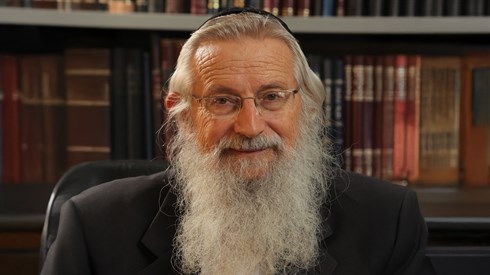
Rabbi Zalman Baruch Melamed
33 - 33. More on the Trait of Piety
34 - 34. Lovingkindness
35 - 36. The Adornment of Religious Performance
Load More
And just what is lovingkindness? Lovingkindness means bestowing goodness upon others with one's own body. "Lovingkindness is greater than charity in three ways: Charity is performed with one's wealth, and lovingkindness with one's body; charity is given to the poor, and lovingkindness to rich and poor alike; charity is given only to the living, and lovingkindness to the living and the dead alike" (Yevamot 79a).
R' Eleazar said, "Lovingkindness is greater than charity, as it says (Hosea 10:12), 'Sow for yourselves with charity and reap with lovingkindness.' When a person sows it is not certain that he will also eat. When a person reaps it is certain that he will also eat."
The sages also teach (Shabbath 1516): " 'And He will give you mercy and He will have mercy upon you' (Deuteronomy 13:18) - Heaven is merciful to all who have mercy upon their fellow creatures." This is self-evident, for since the Holy One Blessed be He pays measure for measure, one who is merciful towards his fellow creatures and treats them with lovingkindness is deserving of mercy and absolution of his sins in lovingkindness. Our Sages of blessed memory thus say (Rosh Hashanah 17a), "Whose sins does He forgive? The sins of one who overlooks an injustice committed against him."
If a person is willing to forgive others for their sins, he too will be forgiven. And if a person is unwilling to forgo his claims or to act with lovingkindness, it follows that he, too, is to be treated only in accordance with strict justice. Who could abide it if the Holy One Blessed be He acted on the basis of justice alone? King David thus prayed (Psalms 143:2), "Do not enter into judgment with your servant, for no living creature will be found righteous before You."
One who engages in lovingkindness will receive lovingkindness, and he will receive it in proportion to the extent that he engages in it. David exulted in possessing this good trait to the extent that he sought the good even of those who hated him (ibid. 35:13), "When they were sick, I put on sackcloth; I tortured my soul with fasting," i.e., when my foes were sick, I would wear sackcloth and fast on their behalf.
According to the Ramchal these statements are sufficient to awaken the inner nature embedded in every Jew to perform lovingkindness, promote pleasantness, and avoid causing others any hardship.
Included in this category of piety is not causing pain to any creature - even animals - and showing mercy and pity towards them. As it is stated (Proverbs 12:10), "The righteous man knows the soul of his beast." There are those who hold (Shabbath 128b) that the Torah itself prohibits the causing of pain to animals, but in any event, it is at least a Rabbinical prohibition.
And so we have seen that lovingkindness is a matter of central importance to the pious.
---
Much of the above translation was taken from or based upon Feldheim's "The Path of the Just"




Rabbis in Midrash























Lessons
fast navigation










Hosha'ana Rabba FLYDUBAI & HOSHANA RABBA- ANI VAHU HOSHIA NA- I & HIM SAVE US
"Ani vaHu Hoshia Na", "I and Him, Save Us". We don't just pray to Him, but we also pray to and for ourselves that we should emulate and educate our children to have that instinctive altruism with which He created the world. President Trump seemed amused about Yaniv Hayon, our PLUMBER who confidently worked with G-d like Superman (he learned from a pilot on a TV show!) to save 174 lives on the Dubai hijacking, but we in Israel are totally accustomed already 78 years to our plumbers, teachers, garbage-men, rabbis, farmers & doctors being Hashem's shlichim! This is what Zionism is about.












