Yeshiva
Beit Midrash
- Sections
- Peninei Halakha
- Shabbat and Holidays
- The Three Weeks
- The Laws of Tisha B'Av

The fast begins immediately at the end of Shabbat, making it is impossible to recite havdala over a cup of wine. Therefore, we postpone reciting havdala over a beverage until after Tisha Be-Av ends. Nevertheless, we recite havdala in the Amida of Ma’ariv – "Ata Ĥonantanu" – after which one may perform melakha (activities forbidden on Shabbat). Some say that it is proper for women to pray Ma’ariv on such a Motza’ei Shabbat, so that they can make havdala by reciting Ata Ĥonantanu. Women who do not follow this practice should recite "barukh ha-mavdil bein kodesh le-ĥol," after which they may do work (mb 556:2).
In addition, we recite the berakha over fire on such a Motza’ei Shabbat, because this berakha is not dependent on the cup of wine. Rather, it is an expression of thanks to God for creating fire, which was revealed to Adam on the first Motza’ei Shabbat. It is customary to recite the berakha after Ma’ariv, before the reading of Eikha, because people light candles at that time. Women also recite the berakha over fire. One who delays and fails to recite a berakha over fire at the beginning of the evening may recite the berakha all night long, since the entire night of Motza’ei Shabbat is considered the proper time for this berakha.
At the end of the fast, before eating or drinking, one must recite havdala over a beverage, which includes two berakhot: Ha-gefen on the beverage and Ha-mavdil ("Who distinguishes"). No berakha is recited on fragrance or fire.
To elaborate, the Sages enacted that one may not do melakha on Motza’ei Shabbat, even after tzeit, before reciting some form of havdala, like Ata Ĥonantanu. Furthermore, one may not eat before reciting havdala over a beverage. Therefore, on a Motza’ei Shabbat that coincides with Tisha Be-Av, it is sufficient to make a verbal havdala, which allows one to do melakha. Then, when Tisha Be-Av ends, we recite havdala over a beverage before eating.
Therefore, a sick person who needs to eat on Tisha Be-Av must recite havdala over a beverage before eating. In such a case, it is proper to use ĥamar medina – a respectable local beverage, other than wine (preferably an alcoholic beverage, but any ubiquitous drink, like coffee, will do; see Peninei Halakha: Shabbat I:8:4). If one has no such beverage, he should recite havdala over grape juice, and if even that is unavailable, he should recite havdala – be-di’avad – on wine and drink a cheekful (around 40 ml.). If a minor who has reached the age of ĥinukh for reciting berakhot is present, it is best to let him drink the wine instead of the sick person. A minor who eats on Tisha Be-Av need not recite havdala before eating (Shemirat Shabbat Ke-hilkhatah 62:45).
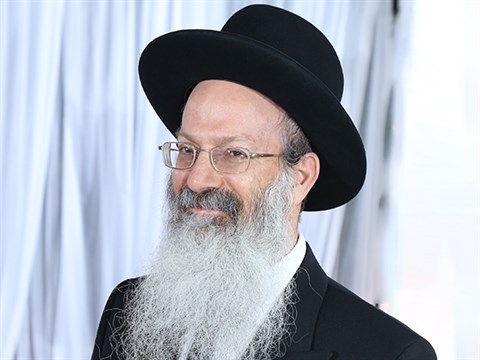
Rabbi Eliezer Melamed

Peninei Halakha 18. Torah Verses in the Prayers and in the Berakha of She-asa Li Kol Tzorki
Chapter 10: The Laws of Tisha Be-Av
The Laws of Purim 14. Can a Drunk or Tipsy Person Recite Berakhot and Pray Ma’ariv?
Chapter 16: The Mitzvot of Joy and Kindness






Rabbis in Midrash
































Various Events FOR WHOM NOT TO VOTE
Rav Zvi Yehuda Kook stressed that Israeli politics is G-dly, so I have no problem answering this common question on a Torani blog. Also, Free-Will is a G-d-given right and obligation, to "destine one's fate" (R. Soloveichik, Kol Dodi Dofek, 67), so I obviously don't tell others how to vote. But once not a few (especially young) have already asked, a couple of personal words from experience and thoughts from chazal & Rav Kook which may be of help to others, mainly for whom NOT to vote.

P'ninat Mishpat Fallout from Failure to Install Elevator – part II
based on ruling 85007 of the Eretz Hemdah-Gazit Rabbinical Courts









