Yeshiva
Beit Midrash
- Shabbat and Holidays
- Yom Haatzmaut
- Additional Lessons

It is told that the first Chief Rabbi of the State of Israel, HaRav Yitzchak Isaak HaLevy Herzog, of saintly blessed memory, displayed amazing faith during World War II. In the summer of 1942, Nazi German armies had made their way to Egypt and were poised to conquer the Holy Land as well. But Rabbi Herzog said, "There is nothing to fear! We know that there will never be a third destruction!"
Similarly, Rav Hershel Schachter (Rosh Yeshiva and Rosh Kollel in Yeshiva University) writes in his work B'ikvei HaTzon that during Israel's War of Independence, Rav Y. Z. Soloveitchik thought to leave Jerusalem and move to Switzerland. Rav Herzog came to him and attempted to convince him that he should not leave and not be afraid, because of the accepted tradition that there would be no third destruction. Rav Soloveitchik responded that he, too, had an accepted tradition from his father, that when one is shot at, he must run away. Apparently, what he meant was that though he agreed there would not be a third destruction, this affects only the nation as a whole – but no specific individual has a guarantee that he would not be killed, and therefore, he wished to leave.
What is the source for this tradition that Rav Herzog stated? It is found in the words of Nachmanides in his work "The Book of Redemption," where he makes clear that there will be only two destructions and that the deliverance following the second one will be final. As follows:
There are two Torah passages of grave punishments (tokhecha) that the Jewish nation can expect when and if they sin. We can see from the verses that they refer, respectively, to the destructions of the First and Second Temples and the following exiles. In the end of Vayikra (26,15) we read that the Jews violated G-d's covenant, meaning that they worshiped idols, and the punishments there are war and exile for a specified number of years (verse 34). Afterwards the Torah promises a relatively small consolation, wherein G-d will remember His covenant with the Patriarchs; no mention is made of a return to the Land. This all applies to the periods before and after the First Destruction, after which only the Tribes of Judah and Benjamin returned.
Later, in Parashat Ki Tavo in D'varim, we see that the reference is to the Second Destruction and the redemption that followed it. No mention is made of how long this exile would last – corresponding to our centuries-long Exile, with no specific end-date – nor was it specified that the sins included idol-worship. The Torah simply states: "If you do not hearken to the voice of Hashem your G-d to make sure to keep His laws and statutes…" (28,15) – for in truth they did not worship idols and only committed certain sins. The stated punishment is that we would be scattered throughout the nations (verse 64), as in fact occurred following the Second Destruction, and the promised redemption includes a full return of the nation to its Land (30,3-5). Furthermore, the Torah promises that the enemies who exiled us will be destroyed (verse 7); two enemies, alluding to Esav and Yishmael, are mentioned here.
In short, the Torah refers to two destructions, and the redemption following the second one will complete and final, with no further destruction of the Jewish Nation to follow it.
And how do we know that we are currently in the Final Redemption? The Talmud states clearly (Sanhedrin 98a):
"There can be no clearer sign of the Redemption than the blossoming of the Land of Israel…
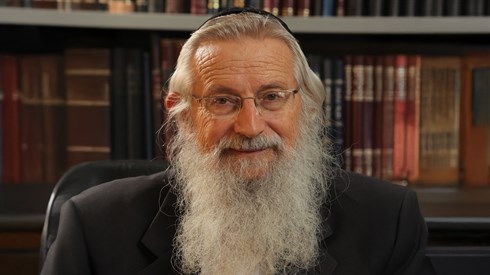








Rabbis in Midrash























Lessons
fast navigation










Hosha'ana Rabba FLYDUBAI & HOSHANA RABBA- ANI VAHU HOSHIA NA- I & HIM SAVE US
"Ani vaHu Hoshia Na", "I and Him, Save Us". We don't just pray to Him, but we also pray to and for ourselves that we should emulate and educate our children to have that instinctive altruism with which He created the world. President Trump seemed amused about Yaniv Hayon, our PLUMBER who confidently worked with G-d like Superman (he learned from a pilot on a TV show!) to save 174 lives on the Dubai hijacking, but we in Israel are totally accustomed already 78 years to our plumbers, teachers, garbage-men, rabbis, farmers & doctors being Hashem's shlichim! This is what Zionism is about.











