Yeshiva
Beit Midrash
- Torah Portion and Tanach
- Vayikra
- Shmini
- Jewish Laws and Thoughts
- Serving Hashem, Mitzvot and Repentance

In fact, in its summary at the end of the parsha, the Torah explains to us that the main purpose of the kashrut laws is to enable us to identify and thus distinguish between the pure and the impure, between what is proper for human consumption and what is not.
In a deeper sense, we can see that the very essence of Jewish belief and lifestyle is the ability to distinguish and separate the holy from the mundane, right from wrong, constant and continuing values from passing fads, the eternal from the fleeting temporary.
Judaism is not a "you’re okay, I’m okay" religion of relativism and constantly changing standards of behavior and belief. It not only stands for something - it defines clearly, in minute detail, what it is that it stands for. Its commandments are meant to shape a person’s drive towards holiness and immortality.
It rejects the impure and demands righteousness of behavior and the avoidance of impurity in our thoughts, food, behavior and speech. All of this is in line with the charge and challenge issued to us at Sinai that we are to be a kingdom of priests and a holy nation.
The Torah has never compromised on that demand. The laws of kashrut described in this week’s parsha are part of that Godly demand for our behavior to be characterized as being holy in nature.
The late great Rabbi Meir Shapiro of pre-World War II Lublin visited the United States in the 1920’s on a fund-raising mission regarding the construction of his yeshiva in Lublin.
He was feted and honored throughout the American Jewish community during his visit. Even his fund raising efforts met with more than moderate success.
Nevertheless, upon returning to Poland he communicated this pithy comment on American Jewry to his peers: "American Jewry has learned to make Kiddush; it has not yet learned how to make havdalah!" Havdalah - the ability to identify what is harmful to Jewish life and holiness and to separate one’s self from it - is infinitely harder to deal with than is the convivial Kiddush.
Without havdalah all succeeding generations are doomed to assimilation and loss of Jewish identity and values. Without having degrees of real separation built into Jewish life we are destined for spiritual extinction.
All of Jewish history has borne proof to this simple assertion. Ignoring the Torah commandments and aping the negative attributes of the cultures of the non-Jewish world lead to spiritual downfall and dire consequences for both the individual and the nation as a whole.
In a general world society that exhibits very little evidence of a moral compass, the task of being a holy and pure individual and people is greatly compounded.
Only by acquiring the discerning skill of separation and distinguishing correctly in all of life’s choices that we face can we hope to achieve that lofty goal of being truly a kingdom of priests and a holy nation.
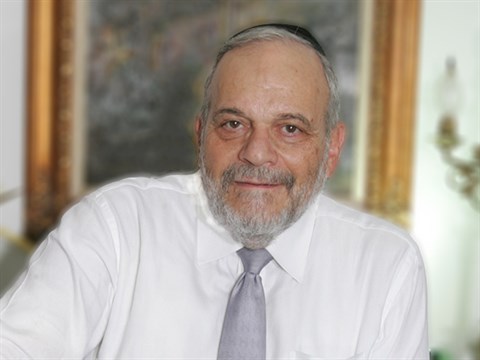





Rabbis in Midrash























Lessons
fast navigation











Various Events FOR WHOM NOT TO VOTE
Rav Zvi Yehuda Kook stressed that Israeli politics is G-dly, so I have no problem answering this common question on a Torani blog. Also, Free-Will is a G-d-given right and obligation, to "destine one's fate" (R. Soloveichik, Kol Dodi Dofek, 67), so I obviously don't tell others how to vote. But once not a few (especially young) have already asked, a couple of personal words from experience and thoughts from chazal & Rav Kook which may be of help to others, mainly for whom NOT to vote.

P'ninat Mishpat Fallout from Failure to Install Elevator – part II
based on ruling 85007 of the Eretz Hemdah-Gazit Rabbinical Courts








