Yeshiva
Beit Midrash
- Jewish Laws and Thoughts
- Personality Development
- Pathways in Personality Development

The Torah study is dedicatedto the full recovery of
Dvorah bat Miriam
After cleaning oneself of theft and sexual immorality, both of which we have already discussed, there is another task which demands quite a bit of effort if one desires to free himself of it completely - the distancing of oneself from forbidden foods. For, on the one hand, man is tempted by his heart to partake in forbidden foods because of their deliciousness. In fact, the Sages say, "Let not an individual say 'I refuse to eat pork because it is not tasty.' Rather, 'Even though it is possible for me to eat it, I refuse to, for the Torah has forbidden it to me.'" On the other hand, there may be financial considerations which cause a person to transgress the prohibition against forbidden foods, for example, their being less expensive. In addition, sometimes the inconvenience involved in koshering pots and pans which have become Traif , or unkosher, causes one to transgress.
It is important to note that the transgression against forbidden food consumption is of a more severe nature than other transgressions. Because these foods actually enter one's body and are absorbed therein, not only does the consumer of such foods sin, but he impairs his body and soul, which in turn effects his personality. The Rabbis teach, regarding, the passage, "'Do not debase yourselves with them, becoming unclean with them,' If you debase yourselves with them, in the end your souls will become contaminated." For the forbidden foods infuse impurity into the body and soul of man until finally God's holiness abandons him. This is in keeping with the Jewish concept that "sin causes man's heart to become stupid," for true understanding abandons him, as does the spirit of knowledge with which God endows his faithful ones, "for, God grants wisdom."
Pathways in Personality Development (52)
Rabbi Zalman Baruch Melamed
14 - 14. Caution Regarding Sexual Immorality
15 - 15. Forbidden Foods
16 - 16. Deceit and Humiliation
Load More
When a person encounters a situation which involves even a slight danger to his health he distances himself from it and won't even consider taking chances. And this, despite the fact that the danger involved is only possible and not one hundred percent certain. So too, one must refrain from partaking in forbidden foods for this is actual poison to the body and the soul.
One would be correct in claiming that keeping Kosher is one of the most widespread religious observances in Israel today. Perhaps the Jew's healthy inner sense discerns how proper and befitting it is to observe these laws. It is important to emphasize that the prohibition against forbidden foods is not due to the fact that they seen as dangerous by medical science. Rather, they are dangerous because they are forbidden by the Torah. They are dangerous despite the fact that the medical establishment is unaware of their danger, for their danger does not exist in the revealed physical realm but in the spiritual realm. The spiritual, though, no doubt affects the physical.
This is one of the Torah commandments which, when not observed, creates a rift in the Jewish people, for it prevents Jews from eating with one another. Yet when it is observed, it unites us and distinguishes us as a unique people - God's people. "It is a people who shall dwell alone, and shall not be reckoned among the nations."
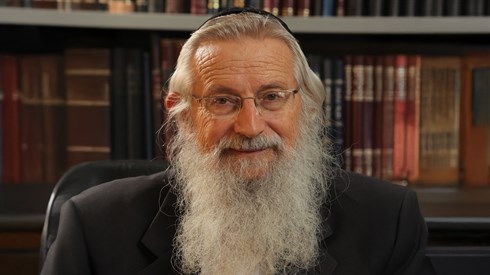






Rabbis in Midrash























Lessons
fast navigation










Various Events FOR WHOM NOT TO VOTE
Rav Zvi Yehuda Kook stressed that Israeli politics is G-dly, so I have no problem answering this common question on a Torani blog. Also, Free-Will is a G-d-given right and obligation, to "destine one's fate" (R. Soloveichik, Kol Dodi Dofek, 67), so I obviously don't tell others how to vote. But once not a few (especially young) have already asked, a couple of personal words from experience and thoughts from chazal & Rav Kook which may be of help to others, mainly for whom NOT to vote.

P'ninat Mishpat Fallout from Failure to Install Elevator – part II
based on ruling 85007 of the Eretz Hemdah-Gazit Rabbinical Courts









