Yeshiva
Beit Midrash
- Jewish Laws and Thoughts
- Pathways in Personality Development
- Humility, Holiness and Fearing Hashem
- Jewish Laws and Thoughts
- Serving Hashem, Mitzvot and Repentance

The lowest level of such fear is fear of punishment. A person on this level fears transgressing the word of God because of the severe punishment that such behavior entails. In other words, he recoils from sin not because it is wrong, but because it is not to his advantage. He loves himself and this prevents him from doing things that will bring him harm. Such fear, says Ramchal (Rabbi Moshe Chaim Luzzato), befits only simple and intellectually unrefined people. This is base, unsophisticated fear.
And just what sort of fear is most desirable? Fear of God's loftiness. Man distances himself from sin due to God's majesty, for how can man, God's own handiwork, even consider acting in opposition to the will of his Creator. Such fear, fear of God's loftiness, befits wise and enlightened individuals.
It is true that every sin brings real and actual punishment, and that every virtuous deed brings real and actual reward. The punishment a person incurs for sinning makes transgression most disadvantageous; the reward reaped for virtuous behavior makes such behavior most rewarding.
Hence, the sages teach, "Reckon the loss that may be sustained through the fulfillment of a precept against the reward accruing therefrom, and the gain that may be obtained through the committing of a transgression against the loss entailed thereby" (Avot 2:1). The effort and difficulty involved in performing virtuous deeds is minimal, and the reward is immense. By contrast, the gain gotten from transgressing is minimal in light of the punishment incurred.
However, wise and enlightened individuals are above such calculations. They refrain from sinning not because of the punishment entailed, but due to the fear of God's loftiness, their fear of God's glory. They distance themselves from doing evil because it is evil.
This is what makes the fear of God's glory so laudable. A person knows perfectly well that "there is judgment and there is a Judge" (Bereshit Rabba 26:6), that he will be held accountable for each and every action, that there is "an eye that sees, an ear that hears, and all thy deeds are written in a book" (Avot 2:1), and nonetheless it is not fear of punishment that keeps him from trespassing but his detest for the sin itself, because it simply is not right to go against God. Even if no punishment were meted out for transgressions he would not sin.
Fear of God's loftiness is the noblest of character traits, even more than the love of God. It is true that the sages say, "Greater is he who acts from love than he who acts from fear, because with the latter [the merit] remains effective for a thousand generations but with the former it remains effective for two thousand generations . . . " (Sotah 31a). This, however, refers to fear that does not stem from love, but the most supreme fear is that which stems from love for the Almighty.
This was precisely the sort of fear demonstrated by Abraham, as it is written, "Now I know that you fear the Lord" (Genesis 22:12), and elsewhere God refers to Abraham as "the one who loves Me" (Isaiah 41:8). His fear of God stemmed from love and was thus even deeper than ordinary love. Ordinary love causes a person to attach himself to God in the most wonderful way, but one who fears God with a fear that stems from love surrenders himself so completely that he is not merely attached to God, he is one with God.
-----
Translated biblical verses and/or Talmudic sources in the above article may have been taken from, or based upon, Davka's Soncino Judaic Classics Library (CD-Rom).
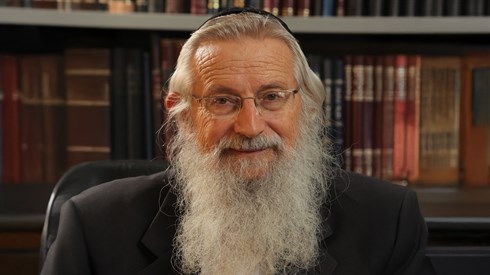






Rabbis in Midrash























Lessons
fast navigation










Various Events FOR WHOM NOT TO VOTE
Rav Zvi Yehuda Kook stressed that Israeli politics is G-dly, so I have no problem answering this common question on a Torani blog. Also, Free-Will is a G-d-given right and obligation, to "destine one's fate" (R. Soloveichik, Kol Dodi Dofek, 67), so I obviously don't tell others how to vote. But once not a few (especially young) have already asked, a couple of personal words from experience and thoughts from chazal & Rav Kook which may be of help to others, mainly for whom NOT to vote.

P'ninat Mishpat Fallout from Failure to Install Elevator – part II
based on ruling 85007 of the Eretz Hemdah-Gazit Rabbinical Courts








