Yeshiva
Beit Midrash
- Torah Portion and Tanach
- Shmot
- Beshalach

Translated by Hillel Fendel
The Torah portion of this week, Beshalach, can be called the Portion of Faith. It is filled with tests and trials that the Children of Israel must undergo on their way out of Egypt, and each one increases and strengthens its faith – emuna - in G-d in a different way. Let us list them and possibly see how they each teach a different lesson in faith:
1. The test of walking and following the Pillar of Cloud
2. The test of having the Egyptians pursue them
3. The test of entering the Red Sea
4. The test of lack of water at Mei Marah
5. The test of lack of food in the Zin Wilderness
6. The test of eating fixed, daily portions of Manna
7. The test in Massah and Merivah
8. The test of the war with Amalek
Our Sages teach us how in each one of these not-simple trials, Bnei Yisrael met the challenge of maintaining and strengthening their faith and trust in Hashem.
One of the ways in which Am Yisrael was able to express their emuna was in the form of the Song of the Sea, Az Yashir. After they safely crossed the sea over dry land, their faith received a great boost – as is written: "Israel saw the great hand that G-d did in Egypt, and they feared G-d, and they believed in G-d and in Moshe His servant" – and their song simply burst forth. The ability to sing such praise to G-d is a strong expression of faith, because it radiates inner serenity from the absolute knowledge that Someone is running the world.
The Hassidic writings teach us that our emuna is revealed specifically at night: "... to say Your kindness in the morning, and Your faith in the nights" (Psalms 92,3). Precisely when it is dark and unclear, that is the time in which we need to enhance our emuna.
The act of planting, as well, is connected to faith. When we plant, we do not really know if we will merit to see the plants growing and if we will benefit from their fruits – and so when we plant, it is an act of faith. We believe and trust that G-d will cause nice growths to sprout from them.
The Talmud (Shabbat 31a) makes this point straight out. It cites a verse from Yeshayahu – "And the faith of your times shall be the strength of salvations, wisdom and knowledge" (33,6) – and says that the words refer to the Six Orders of the Mishna. For instance, the first word, "faith," parallels the First Order, that of Z'raim, which deals with agricultural mitzvot. The Tosafot commentary explains there, based on the Jerusalem Talmud, that one who plants "does so because he believes in the Eternal G-d." It is thus clear that the act of planting is linked with emuna.
Another Talmudic passage makes a similar point, from a different angle. The Gemara (Taanit 5a) says that during the time of the Prophet Yoel, there was a special planting during a period of great drought and famine. The prophet told them, "Go out and plant!" They answered him, "If we have a bit of grain, should we eat it and live, or plant it and die?" He answered, "Despite all, go out and plant!" A miracle then happened, and they found additional grain to eat; they planted for a few days, rain began to fall on the 5th of Nissan, and the grain sprouted to the extent that they were able to bring the Omer sacrifice on time, on the 16th of Nissan. That is, the grain that normally grows in six months, actually grew in 11 days.
We learn from this story that planting is a form of a test and trial: We take seeds, and instead of enjoying them, we bury them in the ground. This requires great belief and trust that rains will soon come and a field of grain will result.
This is the secret of emuna: We take action, even though we can't see what is going on behind the scenes, and we have faith that it will result in fruits. As is written: "Those who plant with tears, will harvest with joy" (Psalms 126,5).
It is likely, therefore, that the fundamental of faith is very connected to the upcoming holiday of Tu B'Shvat, the New Year of Trees. At this time of year, the fruits have not started yet to grow – but we have faith that this will happen. On some of the trees we can see only the very first buds, and we already believe that entire fruits will soon result.
This principle also holds true in the education of our children. The parents plant the seeds and raise their children, in the belief that they will be able to see and enjoy their sweet fruits. And the primary element of education is emuna – to believe that our job is to invest in their education, and believe and trust that the fruits will yet come.
And on the day that we see these fruits, we will be able to sing the Song of Faith.
In conclusion: May we merit to believe in G-d, and believe in the abilities He gave us, and in the abilities of our children. May we know how to "plant" within us and within our children much faith, and merit to sing the great song that the Messiah will sing when he arrives, speedily in our days.
In order to get articles like this delivered straight to your inbox every week, subscribe to the Israel National Torah newsletter here.
The Torah portion of this week, Beshalach, can be called the Portion of Faith. It is filled with tests and trials that the Children of Israel must undergo on their way out of Egypt, and each one increases and strengthens its faith – emuna - in G-d in a different way. Let us list them and possibly see how they each teach a different lesson in faith:
1. The test of walking and following the Pillar of Cloud
2. The test of having the Egyptians pursue them
3. The test of entering the Red Sea
4. The test of lack of water at Mei Marah
5. The test of lack of food in the Zin Wilderness
6. The test of eating fixed, daily portions of Manna
7. The test in Massah and Merivah
8. The test of the war with Amalek
Our Sages teach us how in each one of these not-simple trials, Bnei Yisrael met the challenge of maintaining and strengthening their faith and trust in Hashem.
One of the ways in which Am Yisrael was able to express their emuna was in the form of the Song of the Sea, Az Yashir. After they safely crossed the sea over dry land, their faith received a great boost – as is written: "Israel saw the great hand that G-d did in Egypt, and they feared G-d, and they believed in G-d and in Moshe His servant" – and their song simply burst forth. The ability to sing such praise to G-d is a strong expression of faith, because it radiates inner serenity from the absolute knowledge that Someone is running the world.
The Hassidic writings teach us that our emuna is revealed specifically at night: "... to say Your kindness in the morning, and Your faith in the nights" (Psalms 92,3). Precisely when it is dark and unclear, that is the time in which we need to enhance our emuna.
The act of planting, as well, is connected to faith. When we plant, we do not really know if we will merit to see the plants growing and if we will benefit from their fruits – and so when we plant, it is an act of faith. We believe and trust that G-d will cause nice growths to sprout from them.
The Talmud (Shabbat 31a) makes this point straight out. It cites a verse from Yeshayahu – "And the faith of your times shall be the strength of salvations, wisdom and knowledge" (33,6) – and says that the words refer to the Six Orders of the Mishna. For instance, the first word, "faith," parallels the First Order, that of Z'raim, which deals with agricultural mitzvot. The Tosafot commentary explains there, based on the Jerusalem Talmud, that one who plants "does so because he believes in the Eternal G-d." It is thus clear that the act of planting is linked with emuna.
Another Talmudic passage makes a similar point, from a different angle. The Gemara (Taanit 5a) says that during the time of the Prophet Yoel, there was a special planting during a period of great drought and famine. The prophet told them, "Go out and plant!" They answered him, "If we have a bit of grain, should we eat it and live, or plant it and die?" He answered, "Despite all, go out and plant!" A miracle then happened, and they found additional grain to eat; they planted for a few days, rain began to fall on the 5th of Nissan, and the grain sprouted to the extent that they were able to bring the Omer sacrifice on time, on the 16th of Nissan. That is, the grain that normally grows in six months, actually grew in 11 days.
We learn from this story that planting is a form of a test and trial: We take seeds, and instead of enjoying them, we bury them in the ground. This requires great belief and trust that rains will soon come and a field of grain will result.
This is the secret of emuna: We take action, even though we can't see what is going on behind the scenes, and we have faith that it will result in fruits. As is written: "Those who plant with tears, will harvest with joy" (Psalms 126,5).
It is likely, therefore, that the fundamental of faith is very connected to the upcoming holiday of Tu B'Shvat, the New Year of Trees. At this time of year, the fruits have not started yet to grow – but we have faith that this will happen. On some of the trees we can see only the very first buds, and we already believe that entire fruits will soon result.
This principle also holds true in the education of our children. The parents plant the seeds and raise their children, in the belief that they will be able to see and enjoy their sweet fruits. And the primary element of education is emuna – to believe that our job is to invest in their education, and believe and trust that the fruits will yet come.
And on the day that we see these fruits, we will be able to sing the Song of Faith.
In conclusion: May we merit to believe in G-d, and believe in the abilities He gave us, and in the abilities of our children. May we know how to "plant" within us and within our children much faith, and merit to sing the great song that the Messiah will sing when he arrives, speedily in our days.
In order to get articles like this delivered straight to your inbox every week, subscribe to the Israel National Torah newsletter here.

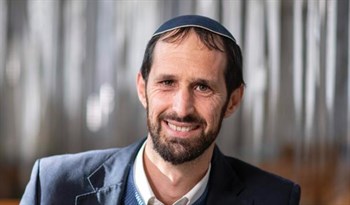







Rabbis in Midrash























Lessons
fast navigation










Hosha'ana Rabba FLYDUBAI & HOSHANA RABBA- ANI VAHU HOSHIA NA- I & HIM SAVE US
"Ani vaHu Hoshia Na", "I and Him, Save Us". We don't just pray to Him, but we also pray to and for ourselves that we should emulate and educate our children to have that instinctive altruism with which He created the world. President Trump seemed amused about Yaniv Hayon, our PLUMBER who confidently worked with G-d like Superman (he learned from a pilot on a TV show!) to save 174 lives on the Dubai hijacking, but we in Israel are totally accustomed already 78 years to our plumbers, teachers, garbage-men, rabbis, farmers & doctors being Hashem's shlichim! This is what Zionism is about.











