Yeshiva
Beit Midrash
- Torah Portion and Tanach
- Shmot
- Beshalach
- Shabbat and Holidays
- Shabbat
- The spiritual view

The Torah study is dedicatedin the memory of
Simha bat Hana
Let us start with the first question.The Ibn Ezra says that Hashem wanted to keep the events of that Shabbat a secret. The Ohr Hachayim explains further that Hashem wanted Bnei Yisrael to find out about Shabbat’s special status in regard to the man directly from Hashem. But why is that important?
The Torah tells of many miracles that took place over the years. Almost all of the miracles were short-lived, so that they were glitches in the course of nature, not changes in nature. The man was a rare exception, and to highlight this fact, the Torah stressed from the outset that the miracle of man would last for 40 years in the Israelite encampment. One could thus view the falling of the man as a mini-creation of sorts. This was a proper opportunity to have Bnei Yisrael experience on some level the place of Shabbat in creation. On the original Shabbat, the whole cosmos must have experienced some profound kedusha, when creation ceased, and its impact echoes on more subtly ever since. So too, Hashem put into the creation of the "natural phenomenon" of man that it would give expression to the uniqueness of the "rest" on Shabbat by the double portion followed by the absence of man.
Had Bnei Yisrael been taught the laws of Shabbat and man in advance, they might have seen the double portion on Friday as a technical provision to facilitate the halachic observance of Shabbat. If our thesis is correct, Hashem wanted the miracle within a miracle of double portions and no portions of man to serve as evidence that Shabbat is an integral part of creation, even later mini-creations. It thus also served as a reminder of the place of the original Shabbat of creation. This gives added meaning to Rashi on Bereishit 2:3, describing the original Shabbat, saying that Hashem sanctified Shabbat through the man. Rashi is not just mentioning a historical curiosity, but tells how a new nation, just receiving the mitzva of Shabbat, experienced Shabbat’s sanctity as the crown of creations, old and new.
May we be zocheh to experience Shabbat to the fullest extent we can.
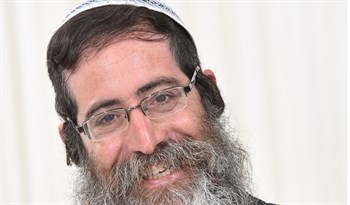






Rabbis in Midrash























Lessons
fast navigation










Hosha'ana Rabba FLYDUBAI & HOSHANA RABBA- ANI VAHU HOSHIA NA- I & HIM SAVE US
"Ani vaHu Hoshia Na", "I and Him, Save Us". We don't just pray to Him, but we also pray to and for ourselves that we should emulate and educate our children to have that instinctive altruism with which He created the world. President Trump seemed amused about Yaniv Hayon, our PLUMBER who confidently worked with G-d like Superman (he learned from a pilot on a TV show!) to save 174 lives on the Dubai hijacking, but we in Israel are totally accustomed already 78 years to our plumbers, teachers, garbage-men, rabbis, farmers & doctors being Hashem's shlichim! This is what Zionism is about.











