YeshivaThe torah world Gateway
Beit Midrash
- Jewish Laws and Thoughts
- Jewish Thought
- Foundations of Faith

The Torah study is dedicatedin the memory of
Amram son of Sultana
Here the Khazar king inquires, "Is not your faith in creation and human genealogy as presented in the Torah weakened somewhat by the fact that the people of India possess ancient traditions and practices which are supposed to date back a million years!"
The wise Rabbi responds, explaining that the traditions of the people of India in no way weaken the Jew's faith. How can the people of India have any serious traditions when, in fact, they lack a proper culture altogether? They are idolaters who place their faith in superstitious belief. They have no culture and have produced only a small number of books, which at any rate are incredulous. Only a genuine ignoramus could be convinced of the reliability of their claims.
Were Bedouins from the Sinai Desert - a people who possess no intellectual background - to approach us with the claim that they have ancient traditions which differ with ours regarding the creation of the world and the history of humankind, should we even feel the need to defend our tradition against their claims? Do the traditions of peoples who lack intellectual standing hold any genuine significance? This was the state of the people of India in the days of the Kuzari.
True, people who live more closely to nature develop unique senses that cannot be found among cultured people - they know how to sense when rain will fall, they are able to uncover footprints and therefore make excellent trackers, and they boast various other sharpened natural talents. They are even likely to possess certain spiritual capacities and unique decorum. However, all of this is far from being a reason to place faith in their traditions - the sort of traditions which are passed down from generation to generation by the light of a bonfire. They are no more than the fruit of healthy imagination. In short, such traditions are not worthy of serious consideration.
All sorts of interesting natural characteristics developed among the people of India, as did unique and even praiseworthy mannerisms. Nevertheless, they were not a learned or intellectual people. In this respect they were very undeveloped, and there is therefore little value to their tales about ancient traditions. This, though, is in no way true when it comes to the Jewish people, "a wise and intelligent nation." The Jews are "the People of the Book" who, throughout the generations, have occupied themselves with learning and Torah. The Jews' profuse literary output in the fields of both Oral and Written Torah serves as proof of the Jewish people's commendable spiritual level.
Foundations of Faith (51)
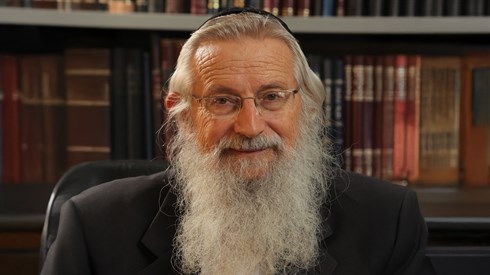
Rabbi Zalman Baruch Melamed
12 - 12. A History of the Divine
13 - 13. Faith Needs No Rational Proof
14 - 20. God's Incorporeality
Load More





Rabbis in Midrash























Lessons
fast navigation








Moreshet Shaul Hashem Is your Shadow – part I
Based on Siach Shaul, Pirkei Machshava V’Hadracha p. 420 – an address from 1941

P'ninat Mishpat A Non-Contractor in Changing Times – part I
(based on ruling 85128 of the Eretz Hemdah-Gazit Rabbinical Courts)
Moreshet Shaul Our King on Rosh Hashana, Our Father on Yom Kippur.
Based on Aroch Siach, p. 221 (Rav Shaul Yisraeli)
P'ninat Mishpat A Non-Contractor in Changing Times – part II
(based on ruling 85128 of the Eretz Hemdah-Gazit Rabbinical Courts)
Moreshet Shaul Hashem Is your Shadow – part II
Based on Siach Shaul, Pirkei Machshava V’Hadracha p. 420 – an address from 1941
Parashat Hashavua Happiness for the Right Reasons
[With painful longing, we share these divrei Torah from our co-Rosh Kollel for close to 40 years, Harav Moshe Ehrenreich zt”l.]