Yeshiva
Beit Midrash
- Torah Portion and Tanach
- Shmot
- Tetzave

The Torah study is dedicatedin honor of
Adina Chaya Ita daughter of Erika
The Torah portions dealing with the Tabernacle dispel the mistaken impression that the Torah instructs man to confine himself to an abstract spiritual world and that the entire goal of the Jew should be to occupy himself with the Torah and the commandments without entering into other exterior realms, without developing deep natural talents, like art, beauty, imagination, and aesthetics.
This, though, is not the case. To the contrary, the Torah tells us to deepen all of our natural facets, to develop all of our talents, not to relinquish even one capacity, but to adopt and perfect it. For only through all of the existing channels can a person serve God. "This is my God, and I will glorify Him." - "Adorn yourself before Him in Mitzvoth" (the Sages on Exodus 14:2).
Here, in the most holy of places, the location of the resting of the Divine Presence among Israel, in the Holy Temple's Holy of Holies, here is where the height of artistic talent must be employed in order to build the entire Temple and its vessels in all of their beauty and magnificence.
The Holy Temple is referred to as the "Splendor of the World." The Almighty is not satisfied with the general commandment to construct a beautiful Holy Temple, magnificent, and flawless, but gives a detailed plan of how to make each and every vessel, and how everything ought to appear together. The Holy Temple is supposed to possess lofty and Divine beauty. Everything in the Temple must be in accordance with what Moses was shown on Mount Sinai. "And see that you make according to the pattern which is being shown to you on the mountain" (Exodus 25:40); And you shall construct the Tabernacle in accordance with that which was shown to you on the mountain" (Ibid. 26:30).
From here one may conclude that when Moses ascended to the heights of Mount Sinai, the Almighty showed him the heavenly Holy Temple and commanded him to build a similar earthly Holy Temple. The beauty, perfection, splendor, and magnificence of the Holy Temple, then, stem from the greatest of heights.
"Yet," one might ask oneself, "Should not we be concerned that the emphasis upon superficial beauty will damage spiritual concepts and cause a person to take a shallow approach; instead of delving into the lofty significance of the Holy Temple in which the Divine Presence rests, one is liable to become caught up in superficial and external appearance; instead of discerning the face of the Divine in the Temple, one is liable to become caught up in the beautiful and impressive vessels.
Such questions arise only because we have become distanced from our land and from the days of the Holy Temple's glory, for when the Holy Temple stood and the Divine Presence rested therein, faith would fill the entire heart. The dwelling of the Divine Presence in the Temple was felt in all of the spiritual senses, and there was no conflict between a person's outer and inner senses, between the "lights" and the "vessels." Rather, there was perfect harmony between all of the spiritual facets, and it was impossible for it to be otherwise, for the greatness of the Divine Presence appeared in the complete magnificence of the vessels. Only after the Destruction, in the Exile, was a contradiction between the content and the vessels themselves born, and only then did a conflict between the external and the internal make itself felt. Such is the sick nature of exile. This is not the case, though, when the Holy Temple is standing and the nation is healthy.
This is what we are anxiously awaiting - the speedy reconstruction of the Temple, in which, and through which, all of the facets will unite in perfect harmony, such that the Divine Presence once again reveal itself in the House of God, the "Splendor of the World."
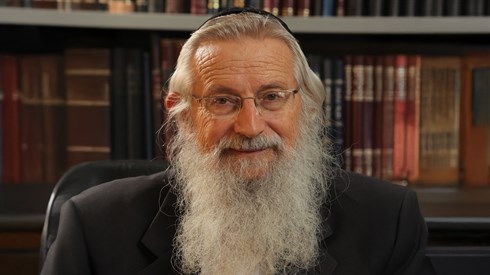









Rabbis in Midrash























Lessons
fast navigation










Hosha'ana Rabba FLYDUBAI & HOSHANA RABBA- ANI VAHU HOSHIA NA- I & HIM SAVE US
"Ani vaHu Hoshia Na", "I and Him, Save Us". We don't just pray to Him, but we also pray to and for ourselves that we should emulate and educate our children to have that instinctive altruism with which He created the world. President Trump seemed amused about Yaniv Hayon, our PLUMBER who confidently worked with G-d like Superman (he learned from a pilot on a TV show!) to save 174 lives on the Dubai hijacking, but we in Israel are totally accustomed already 78 years to our plumbers, teachers, garbage-men, rabbis, farmers & doctors being Hashem's shlichim! This is what Zionism is about.









