Beit Midrash
- Sections
- Chemdat Yamim
- Bemare Habazak - Rabbis Questions

Answer: You have a sharp grandchild, and it is a pleasure to see how well he did regarding the laws of Shabbat.
One can violate Shabbat by an animal performance of "chillul Shabbat" in two ways. If one causes an animal to do any melacha (Shemirat Shabbat K’hilchata 27:2), he violates the prohibition of mechamer, as one of the p’sukim (Shemot 20:10) that forbids doing melacha mentions "and your animal" (Shabbat 153b). While your grandson’s (=gs) plan was close, it appears that this line was not crossed because gs only set up a situation in which the dog "decided" to lunge for something, and gs did not physically lead him or command him to do the melacha (see Orchot Shabbat 31:(8)).
The other violation is when one allows his own animal to do melacha even if he was not involved or even around when it happened (shevitat beheima = sb). This is likely derived from Shemot 23:12 – "in order that [your animal] will rest" (see Mechilta ad loc.). While most of the halachic sources deal with the common use of animals, carrying a load (see Shulchan Aruch, Orach Chayim 305), it applies to all melachot. So, we need to identify grounds for leniency.
If a person reached for something and accidentally switched off a light, it would be a case of "mitasek" in the melacha (he did not intend to do the physical action that came out), and is exempt from a korban (Kritot 19b). There is a broad discussion over the extent there was an act of violation of Shabbat with reduced consequences, or no act of melacha at all (see Shut R. Akiva Eiger, I:8), and so perhaps the dog did not do melacha. However, paradoxically, an animal is worse than a human here. Because an animal never acts with da’at (halachically recognized intent), there is no exemption of mitasek (see Yalkut Yosef XIV, p. 51; Na’ot Mordechai XIII, p. 63). The only consideration is when the human side of a shevitat beheima situation was mitasek (see ibid.), but here gs was aiming for the "melacha outcome."

Bemare Habazak - Rabbis Questions (645)
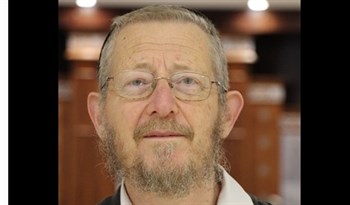
Rabbi Daniel Mann
649 - Ask the Rabbi: Does One Fix a Mistake in a Complex Al Hamichya?
650 - ASK THE RABBI: USING A DOG TO DO WORK ON SHABBAT
Load More
We mentioned that sb applies only to one’s own animal. It is possible that the dog is owned by gs’s father, not gs, even if the dog is for gs’ enjoyment (we will not get into the monetary law or the sociology behind this). If so, it would not be gs’ violation if the dog did forbidden melacha. On the other hand, if the father owns it, it is his responsibility to ensure that the dog does not do melacha. Therefore, if the kulot above do not work, the father is required to stop his son, whether immediately if he was there, or when he finds out about it, he must tell gs not to create an ongoing phenomenon
In short, there is a fair chance that gs did nothing wrong when he "choreographed" his dog shutting off a light, particularly if the light was not incandescent. We would not, though, recommend making a practice of using what we could call a "Shabbos dog." At the least, it could lead to mistakes.
Rabbi Daniel Mann
Reciting Borei Nefashot on Food When One Will Still Drink
Sivan 3 5780
Washing Hands with Soap on Yom Kippur
Tishrei 4 5776
Mishpatim Question
5772
Tazria Metzora Question
5772
Ask the Rabbi: Stock Market Talk on Shabbat
Rabbi Daniel Mann | Adar 5786
Ask the Rabbi: Does One Fix a Mistake in a Complex Al Hamichya?
Rabbi Daniel Mann | Iyar 5786
Ask the Rabbi: Forgot to Remove Tefillin Before Musaf of Rosh Chodesh
Rabbi Daniel Mann | Kislev 5786