Yeshiva
Beit Midrash
- Jewish Laws and Thoughts
- Personality Development
- Pathways in Personality Development

The Torah study is dedicatedin the memory of
Rachel Bat Asher
It is true that the Almighty does not need honor, but we, from our standpoint, must serve God as adamantly and impeccably as possible. In this respect, our sages have already exhorted us (Shabbat 133b): " 'This is my God and I will adorn Him' (Exodus 15:2) - i.e., adorn yourself before Him with commandments: with attractive tzitzit, attractive tefillin, an attractive Torah scroll, an attractive lulav . . . " And further (Baba Kamma 9b): "A person should expend up to an extra third for the sake of beautifying a mitzvah (commandment)."
If a person can choose between two Torah scrolls, he should be willing to spend a third more for the more attractive of the two. "Anything up to this point is paid for by him, and anything beyond it, by the Almighty." That is, if a person adds more than a third for the sake of beautifying a mitzvah, not only does the principle remain intact for him in the World to Come, but he even enjoys in this world the fruits of whatever he invested in the mitzvah.
Pathways in Personality Development (52)
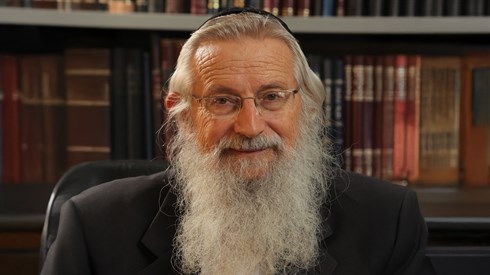
Rabbi Zalman Baruch Melamed
34 - 34. Lovingkindness
35 - 36. The Adornment of Religious Performance
36 - 35. Fear of God's Exalted Nature
Load More
Esau felt that it would be inappropriate to serve his father in anything but regal garments. And if a creature of flesh and blood is served in this manner, how much more so should one take care to be dressed respectfully when standing in prayer before the King of Kings, the Holy One Blessed be He. One should sit before Him as one sits before a great king.
This applies, inter alia, to Sabbaths and Festivals. When a person honors these days he is certainly giving pleasure thereby to his Creator, for He has commanded us (Isaiah 58:13): "If you restrain your foot because of the Sabbath, from pursuing your business on My holy day; and call the Sabbath a delight, the holy day of the Lord honorable; and you should honor it . . . " It is for this reason that the early sages occupied themselves with preparations for the Sabbath and did not merely rely upon the preparations of other household members.
For example, "R' Safra would roast the head of an animal. Rava would salt a carp; R' Huna would kindle a flame; R' Papa would twist a wick; R' Chisda minced beets; Rava and R' Yosef would split wood; R' Nachman would carry things in and out of the house, saying, 'If R' Ami and R' Asi were my guests, would I not perform such labors for them?' " (Shabbat 119a). This, then, is how one must prepare for the Sabbath.
We similarly find (ibid.) that R' Anan wore a simple garment on the eve of the Sabbath so that the honor of the Sabbath would be more pronounced upon his donning beautiful garments for it. This served to underscore the difference between the mundane week days and the holy Sabbath.
And the Sabbath serves as a paradigm for all of the other commandments. In our own day, the adornment of religious performance should no longer be limited to unique and pious individuals. The improved standard of living obligates each of us to adopt this approach. Today, most people are able to buy quality clothing and furniture. Many purchase attractive homes and put much time and money into maintaining and improving them. This should be all the more true when it comes to the commandments of the Torah. A person should be willing to invest in the adornment and perfection of religious performance.
-----
Some of the above translation was taken from or based upon Feldheim's "The Path of the Just."






Rabbis in Midrash























Lessons
fast navigation









Hosha'ana Rabba FLYDUBAI & HOSHANA RABBA- ANI VAHU HOSHIA NA- I & HIM SAVE US
"Ani vaHu Hoshia Na", "I and Him, Save Us". We don't just pray to Him, but we also pray to and for ourselves that we should emulate and educate our children to have that instinctive altruism with which He created the world. President Trump seemed amused about Yaniv Hayon, our PLUMBER who confidently worked with G-d like Superman (he learned from a pilot on a TV show!) to save 174 lives on the Dubai hijacking, but we in Israel are totally accustomed already 78 years to our plumbers, teachers, garbage-men, rabbis, farmers & doctors being Hashem's shlichim! This is what Zionism is about.
Moreshet Shaul Hashem Is your Shadow – part I
Based on Siach Shaul, Pirkei Machshava V’Hadracha p. 420 – an address from 1941











