Yeshiva
Beit Midrash
- Torah Portion and Tanach
- Vayikra
- Bechukotai

Jewish history bears out the accuracy of both visions. We have lived through both experiences. Jewish history seems to have contained much longer periods of darkness than of light, of more tragedy than of joy and serenity. Though the Torah assigns observance of the commandments as the prime cause of security in Jewish life and non-observance of the same as the cause of tragedy, history and the great commentators to Torah seem to modify this cut and dried axiom.
God’s wisdom and judgments are inscrutable and are beyond even elementary comprehension by us mortals. As such we are left wondering as to the tragedies that descended upon the Jewish people and that continue to plague us today. Though there are those amongst us that are prepared to give and accept glib answers to the causes of tragedy, the wise men of Israel warned us against such an approach. Observance of commandments is enormously difficult to fulfill completely and accurately.
As such it is difficult to measure the "why" part of this week's parsha. It is sufficient to note the "how it happened" part to realize that its message of contrasting periods of serenity and tragedy has been painstakingly accurate and contains not one word of hyperbole. The destruction of the Temples, the Crusades and pogroms, the Inquisition and the Holocaust are all graphically described in this week's parsha. Such is the prophetic power of the Torah.
In personal life, the longer one lives the more likely tragedy will somehow visit them. The Torah makes provision for this eventuality in its laws of mourning. We all hope for lives of goodness, and secure serenity. Yet almost inexorably, problems, disappointments and even tragedy intrude on our condition.
In Vayikra, the death of the sons of Aharon remains the prime example of tragedy suddenly destroying a sense of pride, satisfaction and seeming accomplishment. In this week's parsha the description of the punishment of Israel for its backsliding comes after a background of blessings and security. The past century presented the Jewish people with horrors of unimaginable intensity and of millennial accomplishments. The situation of extreme flux in our national life has continued throughout the years of the existence of the State of Israel.
The unexpected and sudden, but apparently regular change of circumstances in national Jewish life mirrors the same situation so recognizable to us from our personal lives. We are constantly blindsided by untoward and tragic events. So, the jarring contrast that the two main subjects of the parsha present to us are really a candid description of life and its omnipresent contradictions, and difficulties. Though we pray regularly for health and serenity, we must always be cognizant of how precarious situations truly are. Thus, as we rise to hear the conclusion of the book of Vayikra, we recite the mantra of "chazak, chazak, v'nitchazek" - let us be doubly strong and strengthen others! So may it be.
Shabbat shalom.
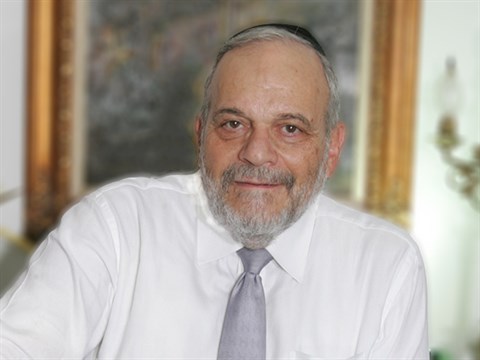
Rabbi Berel Wein







Rabbis in Midrash























Lessons
fast navigation










Various Events FOR WHOM NOT TO VOTE
Rav Zvi Yehuda Kook stressed that Israeli politics is G-dly, so I have no problem answering this common question on a Torani blog. Also, Free-Will is a G-d-given right and obligation, to "destine one's fate" (R. Soloveichik, Kol Dodi Dofek, 67), so I obviously don't tell others how to vote. But once not a few (especially young) have already asked, a couple of personal words from experience and thoughts from chazal & Rav Kook which may be of help to others, mainly for whom NOT to vote.

P'ninat Mishpat Fallout from Failure to Install Elevator – part II
based on ruling 85007 of the Eretz Hemdah-Gazit Rabbinical Courts








