Yeshiva
Beit Midrash
- Torah Portion and Tanach
- Vayikra
- Tazria

This is due to a lower-than-average birth rate amongst nonobservant Jews, a high rate of divorce, later-in-life marriages and an increasing population of singles. The ravages of assimilation and intermarriage also play a great part in the fact that Jews can hardly replace themselves, let alone make up for the deficit caused by the Holocaust.
The Torah places a high priority on children. It sees in children not only the physical continuity of the Jewish people but also a spiritual and heavenly connection that transcends one's life span. The rabbis commented regarding our father Jacob that as long as his descendants were alive and functioning then Jacob himself, so to speak, was also still alive. Seeing oneself ‘past the grave,’ is one of the hallmarks of Judaism and of the Jewish people. The concept of the immortal soul is reinforced by being able to project forward in time, living vicariously in the lives of one’s descendants.
But, my friends, we all know that having and raising children is no easy task. And we also know that a parent remains a parent for one's entire life. I feel that this is one of the subtle messages conveyed at the beginning of this week's Torah reading. The Torah speaks of impurity, sacrifice, and isolation of the mother after the birth of a child. This is the Torah’s indication that these are factors that are unavoidable in the raising and nurturing of a child. In all human society it is natural, indeed expected, for parents to do everything possible to give their children a good and healthy life. Those parents who do not somehow have that instinct within them are shunned in society and even liable to criminal punishment for neglect or abuse of their children. They are, even in our most open and liberal society, treated as being aberrant and cruel. The Torah, which is the book of practical human life, minces no words in describing the difficulties – impurity, sacrifice, and separation from others – that having and raising children automatically brings to parents.
It is perhaps for this very reason that the Torah gave women such a strong maternal instinct and the desire to have children. For without that instinct, based only on the practicalities of life and the difficulties of raising children, Jewish demographics would, in a practical sense, offer us no hope whatsoever for the future. The rabbis in Avot correctly stated that "the reward is directly commensurate with the effort and sacrifice." That is certainly true as far as children and generations and the Jewish future is concerned.
Shabbat shalom
Rabbi Berel Wein
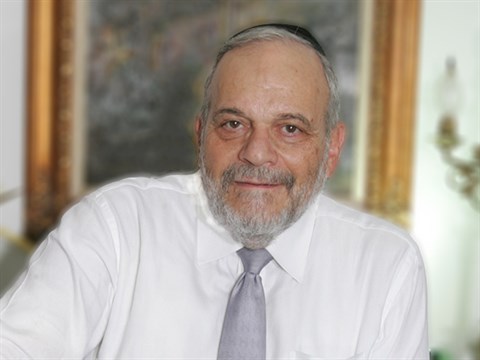







Rabbis in Midrash























Lessons
fast navigation











Various Events FOR WHOM NOT TO VOTE
Rav Zvi Yehuda Kook stressed that Israeli politics is G-dly, so I have no problem answering this common question on a Torani blog. Also, Free-Will is a G-d-given right and obligation, to "destine one's fate" (R. Soloveichik, Kol Dodi Dofek, 67), so I obviously don't tell others how to vote. But once not a few (especially young) have already asked, a couple of personal words from experience and thoughts from chazal & Rav Kook which may be of help to others, mainly for whom NOT to vote.

P'ninat Mishpat Fallout from Failure to Install Elevator – part II
based on ruling 85007 of the Eretz Hemdah-Gazit Rabbinical Courts








