Yeshiva
Beit Midrash
- Shabbat and Holidays
- Jewish Holidays
- The Tenth of Tevet

In honor of the day of fasting that we commemorate tomorrow – the Tenth of Tevet, falling this year on Friday, Dec. 22 – let us discuss the significance of the fact that it occurs on a Friday, which it hardly ever does.
The following apparently true story is told about one of the Torah giants of recent generations. Shortly after his marriage, while he was still being supported by his wealthy father-in-law, a rare event occurred: Rosh Chodesh Tevet, which always occurs during Chanukah, also fell that year on Sabbath, such that three (!) Torah scrolls were ceremoniously removed from the Ark to be read from. Many in the congregation recalled that a special piyut (prayer-poem) was supposed to be recited in honor of the event, but they could not agree on exactly which one. Just before the dispute got out of hand, they remembered that their wealthy colleague had recently gained a scholarly son-in-law, and that this was their chance to test his mettle and see if he deserved his reputation as a Torah great. And so they waited for his arrival, and when he came, they asked him to decide the issue. He calmly answered, "Though I have studied Torah and Jewish Law in depth, I admit that I am not particularly familiar with the various customs of saying piyutim. Why don't we just look in the prayer book and see what it says?"
The congregation members, who knew little of Torah and Jewish Law, were aghast. Did this great Torah scholar actually not know the great importance of the custom of reciting piyutim? He was immediately branded an ignoramus, and the consequences for his family were grave indeed…
Rare events are good opportunities for renewed reflection – and tomorrow provides precisely that opportunity. The Fast of the Tenth Day of Tevet very rarely falls on a Friday, and the Halakhah relates to this uniqueness and thus provides us with an interesting insight into the essence of the day.
The Shulchan Arukh (550,3) rules: "All four of these fasts [those that begin in the morning, not the night before] – if they fall on the Sabbath, are postponed until Sunday; and if they fall on Friday, Vay'chal [the special Torah portion for fasting] is read aloud in Shacharit and Mincha."
[The language here is not precise, the Mishna Berurah tells us, because actually three of these fast days never fall on Friday, while the Tenth of Tevet never falls on the Sabbath.]
The bottom line is that the Fast of Tevet is the only fast day that occurs on Friday. We then fast all day, even after sundown and up to the time that the stars are seen – which means, that we actually fast for a short time on the holy Sabbath day itself.
This situation has an ancient explanation, as the Abudraham wrote: "We have a tradition that if this fast day would ever fall on the Sabbath, it would not be postponed, and we would fast on the Sabbath." The only other fast day that the Sabbath does not override is Yom Kippur! Why? Because it is not a fast of mourning, but rather of repentance. We also know that regarding both Yom Kippur and the 10th of Tevet, the Bible says the words, b'etzem hayom hazeh (Vayikra 23,28; Yechezkel 24,1). As such, the Tenth of Tevet must also have an element of repentance. How so?
We know that the fast of Tevet commemorates the tragic event of the beginning of the Babylonian siege on Jerusalem nearly 2,500 years ago. This ultimately led to the destruction of the First Holy Temple, the downfall of the Kingdom of Judah, and the Babylonian exile of the Jewish people.
In what way is "repentance" a part of the Fast of Tevet?
The answer is rooted in the very siege on Jerusalem that this day commemorates. From one standpoint, nothing actually happened that day - and if the Jews had repented and the Babylonians would then retreat, we would never remember that there had been a plan to destroy the city and Temple. For instance, 150 years earlier, King Sancherib of Assyria began a siege upon the same city, but it ended miraculously, and nothing happened.
The other fast days that commemorate the destruction of Jerusalem, such as the 17th of Tammuz and Tisha B'Av, mark tragic events that actually happened. On the 10th of Tevet, however, we note only the harbinger of a great punishment – rendering it a call for repentance and improvement of our ways more than a day of mourning for an actual tragedy that took place.
This could be the point of disagreement between R. Akiva and R. Shimon bar Yochai regarding when the fast should be held. In the Talmud (Rosh HaShanah 18b), R. Shomon bar Yochai says that the fast is not held on the date of the start of the siege, but rather on the date that those in the Exile actually heard the news of the destruction. We can explain the dispute as follows: R. Akiva, active during the period of Bar Kokhba, sought to ensure that Israel would not be exiled for a long period and would even be redeemed in his generation – and therefore for him the Fast of Tevet was a reminder that we must do teshuvah and improve our ways. But R. Shimon bar Yochai was active chiefly after the failure of the rebellion, when we knew that we were headed for a long Exile – which renders the Fast of Tevet more of a sign of mourning for the finalization of the Destruction.
This fast takes place in the winter, when one quarter of the year has passed (precisely three months after Yom Kippur, the 10th day of Tishrei). This day is therefore a reminder that we can still rectify our situation, and that if we "grasp" the coming year and handle it correctly, we will merit Redemption, both personal and national. The fast days over the actual destruction are still ahead of us: If we do not repent, we will have to suffer through them – deservedly so, for the Sages teach that a generation in which the Temple is not rebuilt, is as if it was destroyed in its time – but if we mend our ways, these days will become days of joy!
Translated by Hillel Fendel.
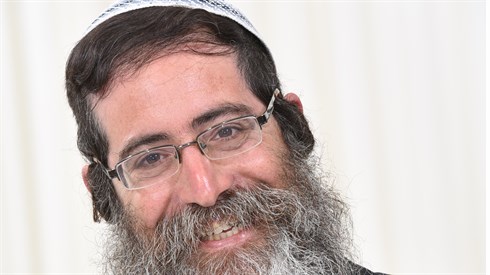





Rabbis in Midrash
































Hosha'ana Rabba FLYDUBAI & HOSHANA RABBA- ANI VAHU HOSHIA NA- I & HIM SAVE US
"Ani vaHu Hoshia Na", "I and Him, Save Us". We don't just pray to Him, but we also pray to and for ourselves that we should emulate and educate our children to have that instinctive altruism with which He created the world. President Trump seemed amused about Yaniv Hayon, our PLUMBER who confidently worked with G-d like Superman (he learned from a pilot on a TV show!) to save 174 lives on the Dubai hijacking, but we in Israel are totally accustomed already 78 years to our plumbers, teachers, garbage-men, rabbis, farmers & doctors being Hashem's shlichim! This is what Zionism is about.











