Yeshiva
Beit Midrash
- Torah Portion and Tanach
- D'varim
- Ki Tavo
- Sections
- Chemdat Yamim
- Parashat Hashavua

The Abarbanel asks several questions on these p’sukim, of which we will bring two. One is an apparent contradiction, in that elsewhere the navi tells of the punishment that will come to the nations, who fight Bnei Yisrael at that time, whereas here the navi speaks about the nations following in Bnei Yisrael’s light, repenting, and singing out in praise of Hashem. Another question is on the pasuk that implies that those who are liberated will come to Eretz Yisrael with their riches. The Abarbanel considers this hard to believe, considering what he knew from those tossed around in exile who needed liberation, for example, after the expulsion from Spain. Since when do Jews in exile have money to bring with them?!
The Abarbanel was correct until our days, but this is no longer difficult to believe. In the merit of our holy forefathers, the situation is very different and the prophecy as prophesized is occurring before our eyes. Jews have come from the exile with their money!
We will bring the words of the early commentators on some of these p’sukim and then try to add some little extra ideas at their fringes. The pasuk about giving light, according to Targum Yonatan and the Radak, refers to Yerushalayim. According to the Ibn Ezra, it refers to the renewal of the monarchy (i.e., independence) and prophecy. Rav Shlomo Alkabetz, the protégé of Rav Yosef Karo, in his beautiful poem, Lecha Dodi, featured prominently the call to Bnei Yisrael, represented by the Queen Shabbat, to reestablish an independent Jewish state in Eretz Yisrael with Yerushalayim as its capital. This was the vision of the holy rabbis of Safed, who came to Eretz Yisrael after the expulsion from Spain with great optimism and belief in the hastening of the liberation. This was very different from the way of thinking of the Abarbanel, who experienced, first hand, the horrors of the cruel Inquisition.
"For your light has come," according to the Radak, means that the time of the liberation, which is a great light, had come. The darkness described in pasuk 2 refers to the troubles of the hostile nations, while we experience light. In recent years, we are witnesses to the great miracle of the flourishing of the State of Israel while the neighboring nations live in relative darkness. The Radak continues that the nations following in the light refers to the nations that Yeshayahu describes as seeking to go up to the mountain of the G-d of Yaakov. Indeed, we see in many ways how the nations look up to Israel for its achievements.
We should always remember that to make progress on the road toward fulfilling more and more stages in this liberation we must work on our national unity. Hashem loves united Jews!



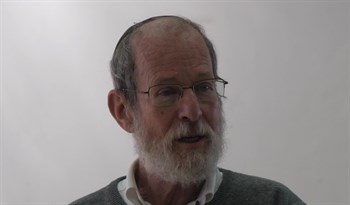




Rabbis in Midrash























Lessons
fast navigation











Hosha'ana Rabba FLYDUBAI & HOSHANA RABBA- ANI VAHU HOSHIA NA- I & HIM SAVE US
"Ani vaHu Hoshia Na", "I and Him, Save Us". We don't just pray to Him, but we also pray to and for ourselves that we should emulate and educate our children to have that instinctive altruism with which He created the world. President Trump seemed amused about Yaniv Hayon, our PLUMBER who confidently worked with G-d like Superman (he learned from a pilot on a TV show!) to save 174 lives on the Dubai hijacking, but we in Israel are totally accustomed already 78 years to our plumbers, teachers, garbage-men, rabbis, farmers & doctors being Hashem's shlichim! This is what Zionism is about.











