Yeshiva
Beit Midrash
- Sections
- Peninei Halakha
- Shabbat and Holidays
- Sefirat Haomer
- The Laws of Sefirat Ha'omer

If, at a time when it is permissible to count, one’s friend asks him, “What is today’s omer count?” one should not answer, “Today is day such-and-such of the omer,” unless he has already counted with a berakha. If he says this, he will fulfill his obligation to count and will no longer be permitted to recite a berakha over that day’s count. Instead, one should answer, “Yesterday was such-and-such of the omer” (sa 489:4).
If one tells his friend which day of the omer it is while maintaining the specific intent not to fulfill his obligation, he may count later on with a berakha. If the day’s count is made up of both days and weeks (i.e., after the sixth day) and one tells his friend the number of days without mentioning the weeks, he may count later on, be-di’avad, with a berakha. Since he did not count in the normal fashion, mentioning both the days and the weeks, he has made it clear that he did not intend to discharge his obligation to fulfill the mitzva with this response (mb 489:22).
Before reciting the berakha, one should remind himself mentally what day of the omer it is (see sa 489:6, sht ad loc. 37). If, for example, one in uncertain whether it is the ninth day or the tenth day, and there is no one available to ask, he should say both numbers, thus fulfilling his obligation either way. However, the poskim debate whether one should recite the berakha in such a case. Some say that one may recite a berakha only over a clear and definite count. Others maintain that one may recite a berakha over a questionable count, because it is certain that one of the numbers is correct (see Piskei Teshuvot 489:17). In practice, one should not recite the berakha in such a case, since there is an uncertainty regarding the matter.
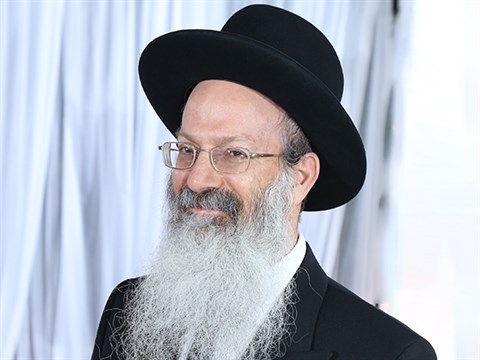
Rabbi Eliezer Melamed

Peninei Halakha 18. Torah Verses in the Prayers and in the Berakha of She-asa Li Kol Tzorki
Chapter 10: The Laws of Tisha Be-Av



Rabbis in Midrash































Various Events FOR WHOM NOT TO VOTE
Rav Zvi Yehuda Kook stressed that Israeli politics is G-dly, so I have no problem answering this common question on a Torani blog. Also, Free-Will is a G-d-given right and obligation, to "destine one's fate" (R. Soloveichik, Kol Dodi Dofek, 67), so I obviously don't tell others how to vote. But once not a few (especially young) have already asked, a couple of personal words from experience and thoughts from chazal & Rav Kook which may be of help to others, mainly for whom NOT to vote.

P'ninat Mishpat Fallout from Failure to Install Elevator – part II
based on ruling 85007 of the Eretz Hemdah-Gazit Rabbinical Courts











