YeshivaThe torah world Gateway
Beit Midrash
- Jewish Laws and Thoughts
- Jewish Thought
- Foundations of Faith

The Torah study is dedicatedin the memory of
Hana Bat Behora
Having learned about the preeminence of the land of Israel, the nature of the Temple service, as well as the greatness of the Jewish people and the Holy Tongue, the Khazar king says to the Rabbi, "I would request that you now describe for me a servant of God according to your opinion."
The Rabbi answers, "This is our conception of a servant of God. He is not cut off from the world in a manner that makes him a burden upon the world and the world burden for him. He does not distance himself from life and despise it, for life is really full of God's goodness. God Himself cites good life as a reward which He gives to the righteous, as it says, 'You will have long life' (Deuteronomy 22:7), and 'I will make the number of your days complete' (Exodus 23:26).
Foundations of Faith (51)
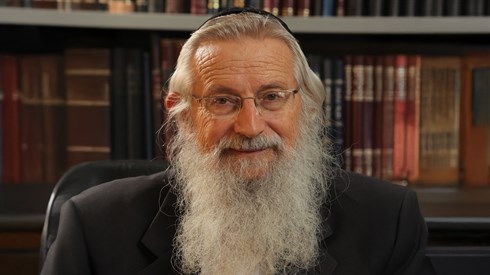
Rabbi Zalman Baruch Melamed
43 - 43. Hebrew's Preeminence - Continued
44 - 44. The Servant of God
45 - 45. The “Hassid” (Saintly Person)
Load More
"True, a servant of God longs and desires to ascend to the highest of levels, like Chanoch, of whom it says, 'Chanoch walked with God' (Genesis 5:24), or the level of Elijah, who reached a very lofty spiritual state, elevated above all of the matters of this world and attached to spiritual spheres. Such a state fills a person with great joy. One who reaches such a level will not feel as if he lacks the physical pleasures which every normal person requires, for a lofty spiritual joy fills his spirit. Such a person does not feel lonely, for he is attached to the angels.
"For one who has attained such a high spiritual level, abstinence does not distance him from pleasure - to the contrary, it brings him closer to it. According to his high spiritual level, worldly matters and society actually burden him and stifle his spiritual pleasure which is infinitely greater than physical worldly pleasures.
"However, today, most people are not on such a level, and hence abstinence and seclusion actually cause a person torment and lead to physical and mental sickness. Instead of elevating him, abstinence depresses him. People might think he looks this way because of his sense of humility and lowliness. In reality, though, he will look this way because he feels like a prisoner. He will despise life not because of his longing for a higher, more spiritual existence but because of his disgust with his self-restrictions and self-afflictions. Therefore, this is not the path taken today by one who wishes to serve God. Rather, such a person must love life and avail himself of all his human faculties in order serve God.
"In the past, when the Divine Presence rested upon the Holy People in the Holy Land, there were small groups of unique people who lived lives of seclusion in order to attain a high level of spirituality. They were called "the Sons of Prophets." They did not isolate themselves completely from society, but rather joined with others like themselves. They helped each other in Torah wisdom, commandments, and spiritual elevation. That was then, when spiritual conditions were appropriate. But today, in our time and place, asceticism is not a virtue but a vice, and a true servant of God loves life, and makes use of all of life's goodness in order to serve God."
------
Much of the text in the above article is taken from or based upon Rabbi N. Daniel Korobkin's translation of The Kuzari (Jason Aronson Inc.)





Rabbis in Midrash























Lessons
fast navigation









Moreshet Shaul Hashem Is your Shadow – part I
Based on Siach Shaul, Pirkei Machshava V’Hadracha p. 420 – an address from 1941

P'ninat Mishpat A Non-Contractor in Changing Times – part I
(based on ruling 85128 of the Eretz Hemdah-Gazit Rabbinical Courts)
Moreshet Shaul Our King on Rosh Hashana, Our Father on Yom Kippur.
Based on Aroch Siach, p. 221 (Rav Shaul Yisraeli)
P'ninat Mishpat A Non-Contractor in Changing Times – part II
(based on ruling 85128 of the Eretz Hemdah-Gazit Rabbinical Courts)
Moreshet Shaul Hashem Is your Shadow – part II
Based on Siach Shaul, Pirkei Machshava V’Hadracha p. 420 – an address from 1941
Parashat Hashavua Happiness for the Right Reasons
[With painful longing, we share these divrei Torah from our co-Rosh Kollel for close to 40 years, Harav Moshe Ehrenreich zt”l.]