YeshivaThe torah world Gateway
Beit Midrash
- Jewish Laws and Thoughts
- Jewish Thought
- Foundations of Faith

The Torah study is dedicatedin the memory of
Yaakov Ben Behora
As a matter of fact, however, it is precisely because God loves us so that He has given us the Torah and its commandments, as we say in our prayers, "You reveal an endless love for us; You have taught us Torah and commandments, laws and justice." And, in the words of the Sages, "The Almighty desired to benefit Israel, and He therefore gave them many laws and commandments, as it is written, 'The Lord is well pleased for his righteousness’ sake; he will magnify the Torah and make it glorious' (Isaiah 42:21)."
When a person's faith is weak, or when one lacks faith entirely, the commandments appear unbearable. To what may this be likened? To a person who has no sense of aesthetic value, no sensitivity to beauty or grace. Such a person could enter a beautifully adorned house, into which much thought and expense has been invested, and feel nothing. One who does not understand such things asks himself, "What is all this for? All this ornamentation just takes up space, every place you walk you run the risk of knocking over some valuable vessel. One cannot walk freely here. Why spend so much energy trying to protect all of these objects?"
Foundations of Faith (51)
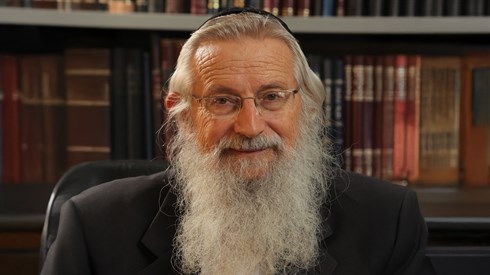
Rabbi Zalman Baruch Melamed
38 - 38. “Israel, Through Whom I Will Be glorified”
39 - 39. The Commandments - A Beloved Burden
40 - 40. Reward and Punishment
Load More
To one who lacks faith, it appears as if the many commandments which have bearing upon virtually every aspect of a Jew's daily activity, from the morning until the nighttime, day after day, every day of the week, throughout the year, restrict and weigh the Jew down. To such a person, orthodox Jews appear to have bound themselves up with iron chains: they are not permitted to eat as they please or to enjoy themselves freely. The Sabbath restricts them, there is no freedom, there is no natural living. This is how it appears to the irreligious.
However, when faith shines forth brightly, filling the heart, the "burden" of the commandments looks entirely different. The precepts are not a burden but a privilege. The commandments are beautiful ornaments, and it is a delight to decorate with them. The commandments truly fill one's entire life, and this is what is so great about them. All aspects of life are illuminated through the light of the Torah. One's entire life is elevated to a new level, invested with a Divine quality. The Torah is indeed "perfect, reviving the soul," the commandments "enlighten the eyes," "God's statutes are right, rejoicing the heart" (Psalms 19:8), for, indeed, God's intention was to benefit Israel, and He therefore gave them many laws and commandments.
If a person were permitted to enter a room full of valuable jewels and pearls and take whatever he could carry, the load which he would haul away would not be a burden to him. To the contrary, he would be happy to take more if he only could. Thus, King David writes, "I rejoice at Your word, like one who finds great booty" (Psalm 119:162).
In order to truly understand the ways of religious Jews one must try to see things through their eyes. Once a person succeeds in doing this he can grasp the greatness of a life of Torah and commandments.






Rabbis in Midrash























Lessons
fast navigation









Moreshet Shaul Hashem Is your Shadow – part I
Based on Siach Shaul, Pirkei Machshava V’Hadracha p. 420 – an address from 1941

P'ninat Mishpat A Non-Contractor in Changing Times – part I
(based on ruling 85128 of the Eretz Hemdah-Gazit Rabbinical Courts)
Moreshet Shaul Our King on Rosh Hashana, Our Father on Yom Kippur.
Based on Aroch Siach, p. 221 (Rav Shaul Yisraeli)
P'ninat Mishpat A Non-Contractor in Changing Times – part II
(based on ruling 85128 of the Eretz Hemdah-Gazit Rabbinical Courts)
Moreshet Shaul Hashem Is your Shadow – part II
Based on Siach Shaul, Pirkei Machshava V’Hadracha p. 420 – an address from 1941
Parashat Hashavua Happiness for the Right Reasons
[With painful longing, we share these divrei Torah from our co-Rosh Kollel for close to 40 years, Harav Moshe Ehrenreich zt”l.]