YeshivaThe torah world Gateway
Beit Midrash
- Jewish Laws and Thoughts
- Jewish Thought
- Foundations of Faith

The Torah study is dedicatedin the memory of
simha bat hana
"Rabbi Akiva says, 'This world is like a vestibule to the world to come; prepare yourself in the vestibule in order to enter the main hall."
One of the foundations of the Jewish faith is the belief in the World to Come, the conviction that there exists a supernal and eternal afterlife and that this world is little more than a "vestibule to the World to Come." This cognizance changes one's entire way of relating to our world and its events. One who possesses such a faith does not look for reward and riches here; instead, such a person dedicates his life in this world to preparatory work in order to guarantee his place in the eventual World to Come.
Belief in the soul's immortality, in eternal life, has the effect of making life in this world appear insignificant. Life in this world appears short, quantitatively transient and qualitatively limited; its only value is that it allows a person to prepare for the eternal and perfect World to Come. Such an approach negates the "instant gratification" attitude which demands here-and-now results, for it claims that the present is not what is important; the here-and-now is a mere means to a more lofty and elevated end. The sages thus teach, "A moment of satisfaction in the World to Come is better than an entire lifetime in this world."
Foundations of Faith (51)
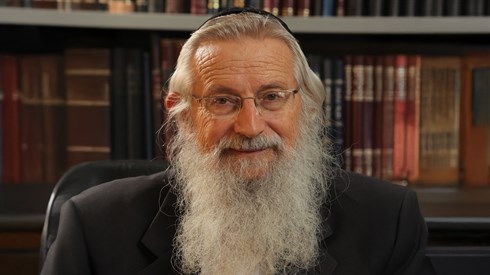
Rabbi Zalman Baruch Melamed
25 - 25. The World to Come – Further Clarification
26 - 26. This World and the World to Come
27 - 27. The Preeminence of the Land of Israel
Load More
And how hapless is one who does not believe in the World to Come, whose entire existence is temporary and passing. He knows not what the future holds in store nor the number of his days. Denial of the World to Come fills a person with despair and nothingness. The sorry slogan, "Eat and drink for tomorrow we die" cannot bring man true happiness.
The Prophets have informed us regarding the immortality of the soul. It is hinted at in the prophecy which tells us that Elijah the Prophet will reveal himself in the future redemption. We also find that King Saul invoked Samuel the Prophet who was no longer living, and Samuel prophesied regarding what was to transpire, in the same manner that he did while he was alive. And though invoking the spirits of the dead is forbidden by the Torah, we are at any rate able to learn from here that the soul is immortal and that it lives on even after it has been separated from the body.
Even today, there are people who make a practice of communicating with the dead. The Torah, of course, forbids such behavior in no uncertain terms, and every Jew must distance himself from such people, but, all the same, the phenomena itself serves to confirm the concept of the immortality of the soul.
Belief in life after death, in the World to Come, is one of the foundations of the Jewish faith.




Rabbis in Midrash























Lessons
fast navigation









Moreshet Shaul Hashem Is your Shadow – part I
Based on Siach Shaul, Pirkei Machshava V’Hadracha p. 420 – an address from 1941

P'ninat Mishpat A Non-Contractor in Changing Times – part I
(based on ruling 85128 of the Eretz Hemdah-Gazit Rabbinical Courts)
Moreshet Shaul Our King on Rosh Hashana, Our Father on Yom Kippur.
Based on Aroch Siach, p. 221 (Rav Shaul Yisraeli)
P'ninat Mishpat A Non-Contractor in Changing Times – part II
(based on ruling 85128 of the Eretz Hemdah-Gazit Rabbinical Courts)
Moreshet Shaul Hashem Is your Shadow – part II
Based on Siach Shaul, Pirkei Machshava V’Hadracha p. 420 – an address from 1941
Parashat Hashavua Happiness for the Right Reasons
[With painful longing, we share these divrei Torah from our co-Rosh Kollel for close to 40 years, Harav Moshe Ehrenreich zt”l.]