Yeshiva
Beit Midrash
- Torah Portion and Tanach
- D'varim
- Ki Tetze

There is a third Mitzva, found in our Sedra, which also promises arichat yamim; long life, and that is the Mitzva of Even Sh’lema, having honest weights and just measures (25:13-15).
What is the connection between these three Mitzvot?
The link between honoring parents and living longer makes perfect sense. If we take good care of our father and mother – attending to their needs when they get older and may be incapable of fending for themselves – then our children will see what we did for our parents, and they, in turn, will follow our example and (hopefully) do the same for US. This will invariably help us to live longer.
The same dynamic applies to the law of shiluach hakeyn. As the Ramban explains, this act of kindness to a member of the animal kingdom helps to instill compassion within us, so that we will surely care for our flesh-and-blood mother (and father) and treat them, too, with loving
kindness when they need our assistance.
But what about the weights and measures? How does this third Mitzva link up to the other two?
The commandment of even sh’lema is not just about being scrupulous in our business dealings. It is about the greater virtues of integrity, and honesty. We must do that which is right and fair in ALL our actions, not just in the workplace. And if we are to be truly honest, we will surely
acknowledge the massive debt we owe to our parents.
Did they not do anything and everything for us in our tender years? Did they not shower us with love, sacrifice for us, place all their hopes and dreams in us? When we were small and vulnerable, they protected us, fed us, guided us. And now – when age has reduced their capabilities – it is OUR turn to do the right thing and see to THEIR needs.
Fascinating, isn’t it? The Hebrew word "even" – stone, or weight - is a combination of "av" and "ben;" parent and child! When we honestly and fairly weigh our debt to Ima and Abba, and do the right thing, their lives will be lengthened and ours will certainly be blessed.
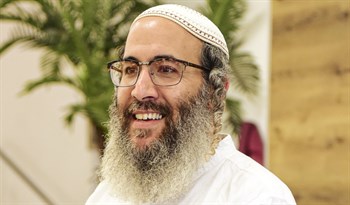
Rabbi Stewart Weiss
Was ordained at the Hebrew Theological College in Skokie, Illinois, and led congregations in Chicago and Dallas prior to making Aliyah in 1992. He directs the Jewish Outreach Center in Ra'anana, helping to facilitate the spiritual absorption of new olim.
Jewish Laws and Thoughts Shul “etiquette:” can we honor Hashem while respecting our fellow congregants?








Rabbis in Midrash























Lessons
fast navigation










Hosha'ana Rabba FLYDUBAI & HOSHANA RABBA- ANI VAHU HOSHIA NA- I & HIM SAVE US
"Ani vaHu Hoshia Na", "I and Him, Save Us". We don't just pray to Him, but we also pray to and for ourselves that we should emulate and educate our children to have that instinctive altruism with which He created the world. President Trump seemed amused about Yaniv Hayon, our PLUMBER who confidently worked with G-d like Superman (he learned from a pilot on a TV show!) to save 174 lives on the Dubai hijacking, but we in Israel are totally accustomed already 78 years to our plumbers, teachers, garbage-men, rabbis, farmers & doctors being Hashem's shlichim! This is what Zionism is about.











