Yeshiva
Beit Midrash
- Jewish Laws and Thoughts
- Serving Hashem, Mitzvot and Repentance

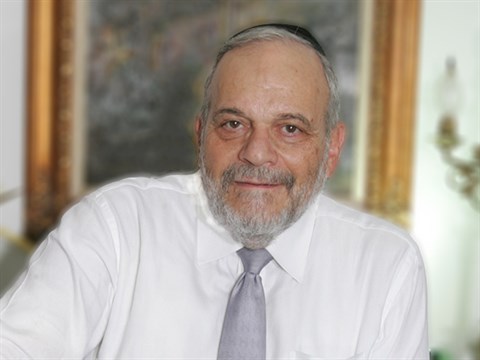
I come from a generation where my peers and I hardly knew grandparents, and nobody, to my memory, had a live great-grandparent. Here the Lord has blessed me many times over to witness and cuddle a fourth generation in our family. Being a great-grandfather is such a special blessing that the Torah makes note of it in reference to the fact that Yosef was privileged to witness great-grandchildren in his family. Great-grandparenthood grants one a glimpse into the unknown future but with it comes all of the doubts that one senses upon viewing the unknown.
The talents, traits and personality of the little infant are also in the realm of the unknown. But the great-grandfather is overjoyed at the brit and is somehow confident that all will yet be well for the baby and the whole family. How can one feel differently after witnessing all of the unbelievably positive events that occurred to one’s family and to the Jewish people over the last sixty-five years?
The only obvious drawback to great-grandfatherhood is that one has to be blessed with advanced age to become a great-grandfather. In our time there are no thirty-five year old great-grandfathers. To a certain extent that fact cramps one’s style regarding dealing with great-grandchildren. It is harder to roll on the floor with them, to play catch or ball with them, even to hear and understand what they are babbling to you. But no matter. Just being n their presence and knowing that they are the continuity of one’s family is sufficient reward for all of the exertions - mental, physical and financial involved in being the elder of the family.
Ultimately in Judaism, it is this continuity of generations that define families, communities, ways of life and the Jewish people as a whole. The Torah always emphasizes the transmission of its message and value system from one generation to the next. There is no Judaism without Jews and the task of raising the next generation to be loyal and observant Jews is the supreme goal and achievement in Jewish life.
Dealing with a fourth generation in one’s family only magnifies this awesome challenge. There are so many different factors – genetic, social, educational, etc. – present in this fourth generation that one cannot help but feel somewhat distanced from this challenge. Perhaps this is also one of the unspoken blessings of being a great-grandparent.
In reality, any exploration of great-grandparenthood is a visit into virgin territory, Jewishly speaking. There is very little mention of this status in life that appears in the Bible (Yosef excepted) or even the Oral Law of the Mishna and Talmud. Perhaps this is because there was much less longevity in those times compared to today.
Perhaps it is also because the actual influence in practical terms of great-grandparents on later generations is essentially minimal. After all, we are hard pressed to influence our own children let alone to be of influence on those two generations later. Yet the mere knowledge that children have that they are backed by generations that are vitally interested in their welfare and achievements is itself influential, even if it be in an indirect fashion.
No one wants to disappoint their elders if they can somehow avoid doing so. There are many instances in Jewish history when later generations, who would somehow feel justified to depart from the ways of their forbearers, were nevertheless sensitive enough to change their names to protect the reputations of previous generations.
It is difficult to be bound to the activities of later or even previous generations. But that is part of generational life. The Torah informs us that Avraham died five years prematurely so that he would not have to witness the evil behavior of his descendant, Eisav. So, family life even for the greatest amongst us is always a chancy affair. But I am delighted to have again become a great-grandfather.

Ein Aya Responsibility for Teshuva Within Our Family: "Does Father Know Best?"
Ein Aya Shabbat 2, 292








Rabbis in Midrash























Lessons
fast navigation










Hosha'ana Rabba FLYDUBAI & HOSHANA RABBA- ANI VAHU HOSHIA NA- I & HIM SAVE US
"Ani vaHu Hoshia Na", "I and Him, Save Us". We don't just pray to Him, but we also pray to and for ourselves that we should emulate and educate our children to have that instinctive altruism with which He created the world. President Trump seemed amused about Yaniv Hayon, our PLUMBER who confidently worked with G-d like Superman (he learned from a pilot on a TV show!) to save 174 lives on the Dubai hijacking, but we in Israel are totally accustomed already 78 years to our plumbers, teachers, garbage-men, rabbis, farmers & doctors being Hashem's shlichim! This is what Zionism is about.
Moreshet Shaul Hashem Is your Shadow – part I
Based on Siach Shaul, Pirkei Machshava V’Hadracha p. 420 – an address from 1941









