Yeshiva
Beit Midrash
- Torah Portion and Tanach
- Bamidbar
- Beha'alotcha

The task of the parent/teacher is that the child/student will sustain himself or herself spiritually, socially, financially, and psychologically, after having been given the necessary life tools. I was a child at a time when children were considered adults by the time they reached puberty and their teenage years. However, in our more modern era childhood extends far beyond even the teenage years. Many children and students do not achieve any sort of true dependence until they are well into their twenties, and sometimes even later than that.
The question then arises: is the responsibility of the parent/teacher open ended, i.e., does it remain, no matter how long it takes for the child or the student to truly become independent? Is the parent/teacher still on the hook, so to speak, to provide aid, sustenance, financial support and means for survival? Since it is not clear to us when the flame of independence and self-sufficiency is truly able to burn on its own, there arises a situation where the obligations of the parent, the educational system and even of society generally appears to remain unlimited. This type of dependency eventually becomes self-destructive, and certainly cannot be what the Torah had in mind for the Jewish family and the Jewish society.
The goal of parenting and of education is to produce people who are well-balanced, to provide their child/student – the next generation, with the necessary tools for self-reliance and independence of thought and action. There is a window of time for such an opportunity. In my opinion, that window closes quickly as time progresses. The options remaining in life for someone in their 30s or 40s are far fewer than the options that existed when they were in their 20’s.
Keeping the outside flame on the wick of the lamp of the candelabra for too long does not enhance the flame nor will it light the candelabra. Rather, it creates a situation of danger, containing too much fire, and is counterproductive in its purpose of lighting the lamps of the candelabra itself. So, too, a wise parent and/or a devoted teacher will eventually see the productivity of removing that outside fire and letting the wick burn on its own, to radiate its own life. Every human being is unique and holy. Every human being is entitled to its own lamp and light.
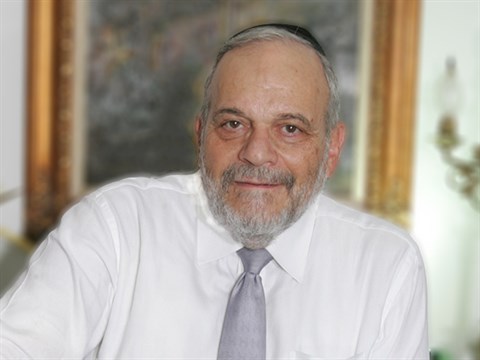






Rabbis in Midrash























Lessons
fast navigation











Various Events FOR WHOM NOT TO VOTE
Rav Zvi Yehuda Kook stressed that Israeli politics is G-dly, so I have no problem answering this common question on a Torani blog. Also, Free-Will is a G-d-given right and obligation, to "destine one's fate" (R. Soloveichik, Kol Dodi Dofek, 67), so I obviously don't tell others how to vote. But once not a few (especially young) have already asked, a couple of personal words from experience and thoughts from chazal & Rav Kook which may be of help to others, mainly for whom NOT to vote.

P'ninat Mishpat Fallout from Failure to Install Elevator – part II
based on ruling 85007 of the Eretz Hemdah-Gazit Rabbinical Courts








