Yeshiva
Beit Midrash
- Shabbat and Holidays
- Purim & The Month of Adar
- The Month of Adar

The Torah study is dedicatedin the memory of
Asher Ben Haim
Additional joy itself serves as an expression of appreciation and thanks toward the Almighty for the miracles and the wonders which He performed on our behalf "in those days, at this time." Now, then, appears to be an appropriate occasion for examining the attribute of joy in general.
In his book "Shaarei Kedushah," Rabbi Chaim Vital, (a leading disciple of the Holy "Ari") explains that joy is a marvelous quality which constitutes a central pillar in the service of God. Joy adds great adoration and desire to cling to the Almighty. And it is written (Deuteronomy 28:47,48): "When you had plenty of everything, you would not serve God your Lord God with happiness and a glad heart. You will therefore serve you enemies..." For, one who worships the Almighty in sorrow resembles a servant who works for his master unhappily and grudgingly, and it is written: "God’s blessing brings prosperity, but sadness will not add...." Sadness causes God’s presence to depart. Proof of this can be brought from Jacob, the "choicest of the Forefathers," who was deprived of prophetic inspiration during the twenty-two years when his son Joseph was separated from him. When, finally, Jacob merited rejoicing upon receiving the news that Joseph was alive, Scripture relates (Genesis 45:27): "And the spirit of their father Jacob was then revived," i.e., Divine prophetic inspiration returned to him. And the Sages say, "The Divine Presence does not dwell where there is sadness, and prophecy does not enter where there is sadness. We also find this principle to be true regarding Elisha and the "sons of the prophets," as it is written: "‘Now, bring for me a musician,’ and when the musician performed, the hand of God came upon him." Even when it comes to the performance of one of the commandments or prayer, they must be carried out with maximum joy. We find that this was the case with the great sage Abaye. Once, when he was very happy, he explained his behavior: "I am fulfilling the commandment of putting on Tefillin." For Rav Berunah, too, the mere fact of having fulfilled the obligation of requesting redemption immediately prior to praying the Amidah caused him to smile the entire day.
All of the above examples illustrating the importance of worshipping God joyfully are brought by Rabbi Chaim Vital, in his masterly work, "Shaarei Kedushah."
Therefore, as the month of Adar enters - may it be a good month - let us accentuate our joy, a joy which stems from complete faith in the Almighty, Whose doings are all for the best. Even that which appears initially not to be for the best, is, in all actuality, for the best. This is what happened in the story of Purim (Ester 9:1): "On that day, when the Jew-haters expected to do as they withed to them, it was just the opposite; for Jews did as they wished to their enemies."
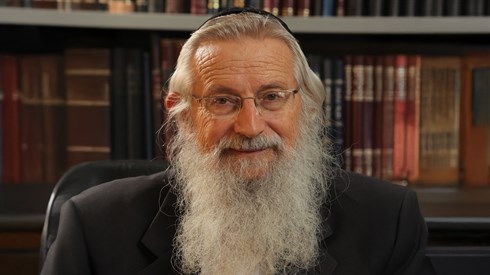







Rabbis in Midrash























Lessons
fast navigation










Various Events FOR WHOM NOT TO VOTE
Rav Zvi Yehuda Kook stressed that Israeli politics is G-dly, so I have no problem answering this common question on a Torani blog. Also, Free-Will is a G-d-given right and obligation, to "destine one's fate" (R. Soloveichik, Kol Dodi Dofek, 67), so I obviously don't tell others how to vote. But once not a few (especially young) have already asked, a couple of personal words from experience and thoughts from chazal & Rav Kook which may be of help to others, mainly for whom NOT to vote.

P'ninat Mishpat Fallout from Failure to Install Elevator – part II
based on ruling 85007 of the Eretz Hemdah-Gazit Rabbinical Courts








