Yeshiva
Beit Midrash
- Shabbat and Holidays
- Jewish Holidays
- The Seven Weeks of Condolence

Part of the difficulty of attaining comfort and consolation is the fact that we have never been able to mourn the past tragedies completely and thoroughly. Rabbi Simcha Wasserman, one of the seminal educators of the Jewish people in the past century, pointed out that in the book of Zecharia the prophet describes in detail the great times of redemption and restoration that will certainly occur in our future. In the midst of this description of greatness and good times of hope and rebirth the prophet describes that there will take place a great funeral and a time of sustained eulogies. What and why is the reason for these eulogies and weeping at the time and era of redemption and restoration of Jewish sovereignty and glory? Isn’t the worst over already and are we not discussing in that chapter of the book of the prophet Zecharia the time of the rebuilding of the Temple in Jerusalem? Rabbi Wasserman explained that in the travails of the long Jewish exile, the Jewish people never had the time or ability to truly mourn and eulogize over the tragedies that befell them. They had to keep on going, to struggle for future survival and thus had no ability to dwell upon the past. Now however when the moment of redemption has finally arrived then the prophet tells us that before there can be true consolation there has to be adequate mourning for what befell us in the past. The mourning over the past is the key to the ultimate comfort and consolation of the present.
We have yet to devise a proper and psychologically gratifying medium to mourn the Holocaust of seventy years ago. The tragedies of the First World War, of nineteenth century Czarist Russia and Ottoman Land of Israel are all but forgotten from our generations. Even the sacrifices of tens of thousands of Israelis in our struggle to maintain our independence and sovereignty in our ancient homeland have not yet found a meaningful method of spiritual and psychologically healthy mourning. We are too busy confronting the problems and challenges, the dangers and hatred that encircle us to be able to concentrate somehow upon these issues of mourning and comfort and consolation. In the necessity of getting on with our lives, personal and national, the wounds of the past remain untended and never really closed. It is of no wonder therefore that we are always in a constant state of stress and distress. The prophet’s vision of comfort and consolation as expressed in the haftorah of this Shabat is dependent upon our view of history and our coming to terms with its realities, tragic as they may have been. Those who are unaware of our past certainly cannot be expected to properly mourn its tragedies and learn from its events. Thus any feeling of true and lasting consolation is precluded from them and sadly, this group of the untaught and historically ignorant section of world Jewry numbers today in the millions. However, correcting this situation can lead eventually to the ultimate Shabat Nachamu of lasting comfort and consolation.



The Seven Weeks of Condolence God's Punishment and Comfort are our Support
Shiv'a de-Nechemta: The Philosophy of Comfort and Redemption - 4
The Seven Weeks of Condolence Does G-d Care About Us
Shiv'a de-Nechemta: The Philosophy of Comfort and Redemption - 5
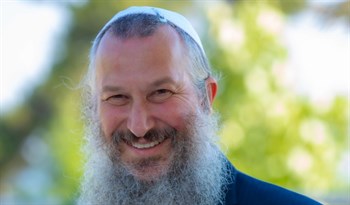






Rabbis in Midrash























Lessons
fast navigation











Various Events FOR WHOM NOT TO VOTE
Rav Zvi Yehuda Kook stressed that Israeli politics is G-dly, so I have no problem answering this common question on a Torani blog. Also, Free-Will is a G-d-given right and obligation, to "destine one's fate" (R. Soloveichik, Kol Dodi Dofek, 67), so I obviously don't tell others how to vote. But once not a few (especially young) have already asked, a couple of personal words from experience and thoughts from chazal & Rav Kook which may be of help to others, mainly for whom NOT to vote.
P'ninat Mishpat Fallout from Failure to Install Elevator – part II
based on ruling 85007 of the Eretz Hemdah-Gazit Rabbinical Courts








