Yeshiva
Beit Midrash
- Torah Portion and Tanach
- Bamidbar
- Shlach Lecha

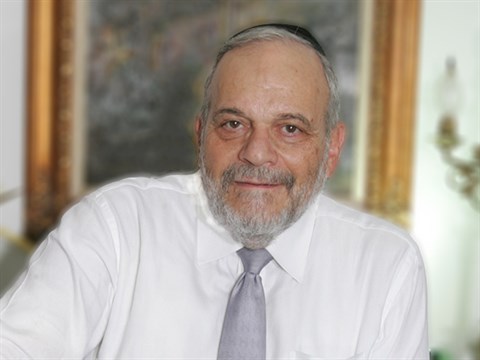
Every person in a position of leadership and responsibility, especially younger people who are in such positions, experiences the same pitfall that Moshe experienced in this week’s parsha. I remember that as a fledgling young rabbi I attempted to bring a well known yeshiva into our community and establish there a branch of its main institution. Our community then badly needed such an educational institution in its midst. I presented the plan at a public meeting called by me to advance this plan. I thought to myself "Who could oppose a yeshiva, so desperately needed by our community, from establishing itself in our midst?" So in my naiveté I did not prepare adequately for the meeting nor did I make phone calls to the supporters of the yeshiva to show up and be prepared to fight the battle. I was supremely confident that everyone saw the issue my way and through my vision for the community. I was therefore shocked to hear the torrent of verbal abuse and opposition to the yeshiva project voiced at the meeting and the whole plan collapsed. I had assumed that everyone would see the matter through my eyes and hold my vision to be correct. Years later and in a different community I was able to establish a yeshiva, also over many naysayers, but this time I was prepared and had a much better feel as to how true human nature works. I could not assume that anyone else would see the situation quite as I did and therefore this time I prepared the meeting properly. Moshe assumed the best and was unprepared for what actually occurred. Naysayers always abound. We always have to prepare properly to overcome them and their objections.








Rabbis in Midrash























Lessons
fast navigation









Hosha'ana Rabba FLYDUBAI & HOSHANA RABBA- ANI VAHU HOSHIA NA- I & HIM SAVE US
"Ani vaHu Hoshia Na", "I and Him, Save Us". We don't just pray to Him, but we also pray to and for ourselves that we should emulate and educate our children to have that instinctive altruism with which He created the world. President Trump seemed amused about Yaniv Hayon, our PLUMBER who confidently worked with G-d like Superman (he learned from a pilot on a TV show!) to save 174 lives on the Dubai hijacking, but we in Israel are totally accustomed already 78 years to our plumbers, teachers, garbage-men, rabbis, farmers & doctors being Hashem's shlichim! This is what Zionism is about.











