Yeshiva
Beit Midrash
- Torah Portion and Tanach
- Shmot
- Shmot

"One who takes leave from his friend should not say 'Go in peace' ("lech BE-shalom"), but 'Go to peace' ("lech LE-shalom"). Jethro told Moses, 'Go to peace' — Moses went and succeeded in his mission. David told his son Absalom, 'Go in peace' — Absalom went and was hanged."
"When taking leave of the deceased, however, one should say, 'Go in peace.'"
What is the difference between these two salutations? Why is one appropriate for the living, and the second for the dead?
Ready for the Journey
Life is full of struggles, both spiritual and physical. We are not doing our acquaintances a favor by pretending these battles do not exist. Implying that the road is easy will only lower their guard, lessening their preparation for the obstacles that lie in the way towards their ultimate destination.
Therefore, we should warn our friends at the start of their journey: know that peace and tranquility are far from us. There are many who strive against us, and there are many obstacles on the way that must be overcome. We tell our friends 'Go to peace.' Proceed towards your destination, but do not expect that the path itself will be peaceful and easy. The road is full of impediments; only by overcoming them, will you reach peace and completeness.
Of course, the story is much different for souls who have already completed their journey on earth. Their material struggles are over, and these obstacles no longer exist. The soul may continue to grow in that world too, but the path is a tranquil one. Therefore, we take leave from the dead by saying, 'Go in peace.'
With these two salutations, the Sages contrasted the nature of this world and the next. The physical world is replete with struggles and challenges which we must be prepared to face. The World to Come, on the other hand, is one of rest and peace, which we need not fear.
(Gold from the Land of Israel, pp. 106-107. Adapted from Ein Eyah vol. II, p. 396)
Rabbi Chanan Morrison of Mitzpeh Yericho runs ravkooktorah.org, a website dedicated to presenting the Torah commentary of Rabbi Avraham Yitzchak HaCohen Kook, first Chief Rabbi of Eretz Yisrael, to the English-speaking community



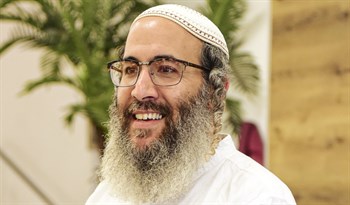





Rabbis in Midrash























Lessons
fast navigation











Hosha'ana Rabba FLYDUBAI & HOSHANA RABBA- ANI VAHU HOSHIA NA- I & HIM SAVE US
"Ani vaHu Hoshia Na", "I and Him, Save Us". We don't just pray to Him, but we also pray to and for ourselves that we should emulate and educate our children to have that instinctive altruism with which He created the world. President Trump seemed amused about Yaniv Hayon, our PLUMBER who confidently worked with G-d like Superman (he learned from a pilot on a TV show!) to save 174 lives on the Dubai hijacking, but we in Israel are totally accustomed already 78 years to our plumbers, teachers, garbage-men, rabbis, farmers & doctors being Hashem's shlichim! This is what Zionism is about.











