Yeshiva
Beit Midrash
- Jewish Laws and Thoughts
- Jewish Thought
- Foundations of Faith

The Torah study is dedicatedto the full recovery of
Asher Ishaayahu Ben Rivka
The Wise Rabbi explains this by way of analogy, saying, "Let us say that you were told that the King of India is a man of great kindness and that you ought to respect him, glorify him and relate his acts of generosity. The proof of this is in the fact that the subjects of his kingdom are righteous, kind, and honest. Would the fact that the people of India are good people obligate you to praise the King of India? Would you feel a necessity to do this?"
The King answered saying, "Why should I feel this way? To begin with, how can I be sure that the King of India is righteous? Perhaps the people of India alone are righteous. Perhaps there is no King of India at all. And even if there were a king, and a righteous one at that, why should this fact obligate me to tell about him? What good does it do me?"

Foundations of Faith (51)
Rabbi Shalom Arush
1 - Emuna From the Cradle
2 - 45. The “Hassid” (Saintly Person)
3 - 47. The “Hassid” - The Ideal Jew
Load More
The Khazar king responded, "Certainly, for by virtue of all of this it would have become absolutely clear to me that there is a King of India - a great and virtuous king, who has done such good for me. In light of all of this, his rule and his direction would certainly be to my benefit."
"And," continued the Rabbi, "were someone to inquire, how would you describe the King of India?" The Khazar king responded, "I would describe him according to my familiarity with him, according to those items that he had sent me, and all which he had done for me. Next, I would bring as additional support the fact that the people of India are a kind people. This demonstrates that the King of India is a man of kindness and deserving of honor and respect."
"This, then," said the Wise Rabbi to the Khazar king, "is exactly what I answered you when you asked me concerning my faith. Moses acted similarly when he came to speak before Pharaoh. He did not say to him, 'The God of the heavens and the earth sent me,' and he did not say, 'My and your Creator sent me.' Rather, Moses said to Pharaoh, 'The God of the Jews has sent me to you.' That is, the God of Abraham, Isaac, and Jacob, for the Forefathers were well known among the nations, and it was well known that God had spoken to them and provided for them, and performed wonders for them. For this reason, then, Moses did not say to Pharaoh, 'The God of the heavens and the earth has sent me to you,' and not, 'My and your Creator has sent me to you.' He did not say something that could not be proven. Rather, he said things which were indisputable and known to all."
"I responded in a similar manner when you asked me concerning my faith. I told you of that which has become clear to us Jews beyond all doubt. I told you concerning the things that we saw with our own eyes - that is, that which our ancestors saw - for this is what obligates us right up until today. These things have been handed down to us via firm and unshakable tradition. Such tradition is just like eyewitness account - as if we ourselves had seen with our own eyes God's revelation to our ancestors. Therefore, I said to you that we believe in the God of Abraham, Isaac, and Jacob, who took us out of Egypt, etc."
Regarding the reliability of tradition, we shall speak in our next discussion.
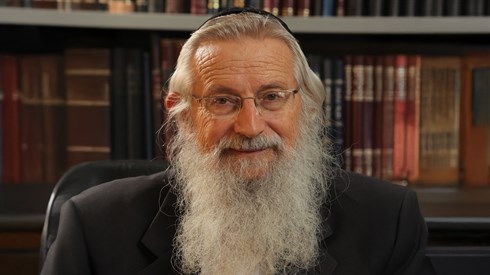






Rabbis in Midrash























Lessons
fast navigation










Various Events FOR WHOM NOT TO VOTE
Rav Zvi Yehuda Kook stressed that Israeli politics is G-dly, so I have no problem answering this common question on a Torani blog. Also, Free-Will is a G-d-given right and obligation, to "destine one's fate" (R. Soloveichik, Kol Dodi Dofek, 67), so I obviously don't tell others how to vote. But once not a few (especially young) have already asked, a couple of personal words from experience and thoughts from chazal & Rav Kook which may be of help to others, mainly for whom NOT to vote.
P'ninat Mishpat Fallout from Failure to Install Elevator – part II
based on ruling 85007 of the Eretz Hemdah-Gazit Rabbinical Courts








