Yeshiva
Beit Midrash
- Shabbat and Holidays
- Jewish Holidays
- Tu Bishvat

The Torah study is dedicatedin the memory of
R. Avraham ben-tziyon ben shabtai
True, there are those who would claim that while this is the sort of idea we would expect to hear in a Zionist Yeshiva , it is certainly not in keeping with the plain truth of the Torah , for according to the Torah a Jew clings to God through prayer, study of the Law, and fulfillment of the Mitzvoth . These and similar acts are how we fulfill the Torah's commandment to "cling to Him" (Deuteronomy 10:20). No doubt, working the soil of Eretz Yisrael possesses some degree of value, but to consider such labor an act of clinging to God is going a bit overboard.
Yet, there is no way of avoiding the facts: The Sages of the Midrash were of the opinion that tree-planting in Eretz Yisrael is a form walking in God's ways. Occupying oneself with planting does not mean merely participating in a yearly tree-planting ceremony, rather, it means becoming an actual tiller of the soil: putting on work clothes, rolling up one's sleeves, planting, irrigating, pruning - in short, the growing of trees with everything it involves. This is the sort of work which our Sages claimed represents clinging to God and walking in His ways, and this is the first thing that must be done upon entering the Land of Israel. There is a Midrash which expresses this concept most lucidly: "Rabbi Yehuda said in the name of Rabbi Simon: "The Torah commands us to 'follow God your Lord' (Deuteronomy 13:5). But how is it possible for a man of flesh and blood to 'follow' God? Why, it is written in the book of Tehillim , 'Your way is in the sea and Your path in great water.' In another place the Torah commands us to 'Cling to Him' (Deuteronomy 10:20). Yet, is it possible for a mere mortal to rise up to heaven and cling to the Divine Presence? Is it not written in the Torah itself, 'For the God your Lord is a consuming fire'? Rather, the intention is to teach us that just as God, when creating the world, occupied himself first with planting trees - as it is written, 'God planted a garden in Eden' (Genesis 2:8) - you too, when entering the Land of Israel, are to occupy yourselves first with planting trees, as it is written, 'When you come into the land, you shall plant trees bearing [edible] fruit'" (Leviticus 19: 23).'" God, then, occupied Himself first with planting trees. If we do as He did, occupying ourselves with tree-planting, we are, in effect, "walking in His ways" and fulfilling the commandment to "cling to Him."
Concerning the question of how to view the practice of farming in the Land of Israel, it is worth taking note of the words of Rabbi Moshe Sofer, the renown Hatam Sofer , with regard to the opinion of Rabbi Yishmael in the Talmud. It is written, "Do not allow the words of this book of the Torah be absent from your mouth" (Joshua 1:8). Rabbi Yishmael explains that this verse can not possibly be taken literally, for prior to this the Torah states: "...You will gather in your grain, your wine, and your oil." One, concludes Rabbi Yishmael, must integrate his Torah study with his labor. Rabbi Shimon bar Yochai, on the other hand, says that if man were to plow at the fixed time, sow at the fixed time, harvest at the fixed time, thresh at the fixed time, and winnow at the fixed time, nothing would be left of his Torah study? Rather, when a Jew fulfills God's will his work is carried out by others leaving him free to study Torah and to fulfill the literal meaning of the verse, "Do not allow the words of this book of the Torah be absent from your mouth." But when a Jew does not fulfill God's will he has no choice but to work for himself, as it says, "...You will gather in your grain..."
"In my own humble opinion," says the Hatam Sofer , "Rabbi Yishmael said what he said with regard to Eretz Yisrael , and when the majority of the Jewish people are settled on the land, for in Eretz Yisrael the mere working of the Land is itself a Mitzvah - the Mitzvah of settling the Land and bringing forth her holy fruit. In this context the Torah has commanded us to 'gather in your grain.' Boaz winnowed the barely threshing floor at night for the sake of fulfilling the Mitzvah . And just as it is forbidden to say 'I won't lay Tefillin because I am busy studying Torah ,' so it is forbidden to say, 'Let somebody else gather in the crops, for I am busy studying Torah .' In fact," continues the Hatam Sofer , "I would venture to say that other professions - in so far as they could be considered an acts of 'settling the world' - are included in this Mitzvah as well. All of this is, though, is true specifically with regards to Eretz Yisrael ; outside of Israel, the more one busies himself in the ways of the world, the more he destroys his own personal worship of God. Outside of the Land of Israel Rabbi Yishmael would agree with Rabbi Shimon bar Yochai, but when it comes to the Land of Israel Rabbi Yishmael says '...You will gather in your grain..." - It is a Mitzvah to settle the Land of Israel, and this Mitzvah is not suspended for the sake of Torah study, rather, one is obliged, together with the study of Torah , to settle the Land of Israel and to till its soil, bringing forth its holy fruit.
Let us bear witness to a year of bountiful fruit, a year of growth, and a year in which the pride of salvation flourishes.
---------------------
Torah - the Five Books of Moses
Mitzvoth - commandments
Midrash - an exposition of Scripture, or collection of such, by the early Sages
Tehillim - Psalms
Yeshiva - a rabbinical academy
Tefillin - phylacteries
Eretz Yisrael - the Land of Israel
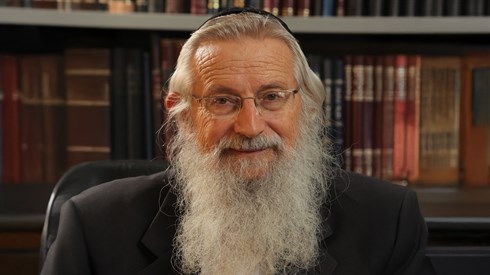




Rabbis in Midrash























Lessons
fast navigation










Hosha'ana Rabba FLYDUBAI & HOSHANA RABBA- ANI VAHU HOSHIA NA- I & HIM SAVE US
"Ani vaHu Hoshia Na", "I and Him, Save Us". We don't just pray to Him, but we also pray to and for ourselves that we should emulate and educate our children to have that instinctive altruism with which He created the world. President Trump seemed amused about Yaniv Hayon, our PLUMBER who confidently worked with G-d like Superman (he learned from a pilot on a TV show!) to save 174 lives on the Dubai hijacking, but we in Israel are totally accustomed already 78 years to our plumbers, teachers, garbage-men, rabbis, farmers & doctors being Hashem's shlichim! This is what Zionism is about.













