Yeshiva
Beit Midrash
- Sections
- Chassidish Stories and Great Rabbis
- The Life of Tzaddikim

As a child, he studied in the Etz Chaim yeshiva elementary school, which was located on the ruins of the R' Yehudah Chassid Synagogue. His rabbis during this period were the famous instructors of Etz Chaim, Rabbi Eliyah Solomon, Rabbi Leib Ruchamkin, Rabbi Eliyahu Friedman, Rabbi Menachem Mendel Mendelson, and others. From here he went on to study in the Etz Chiam Yeshiva in the Machaneh Yehudah neighborhood, and he would walk daily back and forth from his house to the Yeshiva. His family continued to live in the Old City until 5689 (1939), despite the animosity of their Arab neighbors. Finally, the family uprooted to the Bucharim neighborhood where they quickly integrated themselves and became friendly with its residents and rabbis.
At a very young age Rav Avrum entered the Tiferet Tzvi Yeshiva where he became close to Rabbi Reuven Tropp. Later he learned in the Hebron Yeshiva. During that same period many great scholars were learning at the Hebron Yeshiva, for example, Rabbi Goren, Rabbi Jolti, Rabbi Ferbstein, and others. The Rosh Yeshiva (yeshiva dean) took a special interest in Rav Avrum. He became a central figure in the Yeshiva, recognized as a prestigious Torah scholar.
He was the study partner of Rabbi Moshe Hevroni, who would later become the Rosh Yeshiva of the Hebron Yeshiva. Rabbi Isser Zalman Meltzer, from whose work "Even HaEzel" Rav Avrum would often quote, was especially fond of the young scholar. Rav Avrum was likewise very close to the Rebbe of Tchebein, Rabbi Yitzchak Zeev Soloveitchik (Griz), and the Hazon Ish, with whom he corresponded for an extended period of time.
Rabbi Yitzchak Isaac HaLevi Herzog zt"l, who presided as Chief Rabbi of the State of Israel at that time, gathered around himself a group of great Torah scholars. This group made a practice of assembling every Friday in the home of the Chief Rabbi to study, deliberate, and discuss Torah matters. One of the organizers of this weekly gathering was Rav Avrum. Rabbi Herzog admired him greatly and ordained him to serve as member of the High Court of the Jerusalem Chief Rabbinate. Rabbi Moshe Feinstein also recognized his greatness. In "Iggrot Moshe" (Even Haezer 24) he deliberates over the words of Rav Avrum at length and refers to him as "the brilliant and illustrious rabbi . . . of the sages of Jerusalem fit to rule in every aspect of Torah."
Rav Avrum's acquaintanceship with Rabbi Tzvi Yehudah HaCohen Kook zt"l began when they would occasionally meet at Shacharit (morning prayer) in the Meah Shearim neighborhood. The bond between them became further strengthened when Rav Avrum married Rebbetzin Pnina (Hershovitz). The brother of Rebbetzin Pnina, Rabbi Shalom Natan Raanan, zt"l, was the brother-in-law of Rabbi Tzvi Yehudah and served for many years as instructor and director of the Merkaz HaRav Yeshiva. At the behest of Rabbi Tzvi Yehudah, Rav Avrum began studying Torah at Merkaz HaRav where he became very close to the Rosh Yeshiva, Rabbi Charlop.
In the year 5614 (1954), two years after the death of Rabbi Charlop, Rav Avrum was appointed chief instructor at Merkaz HaRav and began giving a general class on a weekly basis. Chazon Ish asked Rav Avrum to move to Bnei Brak, but the latter chose to remain in Jerusalem and continue teaching at the Merkaz HaRav Yeshiva. During this same period, the Yeshiva began to blossom as a result of a large influx of students from the "New Settlement," youngsters affiliated with the Mizrachi and the Bnei Akiva youth movement. Rav Avrum would remain in the yeshiva day in and day out, tending to each and every student while living on close to nothing.
Until his final days, the yeshiva was his whole world. He was extremely close to even the youngest students. By virtue of his unique vitality in study and prayer he infused all those around him with love for the Torah, the people of Israel, and the land of Israel.
From 5616 (1956), in addition to his work at the yeshiva, Rav Avrum began to serve as judge in the regional religious court. Thereafter, he became a presiding judge and was later appointed member of Jerusalem's High Court. In these positions he wrote many legal rulings that now serve as foundation stones in judicial decision making. He was able to free Agunot (deserted wives) so that they could remarry, and he rendered decisions on the most complex matters with unique sensitivity.
Rav Avrum was a member of various committees, among them a committee whose purpose was to solve the problem of autopsy, and an education committee appointed by the minister Moshe Chaim Shapira. One of the important decisions made by this latter committee was the decision to recognize yeshiva study as the best form of training for teachers.
In 5644 (1984), after the death of Merkaz HaRav's Rosh Yeshiva, Rabbi Tzvi Yehudah Kook, zt"l, Rav Avrum was appointed Rosh Yeshiva. Until his death, during twenty-five years, he oversaw the yeshiva with great devotion. Most of those who today stand at the head of Religious-Zionist educational institutions (yeshivas, elementary school yeshivas, Hesder yeshivas, Mechinot, boys' high school yeshivas, girls' religious high schools, and Midrashot) are graduates of the Merkaz HaRav Yeshiva and students of Rav Avrum.
Being, as he was, close to different sectors of the public, Rav Avrum was able to resolve disputes and solve complicated problems with wisdom and pleasantness.
In 5653 (1993) Rav Avrum was appointed Chief Rabbi of the State of Israel (the first native Jerusalemite to hold this position) together with Rabbi Mordechai Eliyahu. During their tenure, the two of them worked energetically in all areas: they addressed the fine details of the issue of Ethiopian Jewry's Jewishness, demanding a "giur lechumra" (conversion for stringency's sake); they acted to strengthen the state's Kashrut (dietary law observance); they solved, from a halachic standpoint, the complicated problem of organ transplant, laying down clear guidelines; they created a new infrastructure for the Sabbatical year, and more.
Both Rav Avrum and Rabbi Eliyahu expressed strong opposition to the transfer of portions of the Land of Israel to non-Jews, and taught that any law or command negating the laws of the Torah should be opposed. During the Gulf War they ruled that it was forbidden to leave the land of Israel. They even traveled around Israel speaking to citizens and strengthening their spirits in the face of the Iraqi threat.
The two rabbis forged strong bonds with the prime ministers and the military. They worked together to strengthen bonds with Diaspora Jewry via meetings with rabbis and public figures in America, Europe, and the Soviet Union, among them Rabbi Soloveitchik, The Lubavitcher Rebbe, and Rabbi Moshe Feinstein. In addition, they met with President Bush Sr. and with foreign ambassadors in order to strengthen ties between Israel and Diaspora Jewry and to make their impact felt in religious, educational, and political matters.
Throughout their tenure special attention was given to Russian Jewry. The rabbinate saw to the release of Prisoners of Zion, and when the gates were eventually opened, the rabbinate helped absorb the hundreds of thousands of new immigrants, both spiritually and practically, solving the difficult halachic problems that this estimable wave of immigration brought with it.
During Rav Avrum's decades of public service, he never departed from the "Tent of the Torah." Day after day he would dedicate numerous hours to the yeshiva - to learning and to teaching, to writing books and articles, to providing personal help with a pleasant countenance to every person who came to him. There was practically never a day in which he was not giving a class or lecture, teaching entire classrooms of students from yeshivot, Ulpanot, and high schools, as well as people of all ages and from all sectors of society who would come to see him. He did everything with the vigor, enthusiasm, and joy of a youth, while maintaining a viewpoint grounded in Torah and Jewish tradition.
May God place strength and wisdom in the hearts of those Torah scholars who follow in Rav Avrum's path at Merkaz HaRav Yeshiva. We all pray that the Yeshiva grow and become strong and foster Torah scholars full of Torah and fear of Heaven, lovers of the land of Israel and the nation of Israel. And may we merit the speedy advent of the Messiah, the restoration of the Holy Temple, and the Resurrection of the Dead, Amen.
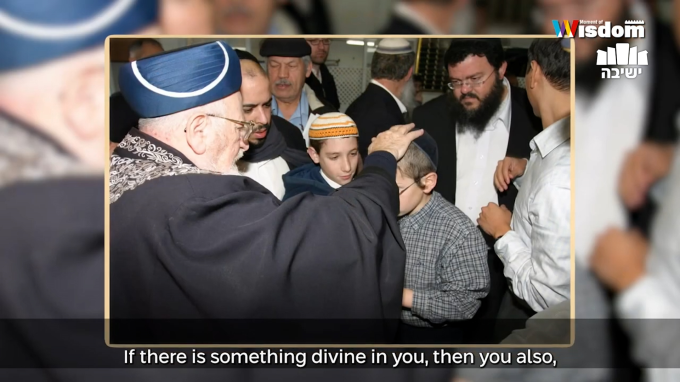



Rabbis in Midrash






















Lessons
fast navigation










Various Events FOR WHOM NOT TO VOTE
Rav Zvi Yehuda Kook stressed that Israeli politics is G-dly, so I have no problem answering this common question on a Torani blog. Also, Free-Will is a G-d-given right and obligation, to "destine one's fate" (R. Soloveichik, Kol Dodi Dofek, 67), so I obviously don't tell others how to vote. But once not a few (especially young) have already asked, a couple of personal words from experience and thoughts from chazal & Rav Kook which may be of help to others, mainly for whom NOT to vote.

P'ninat Mishpat Fallout from Failure to Install Elevator – part II
based on ruling 85007 of the Eretz Hemdah-Gazit Rabbinical Courts











