Yeshiva
Beit Midrash
- Shabbat and Holidays
- Jewish Holidays
- Shavuot

Although we recite 3 different Birkot HaTorah every day, the Talmud (Brachot 11b) teaches that the "best" of these 3 is the final one, "אשר בחר בנו מכל העמים ונתן לנו את תורתו...", "that He chose us from all of the nations, and gave us His Torah". Rashi explains why this is the best of those 3 brachot: "For it contains thanks to G-d, and praise for Torah and ISRAEL".
Rav Tzvi Yehuda Kook zt"l often stressed (e.g. Mitoch HaTorah haGoelet, ch. 4) that first Hashem chose Israel, and subsequently gave us His Torah. Not that our uniqueness stems from what we received the Torah, but contrarily, He first chose us and accordingly gave us the Torah. One who forgets the specialness of Israel is missing the key to accepting the Torah. It's a "package deal" (the midrash inferring that G-d considered giving the Torah to other nations comes to teach another message, but is exactly that, just a midrash).
Similarly, upon examining this parallel between Ahava Rabba (the "great love" that G-d loves Israel) and Birkat HaTorah, we see that the essence of this most important bracha (which together with Birkat HaMazon are the only 2 brachot which are m'd'oraita), is as always found in the end, subsequent to the summarizing bracha:
"והביאנו לשלום מארבע כנפות הארץ ותוליכנו קוממיות לארצנו, כי א-ל פועל ישועות אתה ובנו בחרת מכל עם ולשון... ברוך אתה ה' הבוחר בעמו ישראל באהבה" , "And bring us to peace from the FOUR CORNERS of the earth and lead us UPRIGHT to our LAND. Because, You are the Almighty, Who performs acts of REDEMPTION, and You have chosen us from among all NATIONS and LANGUAGES, and You have brought us close to Your great Name, forever in truth; that we may give thanks to You, and proclaim Your Oneness, with love. Blessed are You, Adonay, Who chooses His nation Israel with LOVE".
Similarly, the other bracha before Kriyat Shema, which praises G-d as the Creator of lights, explicitly mentions that it's not just referring to 5786 years ago, but also "אור חדש על ציון תאיר", "the new light which He will shine on Zion" with the advent of Israel's redemption, which again is subsequent to the summarizing bracha, is included in that plural blessing, "ברוך אתה ה' יוצר המאורות" (haMe'orot). G-d's running of Jewish history and redemption to this day, is a natural continuation of Creation.
Accordingly, as we approach Shavu'ot, and celebrate our receiving the Torah, we must recognize that the current Zionist gathering of the exiles in mass aliya to Israel, and living "upright" with self-respect in our Jewish State, are the direct doing of Hashem "Who performs acts of redemption". This entire Zionist rebirth is a direct outcome that we are His chosen nation. And just as we are about to proclaim His Oneness (in Shema), He first proclaims OUR oneness, and His unique love for Am Yisrael.
The Mishna (Ta'anit 4, 8) teaches us on the pasuk "on the day of his marriage" (Shir HaShirim 3, 11), is referring to Shavu'ot, when Hashem wed with Israel. This act of mutual designation of the other's oneness and single love, is what we celebrate.
How can we not love Israel, when Hashem loves us so much! The Zohar (vol. 3, 73a) teaches that "Israel, the Torah, and G-d Himself are actually one and the same". Accordingly, Shavuot, the holiday of Matan Torah, resonates with His and our love of Israel, the Land, the State ("קוממיות") and the Torah. עם ישראל בארץ ישראל על פי תורת ישראל!
Chag Same'ach & Besorot Tovot! Rav Ari Shvat (Chwat)
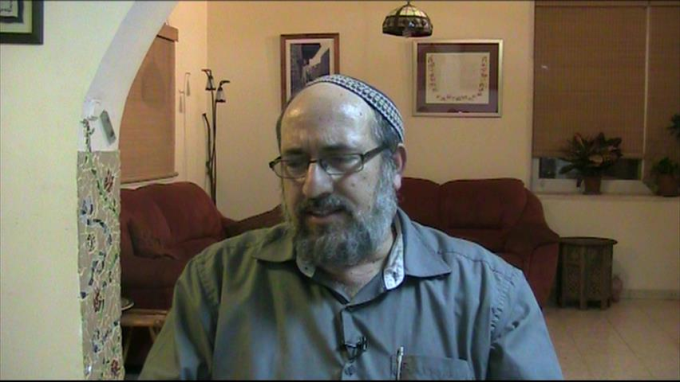
Rabbi Ari Shvat
Lectures at various yeshivot, michlalot and midrashot. Has published many books & Torani articles and is in charge of Rav Kook’s archives.
Ein Aya Complete G-dliness Doesn't Weaken But Enhances Natural Drives
Ein Aya Shabat Chapter B Paragraph 50






Rabbis in Midrash























Lessons
fast navigation









Various Events FOR WHOM NOT TO VOTE
Rav Zvi Yehuda Kook stressed that Israeli politics is G-dly, so I have no problem answering this common question on a Torani blog. Also, Free-Will is a G-d-given right and obligation, to "destine one's fate" (R. Soloveichik, Kol Dodi Dofek, 67), so I obviously don't tell others how to vote. But once not a few (especially young) have already asked, a couple of personal words from experience and thoughts from chazal & Rav Kook which may be of help to others, mainly for whom NOT to vote.

P'ninat Mishpat Fallout from Failure to Install Elevator – part II
based on ruling 85007 of the Eretz Hemdah-Gazit Rabbinical Courts







