Yeshiva
Beit Midrash
- Jewish Laws and Thoughts
- Personality Development
- Pathways in Personality Development

The Torah study is dedicatedin the memory of
Hana Bat Haim
What is devotion? Devotion is the state in which a person's heart clings to God so intensely that he is not concerned with anything else, as alluded to in Solomon's simile (Proverbs 5:19), "A beloved gazelle, full of favor . . . In her love will you ever wander." The height of devotion is attained when a person clings to his Creator constantly, at all times. At the very least, one who loves his Creator will certainly cling to Him during while worshiping Him.
The sages teach (Berachot 5a): "Once, R' Chanina ben Dosa, while standing and praying, was bitten by a poisonous lizard, but he did not interrupt his prayers. His disciples asked him, 'Our master, did you not feel anything?' He answered, 'I swear, because my heart was intent on my prayers, I felt nothing.' "
Pathways in Personality Development (52)
Rabbi Zalman Baruch Melamed
37 - 37. Piety and the Love of God
38 - 38. Love and Devotion to God
39 - 39. For the Sake of God's Honor
Load More
The second branch of love for God is joy, and this is an important principle in the service of God. Thus King David says (Psalms 100:2), "Serve God with joy; come before Him with song," and (Ibid. 68:4), "The righteous will rejoice; they will exult before God and be filled with happiness." And our Sages of blessed memory have said (Shabbat 306), "The Divine Presence comes to rest upon one only through his rejoicing in a good deed." R' Ibu said, "When you stand before him in prayer, let your heart rejoice that you are praying to an unparalleled God."
In this vein, King Solomon says (Song of Songs 1:4), "Draw me on; we will run after You. The King has brought me to his chambers; we will rejoice and be happy in You." The more that a person merits entering the chambers of the knowledge of God's greatness, the more happy he becomes, and his heart rejoices within him.
David would give abundant expression to the joy he felt in serving God (Psalms 104:34): "Let my words be pleasant to Him; I will rejoice in God," and (Ibid. 43:4), "I will come to the altar of the Lord, to the God who is the joy of my rejoicing and I will praise You with the harp, O God." His joy waxed so strong within him that his lips moved of themselves and sang (Ibid. 71:23), "Let my lips rejoice, for I will sing to You."
Furthermore, because Israel did not serve God joyfully, God reprimanded them (Deuteronomy 28:47): "Because you did not serve the Lord your God with happiness and willingness of heart." We see, then, that joy is an important principle in the service of God.
The third branch of love for God is jealousy, for one one who loves God cannot bear seeing God's name disparaged, and he becomes jealous on God's behalf. Elijah thus says (I Kings 19:10), "I have been exceedingly jealous for the Lord of Hosts..." and Pinchas, in his jealousy for God's honor, smote the sinners and thus put an end to the plague (Numbers 25:13): "Because he was jealous for his God and brought about atonement for Israel."
A person who loves God cannot bear the desecration of God's name, and this is what King Solomon says (Proverbs 28:7), "The deserters of Torah will praise the wicked and the observers of Torah will rebuke them," and King David says (Psalms 97:10), "Those who love God hate evil."
---
Some of the translated material in the above article was taken from, or based upon, "The Path of the Just" (Feldheim).
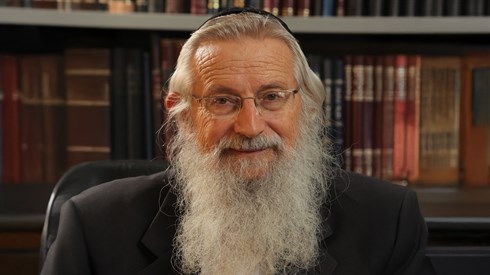






Rabbis in Midrash























Lessons
fast navigation









Hosha'ana Rabba FLYDUBAI & HOSHANA RABBA- ANI VAHU HOSHIA NA- I & HIM SAVE US
"Ani vaHu Hoshia Na", "I and Him, Save Us". We don't just pray to Him, but we also pray to and for ourselves that we should emulate and educate our children to have that instinctive altruism with which He created the world. President Trump seemed amused about Yaniv Hayon, our PLUMBER who confidently worked with G-d like Superman (he learned from a pilot on a TV show!) to save 174 lives on the Dubai hijacking, but we in Israel are totally accustomed already 78 years to our plumbers, teachers, garbage-men, rabbis, farmers & doctors being Hashem's shlichim! This is what Zionism is about.
Moreshet Shaul Hashem Is your Shadow – part I
Based on Siach Shaul, Pirkei Machshava V’Hadracha p. 420 – an address from 1941

P'ninat Mishpat A Non-Contractor in Changing Times – part I
(based on ruling 85128 of the Eretz Hemdah-Gazit Rabbinical Courts)







