Yeshiva
Beit Midrash
- Torah Portion and Tanach
- D'varim
- Shoftim

There is a great deal of space and latitude between anarchy and dictatorial rule. The Torah speaks to this issue but allows for a great deal of human and national choice in the matter. The general tenor of Jewish tradition is to be wary of big and powerful government. Avot teaches us not to be known to government and that the nature of government is to demand, albeit apparently lovingly, much from the individual when it is for its own benefit but to be unavailable to help the individual when one is hard pressed and in need of outside help. Yet Avot also stresses the necessity for government and the requirement to pray for its success and welfare, for otherwise society would be unlivable. As in all matters of human existence, the Torah here demands from us a good sense of proportion, wisdom and sophistication in dealing with government and society. The Torah does not deal with us in absolute specific terms but rather establishes general parameters of righteous judicial systems and equitable standards of law enforcement.
The Torah is clear in its condemnation of corruption and bias, especially in judicial and legal matters. The poor and the wealthy, the scholar and the unlettered, the well-connected and the unknown, all are to be equal before the eyes of judges and the law. The Torah defines true justice as being the pursuit of righteousness and fairness by just means. No unjust means can be condoned even in the pursuit of apparently righteous causes.
The Torah abhors corruption in all forms and methods. The premise of the Torah is that corruption is a natural state of being for humans. We are all somehow corrupted by our past experiences and our preset worldviews. It is interesting to note that, for example, the results of many cases brought before the United States Supreme Court are almost always predictable because of the previous strongly held views of the individual justices. They are certainly not corrupt in the criminal sense of the word, but in the world of the Torah they are certainly not freed from the taint of corruption. The Torah demands an open mind, a listening ear, flexibility of thought and an understanding of human nature and of the ways of the world from those who would serve as judges of other humans. These qualities are not found in abundance, but they are to be searched for and respected in Jewish life and law. True and absolute justice may be unattainable in this world. But the concept of true justice must always be present in all matters of Jewish law and society.
Shabbat shalom
Rabbi Berel Wein
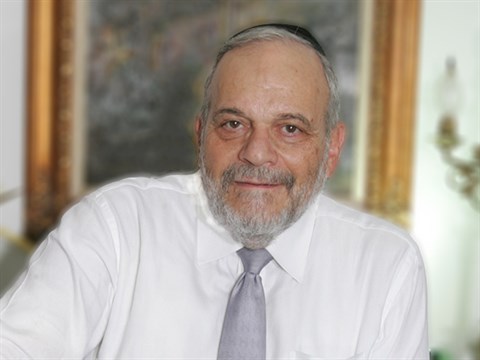







Rabbis in Midrash























Lessons
fast navigation











Hosha'ana Rabba FLYDUBAI & HOSHANA RABBA- ANI VAHU HOSHIA NA- I & HIM SAVE US
"Ani vaHu Hoshia Na", "I and Him, Save Us". We don't just pray to Him, but we also pray to and for ourselves that we should emulate and educate our children to have that instinctive altruism with which He created the world. President Trump seemed amused about Yaniv Hayon, our PLUMBER who confidently worked with G-d like Superman (he learned from a pilot on a TV show!) to save 174 lives on the Dubai hijacking, but we in Israel are totally accustomed already 78 years to our plumbers, teachers, garbage-men, rabbis, farmers & doctors being Hashem's shlichim! This is what Zionism is about.











