Yeshiva
Beit Midrash
- Torah Portion and Tanach
- Bereshit
- Chayei Sara

But powerless as we are to really answer that question cogently and logically, we should, in retrospect, view our mother Sarah with a renewed sense of awe and appreciation. Lesser people would have been crushed by such a cascade of events in one’s lifetime. The Mishna speaks of the ten tests in life that befell Avraham - and that he rose above all of them. We should also make mention of the tests in life that our mother Sarah endured in her existence and that she too rose above them. "The wisdom of women builds their home," said King Solomon. That certainly must be said of the house of Avraham, the founding home of the Jewish people. It was Sarah’s wisdom and fortitude that was the foundation of that home.
In everyone’s life there are moments of danger, frustration, disappointment and even tragedy. Who amongst us can say in truth that all the years of our life were "all good?" This being the case we must revert to the understanding that since the "all good" in the life of our mother Sarah must perforce be interpreted in a spiritual sense – in a sense of continual service to God and man and a commitment to a higher level of living than mere physical existence and an optimistic frame of mind – so too must we search for such an "all good" interpretation in our individual lives as well. The striving for finding such an "all good" approach to life is the essence of Torah and Jewish ritual. I once had to attend a rabbinical court here in Israel in order to register as being married. As often happens in government offices here the wait to be serviced was long and the ambience was not very pleasant. The clerk handling the matter was rather surly and disinterested in my problem.
Finally a wonderful rabbi came out of his inner office and took care of me and my need expeditiously and warmly. When I was foolish enough to begin to complain to him about the long wait and the less than forthcoming clerk, the rabbi gently shushed me and said: "Here in the Land of Israel all is good!" And when one is on that level of spiritually that is certainly true.
Shabbat Shalom
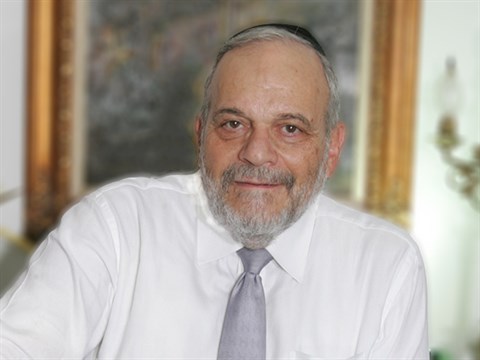
Rabbi Berel Wein




Rabbis in Midrash























Lessons
fast navigation











Various Events FOR WHOM NOT TO VOTE
Rav Zvi Yehuda Kook stressed that Israeli politics is G-dly, so I have no problem answering this common question on a Torani blog. Also, Free-Will is a G-d-given right and obligation, to "destine one's fate" (R. Soloveichik, Kol Dodi Dofek, 67), so I obviously don't tell others how to vote. But once not a few (especially young) have already asked, a couple of personal words from experience and thoughts from chazal & Rav Kook which may be of help to others, mainly for whom NOT to vote.

P'ninat Mishpat Fallout from Failure to Install Elevator – part II
based on ruling 85007 of the Eretz Hemdah-Gazit Rabbinical Courts









