YeshivaThe torah world Gateway
Beit Midrash
- Shabbat and Holidays
- Laws of Hanukkah
- Peninei Halkha - Hanukkah
- Sections
- Peninei Halakha

Likewise, one may not begin any type of work during the half-hour period before candle-lighting time that may drag on for a long time, nor should one go to sleep during that time. One may begin to eat, work, or sleep during this period if he asks a friend to remind him to light on time. Nevertheless, even if one begins these activities in a permissible fashion, i.e., more than half an hour before candle-lighting time, he must stop at tzeit and light the candles, so that he does not miss the time that the Sages enacted (MB 672:10; SHT ad loc.; Peninei Halakha: Prayer 25:9).
One who is in the middle of work and cannot get home in time to light at tzeit may continue working until he is finished. However, he must take care not to eat until he fulfills the mitzva. In addition, if his work is the kind that can drag on for a long time, to the point where there is a concern that he will end up forgetting to light the candles, he may continue working only if he asks a friend to remind him to light when his work is done (see below 13:6, 9).
One may not even study Torah once the time for lighting the Ĥanuka candles arrives. However, if a regular Torah lecture takes place at that time, and it would be difficult to reschedule it for another time, it is best to keep the lecture at its normal time and remind everyone at its conclusion to light Ĥanuka candles (see below ch. 13, n. 13).
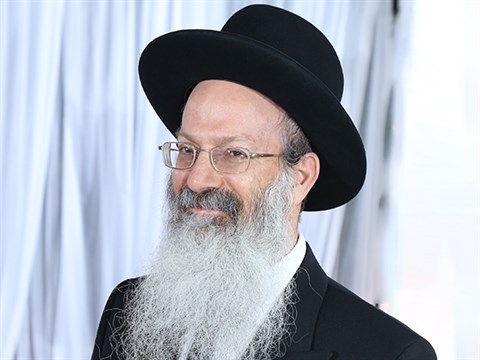
Rabbi Eliezer Melamed
Rosh Yeshiva of Har Bracha and rabbi of the settlement.

Peninei Halakha 18. Torah Verses in the Prayers and in the Berakha of She-asa Li Kol Tzorki
Chapter 10: The Laws of Tisha Be-Av


Rabbis in Midrash






















Lessons
fast navigation










P'ninat Mishpat A Non-Contractor in Changing Times – part II
(based on ruling 85128 of the Eretz Hemdah-Gazit Rabbinical Courts)
Moreshet Shaul Hashem Is your Shadow – part II
Based on Siach Shaul, Pirkei Machshava V’Hadracha p. 420 – an address from 1941
Parashat Hashavua Happiness for the Right Reasons
[With painful longing, we share these divrei Torah from our co-Rosh Kollel for close to 40 years, Harav Moshe Ehrenreich zt”l.]

Israel and the Nations A Few Minutes & Many Innovative Ideas on Antisemitism & What to do About It
As we approach the High Holidays, this short lecture (18 minutes) deals with the unfortunate situation of how Israel and the Jewish People stand against antisemitism, analyzing its cause according to Rav Kook, and how to deal with the issue pragmatically & via our prayers.
Ha'azinu PURSUIT is PERFECTION
p. Ha'azinu, Shabbat Shuva
Rav Kook deals with the question of the seemingly hopeless nature of Tshuva. For G-d Himself knows that He created us with free will, which inevitably means we will sometimes make mistakes and choose wrong. This can easily be frustrating, freezing us into inaction and ye'ush (loss of hope). If one sins even once, does he chalila have no choice but suicide?! Moreover, our Godly conscience demands justice, righteousness and perfection, but we all know this is impossible, so what's the solution? Rav Kook's innovative thinking, strongly based on chazal (our sages), offers an inciteful and important aspect to this topic, especially this time of year!
Sukkot Bug-Free Sukkah: Essential Halachic and Practical Schach Guide
How to inspect, clean, and store bamboo mats and palm branches to protect your mitzvah and holiday meals.