Yeshiva
Beit Midrash
- Sections
- Peninei Halakha
- Shabbat and Holidays
- The Three Weeks
- The Laws of Tisha B'Av

Most of the passages recited in the Korbanot section were included in the regular prayer service for two reasons: 1) to substitute for the actual offerings and as a preparation for prayer; and 2) so that every Jew studies a bit of Torah each day from Scripture, Mishna, and Talmud. Consequently, on Tisha Be-Av, when one may not study Torah, the question arises: May one recite these passages? Many poskim maintain that the main purpose of any part of our liturgy is simply to serve as prayer. Therefore, one may recite any liturgical passages on Tisha Be-Av. Sephardim, as well as some Ashkenazim, follow this viewpoint in practice. Others maintain that on Tisha Be-Av one may recite only what he recites on a regular basis in his prayers. He should not, however, recite passages that he does not usually recite in Korbanot.21
Some people recite several chapters of Tehilim every day, such that they complete the entire book every month. Some maintain that one may recite these daily chapters on Tisha Be-Av after midday. Others maintain that it is better to postpone reciting these chapters until after Tisha Be-Av (mb 554:7, Kaf Ha-ĥayim 554:20).22
One of the morning blessings is the berakha of She-asa li Kol Tzorki, which expresses gratitude to God for providing us with shoes to wear. Even though one may not wear high-quality shoes on Tisha Be-Av and Yom Kippur, Ashkenazim and some Sephardim recite the berakha, because it is a general expression of thanksgiving for the normal way of the world, not for the shoes one wears on any particular day. Moreover, one may wear low-quality shoes on these days. Furthermore, we put on regular shoes after the fast is over, and some say that the Birkhot Ha-shaĥar apply to the night as well. According to Arizal, however, one should not recite this berakha on these days, and most Sephardim follow this position.23
On the night of Tisha Be-Av, one may recite all the passages of the bedtime Shema, because one recites the verses in these passages as prayer, not as Torah study.
sa 554:3 states that one may recite the entire daily liturgy, including the midrash of R. Yishmael. ahs 554:6 concurs. Rema 559:4 writes that one should not recite Pitum Ha-ketoret. See Hilkhot Ĥag Be-ĥag 7:44, which explains that Rema is referring to the Pitum Ha-ketoret at the end of Shaĥarit, since not everyone recites it. mb 554:7, however, implies that Rema is referring to the Pitum Ha-ketoret recited before the prayer service. Either way, it seems from mb that, as a rule, whatever one regularly recites in their daily prayers may be recited on Tisha Be-Av. This is the second opinion I recorded in the main text.↩︎
Taz permits reciting on Tisha Be-Av the section of the weekly parasha designated for that day, in order to fulfill the rabbinic requirement of shnayim mikra ve-eĥad targum. Some rely on this opinion, including Chabad Ĥasidim, who recite sections of "Ĥitat" (Ĥumash, Tehilim, and Tanya) daily. However, the vast majority of Aĥaronim do not accept this viewpoint, as explained in sht 554:11. Similarly, one should not read the daily portion of Ĥok Le-Yisrael or Ma’amadot, as Birkei Yosef 554:5 and mb 554:7 state. One may recite Tehilim on behalf of a sick person even before midday, because it is for a special need (Divrei Malkiel 6:9; Torat Ha-mo’adim 8:19, end of note).↩︎
Rosh, Ran, and Tur (oĥ 613) maintain that one should recite She-asa li Kol Tzorki on Yom Kippur, and mb 554:31 concurs. According to Rambam, however, one should not recite the berakha, because he maintains that if one does not derive pleasure from something, he does not recite a berakha on it, as Beit Yosef, oĥ 613 explains. The Vilna Gaon followed this custom as well, but he would recite the berakha after the fast, upon putting on his regular shoes (Ma’aseh Rav §9). In general, Arizal’s custom was to recite berakhot even on things that do not provide pleasure (see Peninei Halakha: Prayer 9:3), but he ruled that one should not recite this berakha on fast days, and his adherents follow this practice, as quoted in Kaf Ha-ĥayim 46:17. Rav Pe’alim 2:8 states that one should not recite the berakha even after the fast ends. See Torat Ha-mo’adim 10:14, which mentions the accepted Sephardic ruling not to recite the berakha on fast days, but adds that those who do recite it have authorities to rely on, and that R. Ovadia Yosef (the author’s father) recites the berakha.↩︎
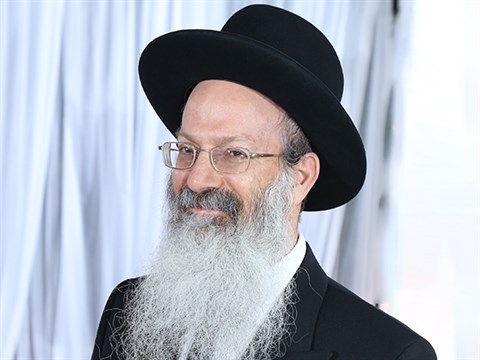
Rabbi Eliezer Melamed

Peninei Halakha 18. Torah Verses in the Prayers and in the Berakha of She-asa Li Kol Tzorki
Chapter 10: The Laws of Tisha Be-Av
The Laws of Purim 15. Scheduling the Se’uda when Purim is on Friday
Chapter 16: The Mitzvot of Joy and Kindness



Rabbis in Midrash
































Various Events FOR WHOM NOT TO VOTE
Rav Zvi Yehuda Kook stressed that Israeli politics is G-dly, so I have no problem answering this common question on a Torani blog. Also, Free-Will is a G-d-given right and obligation, to "destine one's fate" (R. Soloveichik, Kol Dodi Dofek, 67), so I obviously don't tell others how to vote. But once not a few (especially young) have already asked, a couple of personal words from experience and thoughts from chazal & Rav Kook which may be of help to others, mainly for whom NOT to vote.

P'ninat Mishpat Fallout from Failure to Install Elevator – part II
based on ruling 85007 of the Eretz Hemdah-Gazit Rabbinical Courts










