Yeshiva
Beit Midrash
- Sections
- Peninei Halakha
- Shabbat and Holidays
- The Three Weeks
- The Laws of Three Weeks

Even though the Sages prohibited bathing on Tisha Be-Av only, the Rishonim were stringent and would refrain from bathing on the days preceding Tisha Be-Av as well. Many Iberian Jews were stringent as well, and would refrain from washing in hot water during the week of Tisha Be-Av. The Ashkenazic custom, on the other hand, was to refrain from bathing completely during the Nine Days, even in cold water. They would only rinse in cold water in preparation for Shabbat Ĥazon (sa 551:16, mb ad loc., Kaf Ha-ĥayim ad loc. 186).
Today, however, our hygiene and bathing habits have changed completely. In the past, people did not have running water in their homes, and bathing was thus considered a special occasion and a rare pleasure. Because of this, people barely suffered when they refrained from bathing. Nowadays, though, when people shower regularly, this has become a routine practice. Many people shower daily, with soap, and would suffer if they were to go even a single day without showering. Some even have difficulty falling asleep as a result.
Therefore, one who feels pain when he refrains from washing himself may shower in lukewarm water, so that he does not take pleasure in his washing, but rather that the sole purpose of this activity should be his own cleanliness. One may even use soap in order to remove a bad odor from one’s body. And if one cannot tolerate having unclean hair, he may wash his hair with shampoo. These rules apply according to Ashkenazic custom throughout the Nine Days. According to Sephardic custom, they only apply during the week in which Tisha Be-Av falls; before then one may shower using hot water for pleasure.
Even if having foul body odor due to lack of showering does not bother a particular person, he should nonetheless shower during the Nine Days and the week of Tisha Be-Av to remove this foul odor, because of the great value of human dignity. Moreover, many people are sensitive to bad smells nowadays, and if one fails to wash himself, he will cause a desecration of God’s name.
Everyone showers in preparation for Shabbat Ĥazon. The only distinction is that Ashkenazim use lukewarm water, while Sephardim permit using hot water. Those who are accustomed to immersing in a mikveh every day may do so until the day before Tisha Be-Av, though they must make an effort to use lukewarm water rather than hot water.[19]
One may not swim for the purpose of recreation from the first of Av, because one must curtail joyous activities starting then. If the purpose is to improve one’s health, however, like those who swim daily for half an hour, it is permitted, according to Sephardic custom, until Shabbat Ĥazon. Afterward, though, it is proper to be stringent and refrain from all swimming. According to Ashkenazic custom, one may not swim even for health reasons throughout the Nine Days. One who needs to swim for therapeutic purposes may swim until the day before Tisha Be-Av (see above, section 6).
[19] sa 613:1 states explicitly that on Yom Kippur, one may wash his hands or body if they get soiled, because only washing for the sake of enjoyment is prohibited. mb ad loc. 2 infers from this language that one who sweats profusely may wash himself in order to remove the sweat, because such washing is not for pleasure. In the end, though, mb permits this only for an istenis (a delicate and sensitive person). However, if the poskim permit this on Yom Kippur, which is ordained by Torah law – and several Rishonim maintain that even the prohibition on washing is a Torah prohibition – one may certainly be lenient during the Nine Days, when the prohibition on washing is less stringent and is based on the custom of the Rishonim.
Today, almost everyone is considered an istenis with regard to foul odors, since we have sinks and faucets for washing, as well as sewage pipes that remove excrement and urine. In the past, foul odors were commonplace, as sewage would flow in canals in between the houses, or it was buried near villages. It is evident that all halakhot relating to foul odors are determined based on what is accepted in the current setting. Therefore, we are more stringent nowadays with regard to allowing prayer in the presence of foul odor (see Peninei Halakha: Prayer 3:10). In addition, our bathing habits have changed completely, as we shower much more frequently than in the past. Everyone is considered an istenis in this area, and thus we may shower for the sake of cleanliness. The only qualification is that one should use lukewarm water, so as not to derive pleasure from washing. One should not be stringent and wash exclusively in cold water, because most people are used to showering in hot water, and thus using cold water would cause them great pain. Therefore, one should use water that causes neither suffering nor pleasure. It is also worth noting that the difference between the Ashkenazic and Sephardic customs apparently stems from the difference in climate in the regions where each of these groups lived. There is a greater need to bathe frequently in the hotter, southern lands than there is in the colder, northern lands. Moreover, the conventional wisdom among the non-Jews in Europe at the time was that bathing is detrimental to one’s health, and thus they would bathe only once every few months. The Jews who lived there were also influenced by this viewpoint to some degree. Therefore, they acted stringently during the Three Weeks. Today, however, especially in Eretz Yisrael, people suffer greatly from not washing, and the custom, therefore, is to be lenient.
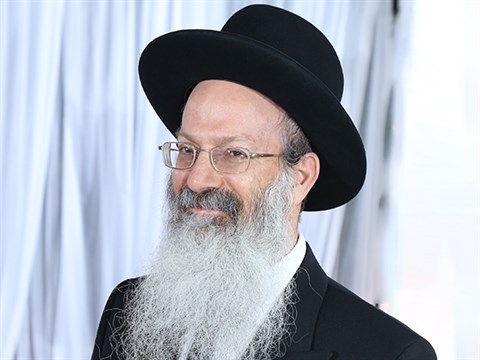
Rabbi Eliezer Melamed

Peninei Halakha 18. Torah Verses in the Prayers and in the Berakha of She-asa Li Kol Tzorki
Chapter 10: The Laws of Tisha Be-Av
Peninei Halakha 7. Throwing Clothes into the Bonfire and Praying at the Gravesites of Tzadikim
Chapter 5: Lag Ba-omer




Rabbis in Midrash
































Hosha'ana Rabba FLYDUBAI & HOSHANA RABBA- ANI VAHU HOSHIA NA- I & HIM SAVE US
"Ani vaHu Hoshia Na", "I and Him, Save Us". We don't just pray to Him, but we also pray to and for ourselves that we should emulate and educate our children to have that instinctive altruism with which He created the world. President Trump seemed amused about Yaniv Hayon, our PLUMBER who confidently worked with G-d like Superman (he learned from a pilot on a TV show!) to save 174 lives on the Dubai hijacking, but we in Israel are totally accustomed already 78 years to our plumbers, teachers, garbage-men, rabbis, farmers & doctors being Hashem's shlichim! This is what Zionism is about.
Moreshet Shaul Hashem Is your Shadow – part I
Based on Siach Shaul, Pirkei Machshava V’Hadracha p. 420 – an address from 1941











