Yeshiva
Beit Midrash
- Sections
- Peninei Halakha
- Shabbat and Holidays
- The Three Weeks
- The Laws of Three Weeks

The Sages instituted prohibitions against cutting one’s hair and washing one’s clothes during the week of Tisha Be-Av (Ta’anit 26b). Accordingly, Shulĥan Arukh (551:3) rules that one may not cut one’s hair from the beginning of the week in which Tisha Be-Av falls, and many Sephardim follow this practice. One may not cut even children’s hair if they have reached the age of ĥinukh (education), in order to train them to mourn the destruction of the Temple. The custom, moreover, is not to cut the hair of even children who have yet to reach the age of ĥinukh, in order to express the sorrow we feel during this period (sa 551:14).
Ashkenazim and some Sephardim – including Jews from Morocco and Djerba, and those who follow Arizal’s customs – are stringent and avoid haircuts during the entirety of the Three Weeks (Rema 551:4; Kaf Ha-ĥayim 551:80; Kitzur sa [Toledano] 387:8; Brit Kehuna 2:12; Jews from Tunis and Algiers customarily do not cut their hair starting from the first of Av, based on the ruling of R. Yehuda Ayash).
There is disagreement about whether these communities should be stringent about haircuts for children during the entirety of the Three Weeks or only during the week of Tisha Be-Av. In a time of need, one may be lenient until the week of Tisha Be-Av (mb 551:82).
This prohibition does not apply only to head and facial hair, but applies to body hair as well. One may, however, trim mustache hair that interferes with one’s eating (sa 551:12-13).
A woman may cut her hair if it is beginning to slip out of her head-covering due to its length. A woman may also remove facial or body hair that mars her beauty (mb 551:79, Kaf Ha-ĥayim 551:47).[6]
In honor of a brit mila, the father, the sandak, and the mohel may cut their hair, until the week of Tisha Be-Av (see below, section 19, regarding clothing).
It is proper for a bar mitzva boy to refrain from cutting his hair during the Three Weeks, because he can cut his hair before the seventeenth of Tamuz. However, if the boy’s father usually shaves every day, he may shave in honor of his son’s becoming a bar mitzva, until the week of Tisha Be-Av (see Kaf Ha-ĥayim 551:10, Piskei Teshuvot 551:6).
One may comb one’s hair even during the week of Tisha Be-Av (mb 551:20, Kaf Ha-ĥayim 551:46). The Aĥaronim debate whether one may cut one’s nails during the Nine Days, although one certainly may do so in honor of Shabbat (mb 551:20, Kaf Ha-ĥayim 551:48).
[6] Some are even more lenient, maintaining that the prohibition on haircuts does not apply to women at all, in accordance with the opinion of sa regarding mourning after shiva (yd 390:5). This ruling is found in Panim Me’irot 2:37 and Torat Ha-mo’adim 5:26.
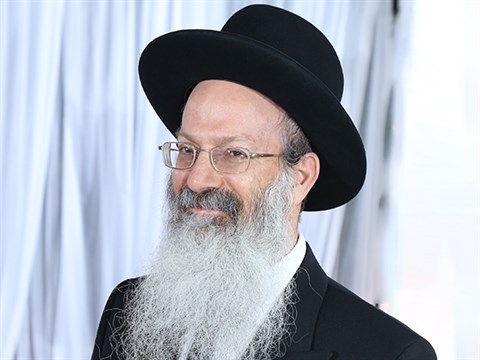
Rabbi Eliezer Melamed

Peninei Halakha 18. Torah Verses in the Prayers and in the Berakha of She-asa Li Kol Tzorki
Chapter 10: The Laws of Tisha Be-Av







Rabbis in Midrash

































Hosha'ana Rabba FLYDUBAI & HOSHANA RABBA- ANI VAHU HOSHIA NA- I & HIM SAVE US
"Ani vaHu Hoshia Na", "I and Him, Save Us". We don't just pray to Him, but we also pray to and for ourselves that we should emulate and educate our children to have that instinctive altruism with which He created the world. President Trump seemed amused about Yaniv Hayon, our PLUMBER who confidently worked with G-d like Superman (he learned from a pilot on a TV show!) to save 174 lives on the Dubai hijacking, but we in Israel are totally accustomed already 78 years to our plumbers, teachers, garbage-men, rabbis, farmers & doctors being Hashem's shlichim! This is what Zionism is about.
Moreshet Shaul Hashem Is your Shadow – part I
Based on Siach Shaul, Pirkei Machshava V’Hadracha p. 420 – an address from 1941









