Yeshiva
Beit Midrash
- Sections
- Peninei Halakha
- Shabbat and Holidays
- Sefirat Haomer
- The Laws of Sefirat Ha'omer

Now that we have discussed the duration of the mourning period, we will outline the laws of the various customs in detail. The Ge’onim write that ever since R. Akiva’s students died in the period between Pesaĥ and Shavu’ot, the Jewish people have a custom not to get married during this time.
Some poskim maintain that only optional marriages are prohibited, like that of a man who has been married before and has already fulfilled the mitzva of procreation. However, one who has yet to fulfill the mitzva of procreation may get married during the omer period, because the mitzva of marriage overrides the custom (Radbaz, Pri Ĥadash). In practice, though, the consensus of Aĥaronim is that it is customary not to get married during this period, even if one has yet to fulfill the mitzva of procreation, because otherwise the custom of mourning would have almost no significance. One may, however remarry his ex-wife, because it is a mitzva to do so and it is not an overly joyous occasion (mb 493:1, Kaf Ha-ĥayim 493:2-3).
According to the custom of most Sephardim, the prohibition against getting married lasts from the beginning of the omer period until the 34th day. That is, one may get married from the morning of the 34th and on. Some Sephardic communities follow a more lenient custom and permit getting married from Lag Ba-omer. Under pressing circumstances, one may follow this practice, in accordance with the ruling of a Torah scholar (see above n. 3).
The Ashkenazic custom in Israel is to forbid weddings from the beginning of the omer period until the 29th of Iyar, allowing them only from Rosh Ĥodesh Sivan and on. Some rabbis permit those who have yet to fulfill the mitzva of procreation to get married from Lag Ba-omer and on, and one who wishes to be lenient for the sake of this great mitzva may do so. All Ashkenazic customs agree that one may get married on the day of Lag Ba-omer, and some are even lenient on the night of Lag Ba-omer; one who wishes to follow this leniency may do so. Additionally, all agree that if a wedding takes place on the day of Lag Ba-omer, the celebrations may continue into the night of the 34th.[6]
If one is invited to a wedding on a day when weddings are forbidden according to his custom, but the groom follows a custom that permits weddings on that day, he may attend the affair, partake of the meal, and dance with joy before the bride and groom (Igrot Moshe, oĥ 1:159).
Only weddings are forbidden. One may hold an engagement party, on condition that no music is played.[7]
[6] Regarding the custom not to get married until Rosh Ĥodesh Sivan, see n. 4. The Chief Rabbinate of Israel has established that all Ashkenazim may get married on Yom Yerushalayim (the 28th of Iyar), the day Jerusalem was reunified in 1967. Regarding the night of Lag Ba-omer, see n. 5. If the wedding took place on the day of Lag Ba-omer, the celebrants may continue the meal and dancing into the night of the 34th.
Under pressing circumstances, some Ashkenazic poskim allow a couple to get married on Friday, the 31st day of the omer, when Lag Ba-omer falls out on Sunday, just as Rema permits cutting one’s hair on that day. Others forbid this. According to Sephardic practice, it seems clear that one should not be lenient in this regard.
mb 493:5 maintains that if Rosh Ĥodesh Iyar falls out on Shabbat – making it doubly joyous – one may get married on Friday and serve the meal and rejoice on Shabbat/Rosh Ĥodesh. Sephardim rule leniently in this case only under pressing circumstances (Kaf Ha-ĥayim 493:42, based on Beit David and Ĥida).
[7] Even though such a party is joyous, it is permitted because it involves some element of a mitzva, as it strengthens the bond between the couple. Nonetheless, one should not play music at such an occasion, because it is not considered an actual se’udat mitzva (a ceremonial festive meal associated with a mitzva), as ma 493:1 and mb 493:3 demonstrate regarding such a meal, in contrast to what Yalkut Yosef states writes (Hilkhot Sefirat Ha-omer §35) in mb’s name. Furthermore, we will explain below, in section 9, that even at a full-fledged se’udat mitzva, like a brit mila, one may play music only if the local custom is to play music at all such events, and there is not always music at engagement parties. In the last few years, however, many people have adopted the custom of playing music and dancing at engagement parties. Therefore, one who believes that this is the custom of his entire environment may be lenient if he wishes and play music to the minimum extent that is considered acceptable. Still, it is proper to hold a siyum at the party, in order to ensure that it is a se’udat mitzva.
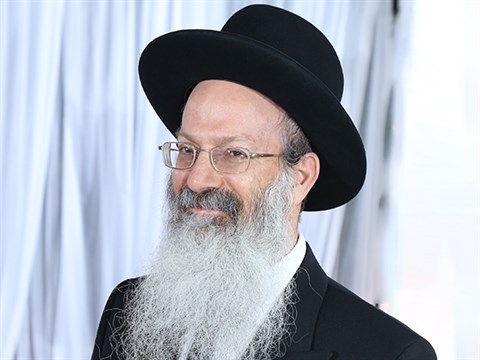
Rabbi Eliezer Melamed

Peninei Halakha 18. Torah Verses in the Prayers and in the Berakha of She-asa Li Kol Tzorki
Chapter 10: The Laws of Tisha Be-Av





Rabbis in Midrash
































Hosha'ana Rabba FLYDUBAI & HOSHANA RABBA- ANI VAHU HOSHIA NA- I & HIM SAVE US
"Ani vaHu Hoshia Na", "I and Him, Save Us". We don't just pray to Him, but we also pray to and for ourselves that we should emulate and educate our children to have that instinctive altruism with which He created the world. President Trump seemed amused about Yaniv Hayon, our PLUMBER who confidently worked with G-d like Superman (he learned from a pilot on a TV show!) to save 174 lives on the Dubai hijacking, but we in Israel are totally accustomed already 78 years to our plumbers, teachers, garbage-men, rabbis, farmers & doctors being Hashem's shlichim! This is what Zionism is about.
Moreshet Shaul Hashem Is your Shadow – part I
Based on Siach Shaul, Pirkei Machshava V’Hadracha p. 420 – an address from 1941











