Yeshiva
Beit Midrash
- Sections
- Peninei Halakha
- Shabbat and Holidays
- Sefirat Haomer
- The Laws of Sefirat Ha'omer

Since it is customary not to celebrate too much during the omer period, the Aĥaronim write that one may not engage in optional dancing (dancing that is not for the sake of a mitzva; ma 493:1). They also forbid playing or listening to musical instruments.
According to Sephardic custom, the laws of mourning last until the morning of the 34th day of the omer. Nevertheless, in honor of the hilula (yahrzeit, anniversary of a death) of R. Shimon bar Yoĥai, music and dancing are permitted on Lag Ba-omer. Afterward, however, the prohibition resumes and continues through the night of the 34th, until the next morning, when all customs of mourning cease to apply.
According to Ashkenazic practice, the prohibitions last until the end of the 32nd day of the omer, meaning that music, dancing, and rejoicing are permitted from the beginning of the night of Lag Ba-omer, in honor of the hilula of R. Shimon bar Yoĥai. Most Ashkenazim refrain from large celebrations – like festive graduation ceremonies or dance nights – until Shavu’ot, but one may play and listen to musical instruments. One may conduct exercise classes with musical accompaniment even before Lag Ba-omer, but ideally the volume of the music should be lowered so that it is clear that the purpose of the music is to facilitate exercise, not to bring joy.[10]
It is customary to permit dancing and playing music on Ĥol Ha-mo’ed Pesaĥ, because it is a mitzva be joyful then (mb 529:16). Weddings, however, may not be held on Ĥol Ha-mo’ed, because we do not mix one celebration with another (sa 546:1). The Sages also forbid getting a haircut on Ĥol Ha-mo’ed, so that people do so prior to the festival (ibid. 531:2).
A Jew who makes a living playing music may perform at non-Jewish affairs if he needs the income. One may also teach or study music during the omer period, since these endeavors are not joyful (Siddur Pesaĥ Ke-hilkhato 12:16; see Piskei Teshuvot 493:4). However, a music student who, in any event, studies only intermittently throughout the year, should schedule a break, if possible, during the mourning period of the omer. If he intends to take only one break a year, it is preferable that it be during the Three Weeks (see below 8:2).
[10] Ashkenazic Aĥaronim were uncertain whether one may make large celebrations after the 33 days of primary mourning are finished. They are even uncertain concerning the days between Rosh Ĥodesh Sivan and Shavu’ot, as sht cites 493:4 in the name of Eliya Rabba and Pri Megadim. Siddur Pesaĥ Ke-hilkhato (ch. 12, n. 50) also cites this uncertainty. R. Shlomo Zalman Auerbach and R. Shmuel Wosner rule stringently (Piskei Teshuvot ch. 493 n. 43). Even though the custom in Israel is to permit weddings after Rosh Ĥodesh Sivan, one should be stringent throughout the omer period with respect to optional dancing. The rationale for extending the customs of mourning beyond Lag Ba-omer is twofold: 1) the tradition that R. Akiva’s students died throughout the omer period, or at least on the weekdays therein; 2) the fact that so many tragedies befell the Ashkenazic communities during these days. The only difference is that we are more stringent in our observance of these customs before Lag Ba-omer than we are afterward. All this was already explained above, in sections 2 and 4 and in notes 2 and 4.
The distinction between a large celebration and a regular one is undefined. However, festive graduation ceremonies and dance nights are certainly considered large celebrations. On the other hand, exercise classes are permitted. If one is uncertain whether an event is considered a large celebration, one may be lenient if one combines it with a siyum or some other mitzva component. According to Sephardic custom, one may participate in any type of celebration after Lag Ba-omer. If many of the participants in an event are Sephardim, the group as a whole may be lenient, in accordance with their custom, but it is preferable to combine the event with a siyum or some other mitzva.
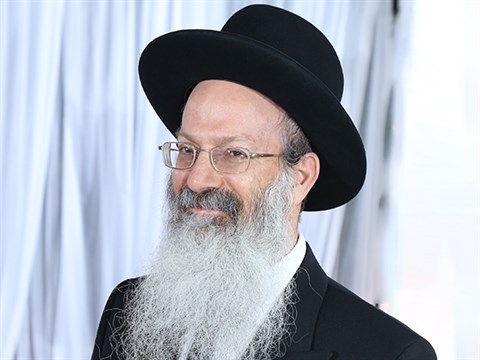
Rabbi Eliezer Melamed

Peninei Halakha 18. Torah Verses in the Prayers and in the Berakha of She-asa Li Kol Tzorki
Chapter 10: The Laws of Tisha Be-Av
The Laws of Purim 12. The Berakhot and the Order of the Reading
Chapter 15: Purim and Reading the Megilla
The Laws of Purim 14. Can a Drunk or Tipsy Person Recite Berakhot and Pray Ma’ariv?
Chapter 16: The Mitzvot of Joy and Kindness





Rabbis in Midrash































Various Events FOR WHOM NOT TO VOTE
Rav Zvi Yehuda Kook stressed that Israeli politics is G-dly, so I have no problem answering this common question on a Torani blog. Also, Free-Will is a G-d-given right and obligation, to "destine one's fate" (R. Soloveichik, Kol Dodi Dofek, 67), so I obviously don't tell others how to vote. But once not a few (especially young) have already asked, a couple of personal words from experience and thoughts from chazal & Rav Kook which may be of help to others, mainly for whom NOT to vote.

P'ninat Mishpat Fallout from Failure to Install Elevator – part II
based on ruling 85007 of the Eretz Hemdah-Gazit Rabbinical Courts








