YeshivaThe torah world Gateway
Beit Midrash
- Torah Portion and Tanach
- D'varim
- Va'etchanan

Moshe was told by heaven that he should no longer pursue this course of prayer. He is to give up on his lifelong dream and accept the will of heaven, even though he may not understand or certainly agree with the decision that is being rendered. This becomes part of the matrix of the greatness of Moshe, in that he does accept this judgment against him, and we do not find him pursuing the matter any longer. In his closing words of the Jewish people, Moshe will refer again to the fact that he will not lead them into the land of Israel, and that he will die and be buried in the land of Moab. But these statements are not made in bitterness or in complaint, but, rather, simply a recognition of the truth of the situation that faces him and the Jewish people. Judaism is a religion of optimism, opportunity, and multiple choices, but also contains within it a certain degree of fatalism – an understanding that the will of Heaven will not be thwarted, no matter what, and no matter how mysterious it may appear to an ordinarily mortal. In Yiddish, this streak of fatalism is expressed in the word Bashert. After all our attempts and actions have taken place, there still is this element of bashert that governs the final outcome after all our efforts and seeming accomplishments. Such is the relationship of the created towards the Creator.




Rabbis in Midrash























Lessons
fast navigation










Moreshet Shaul Hashem Is your Shadow – part I
Based on Siach Shaul, Pirkei Machshava V’Hadracha p. 420 – an address from 1941

P'ninat Mishpat A Non-Contractor in Changing Times – part I
(based on ruling 85128 of the Eretz Hemdah-Gazit Rabbinical Courts)
Moreshet Shaul Our King on Rosh Hashana, Our Father on Yom Kippur.
Based on Aroch Siach, p. 221 (Rav Shaul Yisraeli)
P'ninat Mishpat A Non-Contractor in Changing Times – part II
(based on ruling 85128 of the Eretz Hemdah-Gazit Rabbinical Courts)
Moreshet Shaul Hashem Is your Shadow – part II
Based on Siach Shaul, Pirkei Machshava V’Hadracha p. 420 – an address from 1941
Parashat Hashavua Happiness for the Right Reasons
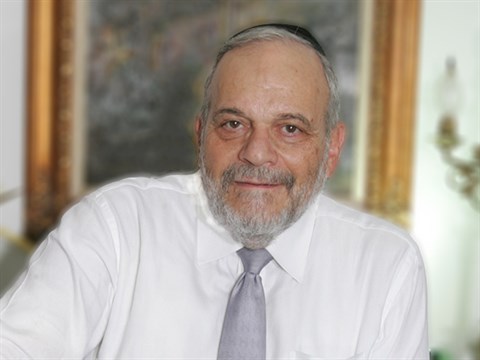
[With painful longing, we share these divrei Torah from our co-Rosh Kollel for close to 40 years, Harav Moshe Ehrenreich zt”l.]