Yeshiva
Beit Midrash
- Family and Society
- A Nation and its Halachot
- Miscellaneous

Nevertheless, without any clear coherent demands, programs, or policies that they wish to enact, the demonstrations themselves are of little value, and, in many cases, a great annoyance and discomfort to the peaceful residents of our neighborhood. The demonstrators usually gather as I am about to leave my house to attend the evening services that continue in my beloved synagogue, Beit Knesset Hanassi. Because of this, I have had a chance to observe who the demonstrators are. Most of them are very friendly to me, and we always exchanged civil and cordial greetings one to another.
Apparently, age does have its due - at least in our society. I find that most of the demonstrators are either retirees or young people in their twenties. These are really the most disadvantaged victims of the Coronavirus pandemic and the most affected by the steps that have been taken here in Israel to try and control it. Of course, when the police get involved, as they always do, there are provocateurs and agitators amongst the demonstrators that begin to engage the police. Usually, every night there are arrests, loud protests, and performances before the television cameras, sent out by the media in full expectation that such confrontations will occur.
I feel that part of the problem is that there really is no outlet for the pent-up emotions and frustrations of the public over what the past few months have done to our society. Synagogues barely function, public lectures and teachings have been relegated to sessions on zoom – a wonderful creation but no substitute for the real personal interaction between teacher and student, lecturer and audience. Sports, always a valuable tool for releasing societal pressures, is for all practical purposes nonexistent now. So, there is a great deal frustration that really has no outlet or direction. This makes demonstrations popular and perhaps even necessary.
The danger always is that radical political groups who usually remain on the fringes of debate and society use these demonstrations to come to the fore and control and radicalize the situation. Lenin famously said that by organizing 300 Bolsheviks and taking over the demonstrations against the government, these 300 Bolsheviks came to rule the country of 135 million. Such an aberration is always possible in a volatile political situation when emotions run high. At these moments, rational behavior and thought are ignored if not completely forgotten.
I imagine there can never be a quiet demonstration. Because of this, I have had to postpone my bedtime at least for an hour, until the crowd begins to disperse, and the noise begins to diminish. I cannot blame the demonstrators for not being more considerate of my sleeping hours, for, after all, they also must be awake and energized to be able to participate in the demonstration. Nevertheless, I think that simply by not being able to go to sleep earlier, my sympathy for the demonstrators is diminished when they continue to be oppressively loud.
Our demonstrations here in Jerusalem pale in comparison to the rioting, looting and vandalism of the organized demonstrations which have recently taken place in the United States. This is of some comfort to me, but I still would like to be able to go to sleep earlier and in a quieter atmosphere. But, like everything else this too will pass, and different demonstrations for different causes and under different circumstances will appear in the future.
Shabbat shalom
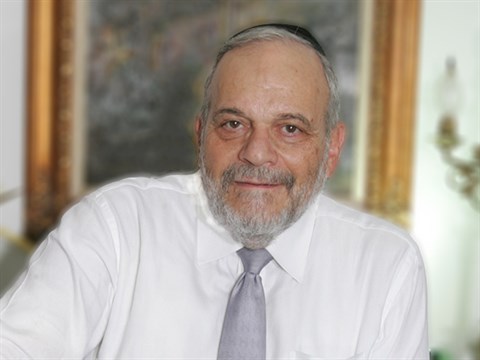
Berel Wein



Rabbis in Midrash























Lessons
fast navigation











Various Events FOR WHOM NOT TO VOTE
Rav Zvi Yehuda Kook stressed that Israeli politics is G-dly, so I have no problem answering this common question on a Torani blog. Also, Free-Will is a G-d-given right and obligation, to "destine one's fate" (R. Soloveichik, Kol Dodi Dofek, 67), so I obviously don't tell others how to vote. But once not a few (especially young) have already asked, a couple of personal words from experience and thoughts from chazal & Rav Kook which may be of help to others, mainly for whom NOT to vote.

P'ninat Mishpat Fallout from Failure to Install Elevator – part II
based on ruling 85007 of the Eretz Hemdah-Gazit Rabbinical Courts