Yeshiva
Beit Midrash
- Jewish Laws and Thoughts
- Personality Development
- Pathways in Personality Development

The Torah study is dedicatedin the memory of
Asher Ben Haim
The first traits which need to be dealt with are pride, anger, envy, and lust.
Pride consists in a person's focusing on himself, trying to impress others, attributing importance to himself. This tendency can find expression in a number of manners. A person might take pride in his handsomeness, or his physical strength. Slowly, he begins to think highly of himself and wants others to do the same. Similarly, A person might take pride in his intelligence or in other spiritual virtues, to the point that he becomes bloated from pride.
Pathways in Personality Development (52)
Rabbi Zalman Baruch Melamed
20 - 20. Distance Yourself from Falsehood
21 - 21. The Dangers of Pride
22 - 22. Pride and Humility
Load More
Some people let their pride go to their head and begin to behave in a manner which reflects their importance, walking and talking like an important person and wearing the sort of clothing which befits such a person. Everything they do, they do to feed their honor, to be "in," to look important.
Pride is an evil sickness which removes a person from the world. All of his energies are exhausted upon himself, and instead of being full of ideological aspirations and pure content, he becomes full of himself and a slave to his own pride, destroying any positive tendency he might possess. Pride creates a partition between a person and the world. The sages teach: "Regarding a proud person, God has said: he and I cannot live together in the world." Such a person impinges upon the Divine Presence.
The sages expressed themselves very forcefully toward proud people, saying, "A proud person deserves to be uprooted like an Ashera (idolatrous) tree." Pride is like idolatry.
Sometimes pride causes a person to want to appear humble, so that everybody will admire him for his humility. He performs all sorts of actions which are appropriate for a humble person. He flees from honor, bestows titles of honor on others , always sits on the side, at the end, and all of this stems from a desire to receive honor. Obviously, one who behaves in such a manner will eventually become proud. It is impossible to hide inner pride for very long.
A proud person thinks himself superior to others and is unable to accept another person's opinion over his own. He is unable to accept criticism.
Sometimes pride takes root so deep that the proud person does not even realize that everybody is degrading him, and that those who honor him only do so outwardly. In their hearts they do not feel any admiration for him at all, and he goes from bad to worse, to the point where he is not even respected by the members of his family. The verse "The proud of heart are the abomination of God" (Proverbs 16:5) says it all.
Hence, a person must distance himself from pride to the very farthest extreme, "Be very very humble." Without examining ones deeds, without dealing with this trait, it is impossible to get rid of it. However, when a person looks closely at himself and studies this obligation, when one considers the vices involved in pride and distances himself from it, he becomes a new person, more complete and more happy.
---
Some of the translated biblical verses and talmudic sources in the above article might have been taken from, or based upon, Davka's Soncino Judaic Classics Library (CD-Rom). Parts of the Path of the Just were taken from, or based upon, Shraga Silverstein's translation of this work (Feldheim).
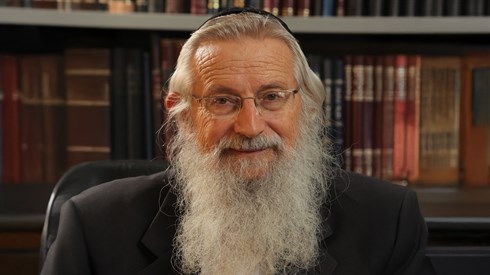




Rabbis in Midrash























Lessons
fast navigation









Hosha'ana Rabba FLYDUBAI & HOSHANA RABBA- ANI VAHU HOSHIA NA- I & HIM SAVE US
"Ani vaHu Hoshia Na", "I and Him, Save Us". We don't just pray to Him, but we also pray to and for ourselves that we should emulate and educate our children to have that instinctive altruism with which He created the world. President Trump seemed amused about Yaniv Hayon, our PLUMBER who confidently worked with G-d like Superman (he learned from a pilot on a TV show!) to save 174 lives on the Dubai hijacking, but we in Israel are totally accustomed already 78 years to our plumbers, teachers, garbage-men, rabbis, farmers & doctors being Hashem's shlichim! This is what Zionism is about.












